State subsidies and partner panic: What the latest cross-border deals reveal about business in China
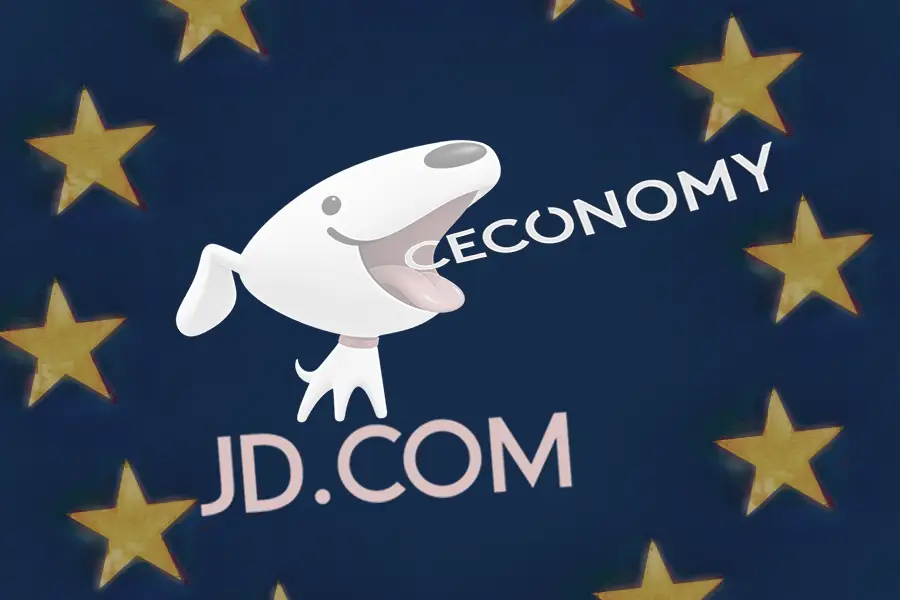
From European regulatory scrutiny to sudden licensee changes, multinational deals are facing new tests of trust and transparency
Key Takeaways:
- European regulatory scrutiny over JD.com’s Ceconomy acquisition reflects a new phase of geopolitical tension and demands for financial transparency
- Western brands operating in China must overcome deep-seated trust issues and cede control to local partners to survive fierce domestic competition
By Brad Burgess and Doug Young
Whether it’s a Chinese e-commerce giant venturing West or a U.S. fashion label going East, cross-border business is increasingly fraught with scrutiny and trust deficits. A major European acquisition by a Chinese retailer recently hit a regulatory speed bump, while an American brand conglomerate abruptly swapped one of its Chinese licensees. Both situations highlight growing friction in international deal-making.
JD.com (JD.US; 9618.HK) thought it had a done deal when it agreed to pay $2.5 billion for German retailer Ceconomy last year. But now it seems it may not be so done after all. The European Commission has opened a full-scale investigation into the purchase, scrutinizing whether the Chinese e-commerce titan received unfair state support, such as preferential financing from state-run banks or tax incentives from the government. It said it will make its final determination by Oct. 1.
We believe this serves as a critical pulse check on EU-China relations and might be the harbinger of broader regulatory scrutiny from the EU and Germany. The EU’s relatively new foreign subsidies regulation is clearly being used as an additional measure outside standard anti-monopoly rules. In a previous case, a Chinese railroad company proactively pulled out of a public tender in Bulgaria after its ridiculously low bid sparked immediate red flags over state subsidies.
That withdrawal was seen as a victory for the new regulation. But applying this tool to a private company rather than a traditional state-owned enterprise is a noteworthy extension of this scrutiny. JD.com has been aggressively pursuing retail assets across Europe, making this regulatory obstacle even more significant for future M&A.
The geopolitical climate adds to the friction. Germany — where Ceconomy’s MediaMarkt and Saturn chains are based — was traditionally conciliatory toward China under former Chancellor Angela Merkel. Today, political concern is mounting, and the dialogue between the EU and China isn’t where it was before. If the EU vetoes this deal, China will likely complain of discrimination, claiming its companies are being targeted, and vow to protect its rights. That inevitably ends in retaliation, perhaps targeting European exports like champagne, cognac, or brandy.
The crux of the problem lies in how state support is disclosed. Current Chinese financial statements contain vague disclosures, often bundling financial incentives with other investment gains and losses. Anyone receiving financing from a state-run Chinese bank is technically getting government support. However, defying Beijing by explicitly detailing that government support is like playing with fire, as China routinely denies offering such subsidies. We’re curious to see if Western regulators will push companies to be more forthright and specific in their material disclosures moving forward.
Letting go of the reins
On the flip side, Western companies operating in China face their own set of hurdles. U.S. company Authentic Brands, which owns major labels like Reebok, Eddie Bauer, and Brooks Brothers, made recent headlines when it abruptly dumped the China licensee for its Nautica and Spyder brands. Following the announcement, shares of the dumped partner, Tristate Holdings (0458.HK), tanked about 15%.
This kind of partner shifting is a relatively common shortcut for major Western brands to develop the China market. However, identifying a capable partner with enough breadth and execution capability to adapt a product for local tastes is easier said than done. We saw a similar situation recently when Nike (NKE.US) made major changes to its China licensing agreement with long-time partner Topsports (6110.HK), whose stock also tumbled after losing authorizations for online sales.
Decades-long relationships evaporate in some cases, highlighting the extreme fragility of these partnerships. We think multinational companies suffer from a profound trust problem. To succeed, they need to let go a bit and trust their Chinese partners more. Local operators understand the rapidly changing Chinese consumer landscape far better than a remote headquarters ever could. Local managers often complain that running everything through headquarters takes too much time and makes them less competitive. Yet, ceding control and allowing a brand to morph for local tastes — like Yum China (YUMC.US; 9987.HK) successfully offering pizza with corn and shrimp — is deeply uncomfortable for many top multinationals.
While top-tier global brands might still command loyalty among brand-conscious urbanites, mid-tier labels face fierce competition from local players. For investors evaluating these publicly traded partners, diversification is key. If a local licensee is heavily dependent on a single Western brand, the risk of a sudden breakup should prompt extreme caution. Investors must do their homework to understand the importance of each brand relationship.
Ultimately, the ones who do best in China are those willing to let go. The way a business is promoted and operated needs to be flexible and modified according to actual conditions in the Chinese market.
About China Inc
China Inc by Bamboo Works discusses the latest developments on Chinese companies listed in Hong Kong and the United States to drive informed decision-making for investors and others interested in this dynamic group of companies.
Subscribe to China Inc on your favorite app:


Related Articles

RELATED ARTICLES
-
Geopolitical tightropes: What Tesla and TAL reveal about a new era of U.S.-China business
 TSLA.US
 -
Solar subsidies likely to top agenda at Trump-Xi meeting
688223.SHG
- CXMT IPO tests China’s state-driven chip dream
- Qingtao Energy reaches solid-state battery milestone, but model remains unproven
- Avatr parks its NEV listing in Hong Kong, complete with losses and state ownership
-
Why regulating capital and serving burgers are both getting tougher in China
WEN.US
-
The global leap: Chinese biopharma, athletic brands dip toes in global waters
1368.HK