Avatr parks its NEV listing in Hong Kong, complete with losses and state ownership
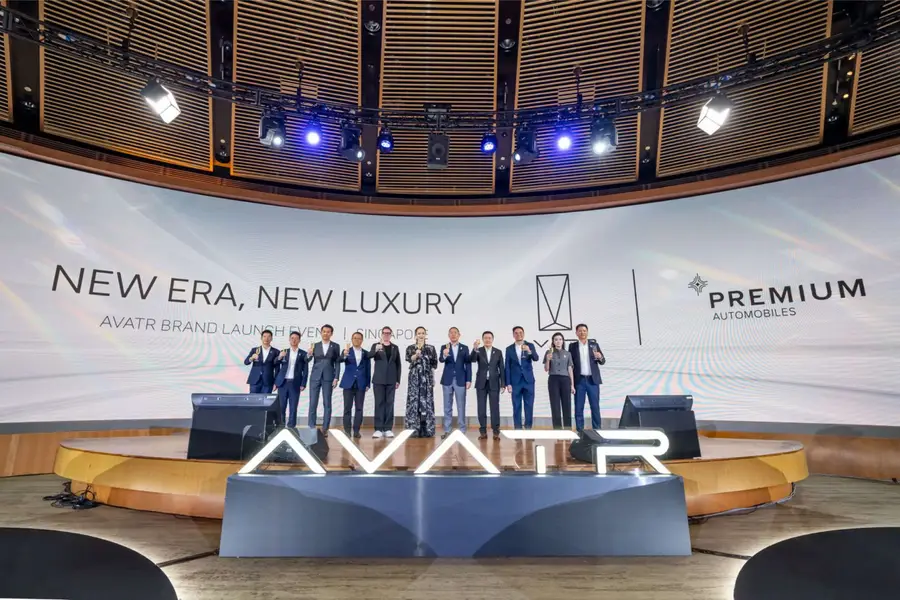
Parent Chang’an Auto’s chairman has said his company will strongly support the NEV brand, whose sales plunged by more than half in the first five months of 2026
Key Takeways:
- Avatr’s new Hong Kong IPO application shows it lost a combined $1.6 billion over three years, as it spent heavily on R&D
- The EV maker’s unit sales dropped by more than half year-on-year to 20,160 in the first five months of 2026, after it sold 122,000 units in all 2025
By Edith Terry
Lest any of the many workers at Avatr Technology (Chongqing) Co. Ltd. worry about their employer’s relatively late arrival to China’s hyper-competitive electric vehicle (EV) sector, they needn’t. At least those were the soothing words coming from Zhu Huarong, chairman of the company’s seasoned parent, Chang’an Automobile Group, one of China’s top four state-owned automakers.
“Chang’an Automobile will fully support Avatr whenever it needs us – providing funds, personnel and technology,” Zhu proclaimed at a car launch event in 2025.
Avatr is just a piece of Changan’s aggressive plan to become one of the world’s top 10 automakers by 2030, with a global target of 5 million units by then, 60% of those new energy vehicles (NEVs). That would mark a more than 70% increase from the 2.9 million total vehicles the company sold in 2025.
Now, Avatr, one of three Chang’an NEV brands, which focuses on the lower end of the luxury market, is aiming to charge up its own finances by filing last week for a Hong Kong IPO.The company has launched four models since 2022, including both battery and extended range models, priced between 200,000 yuan ($29,437) and 700,000 yuan.
Avatr bills itself as combining three well-known brands in an asset-light model. Its batteries come from industry leader CATL, while its intelligent drive technology harkens from smartcar technology giant Huawei. Chang’an provides the company’s manufacturing muscle on an outsourced basis, while Avatr focuses on product design, development and sales.
The joint sponsors for the listing are Citic Securities and CICC, both heavyweights.
Avatr’s latest application is its second, after its original filing last November expired before it could complete its IPO. At the time of its first filing, media reports said it was targeting up to $1 billion in proceeds, which it would use to launch five new models or upgrades by 2026 and 17 new models by 2030. The reports said Avatr planned to expand to over 80 countries by 2030.
Strong revenue growth
The latest listing document shows strong topline revenue growth that rose nearly 70% last year to 25.6 billion yuan ($3.77 billion) from 15.2 billion yuan in 2024. Its unit sales growth has been equally dramatic, rising from 20,021 units in 2023 to 122,702 vehicles in 2025. Its gross margin has been rising as it gains experience and scale, reaching 9.4% last year from 6.3% in 2024 and a negative figure in 2023.
On its bottom line, the company’s loss of 3.5 billion yuan last year was 15% narrower than 2024, though both figures still represent massive red ink. And perhaps most worrisome, Avatr’s total NEV sales plunged by more than half in the first five months of 2026 to just 20,160 units from 43,700 in the same period of 2025, according to industry data.
The drop isn’t too surprising, since China’s domestic passenger NEV sales fell 19.7% year-on-year in the first five months of 2026. But Avatr’s far larger decline than the overall market certainly isn’t too reassuring.
While most of its sales are domestic, the company has also performed poorly overseas. In the first five months of 2026 it sold just 2,949 vehicles abroad from its network of 95 distribution points in 43 countries and regions.
The obvious and unapologetic reason for Avatr’s losses is its high R&D expenses, which are quite typical in the sector. At the end of last year, 2,186 employees, or 55% of its workforce, were R&D personnel. Its 2025 R&D expenses totaled 2.1 billion yuan, or 8% of revenue, roughly triple the 660 million yuan it spent in 2023.
The company shows no sign of slowing down in either its international ambitions or R&D spending. It currently operates a global design center in Munich with 144 employees, who play “a pivotal role in shaping the luxurious appeal and world-class aesthetic complexity of our vehicles,” it said in the listing document. It has hired the former artistic director of menswear for Louis Vuitton to help design a limited edition of its AVATR 012 sedan, as well as the former creative director for Givenchy for its limited edition AVATR 011 model.
Parental backing
Whether Avatr’s strategy is reckless or prudent may depend on just how much Zhu Huarong and Chang’an are ready to backstop the company. Chang’an’s own overall sales fell by 21% in the first quarter of 2026 to 557,500 units, with EV sales down 13% to 168,600 units. Besides Avatr, Chang’an also owns the mass market Deepal NEV brand, and Nevo, a mainstream and hybrid brand.
So, what has Changan done to show its love for Avatr? One of its most consequential steps has been integrating Avatr’s manufacturing with Deepal, which focuses on more affordable NEVs costing 150,000 yuan to 300,000 yuan.
Both brands will continue to be marketed separately, but the backend link will help to reduce costs. When Avatr formed a joint stock company in preparation for its IPO last September, Zhu Huarong stepped down as its chairman and was replaced by the younger Wang Hui, a 22-year Chang’an veteran born in 1981. Media reports say Wang was the driver behind Avatr’s relationship with CATL and Huawei, and was also general manager of Chang’an’s overseas business development and Southeast Asia departments.
Chang’an initially set up Avatr as a 50-50 joint venture with private NEV startup Nio (NIO.US; 9866.HK), before Nio’s own IPO and before Chang’an announced a “joint effort” with CATL and Huawei to build a premium intelligent new passenger electric vehicle (NEPV) brand in 2020. After Nio exited, Chang’an raised 19 billion yuan for Avatr in four financing rounds, ending up with 38 shareholders and a 41% controlling interest in the company.
CATL currently holds 9.2% of Avatr’s pre-IPO shares. Huawei is principally a supplier through its smart automotive business, Shenzhen Yinwang Intelligent Technology, which is an open platform for Huawei’s Qiankun smart driving system.
Avatr and another NEV maker, Seres (9927.HK), now each owns 10% of Yinwang, each investing 11.5 billion yuan. Avatr closed its deal in February 2025, and included its share of profits from the joint venture on its balance sheet for 2025.
Just how big a role Yinwang will play in Avatr’s future is an open question, as the former’s customers also include a long list of other state-owned enterprises, from SAIC Motor (600104.SH) and Guangzhou Auto(2238.HK; 601238.SH) to newly listed Voyah Auto (7489.HK). But a more immediate issue for Avatr, if it hopes to impress Hong Kong investors, will be showing how it plans to halt its skidding domestic sales and how its overseas network can provide a more meaningful contribution to the business.
To subscribe to Bamboo Works weekly free newsletter, click here
Related Articles
RELATED ARTICLES