China pivots to ‘hard tech’ and global branding: Frost & Sullivan Summit
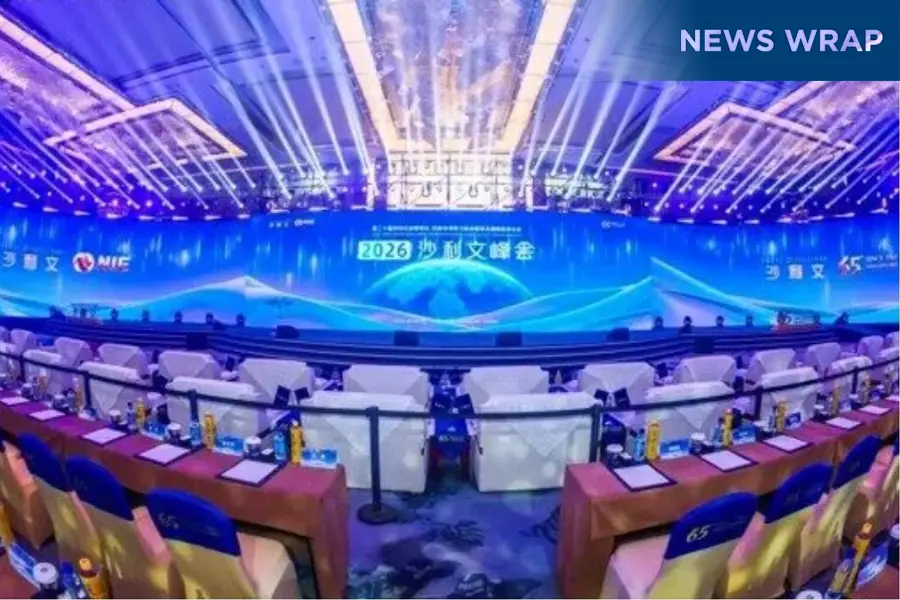
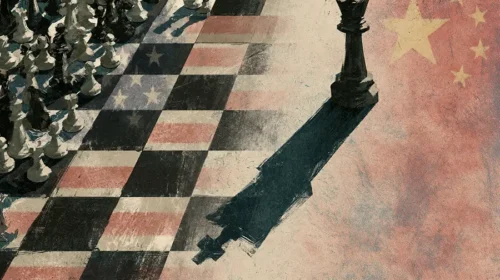
As global trade becomes fragmented, Chinese enterprises are embracing hard technology and non-market strategies to build durable, world-class brands
By Da Cheung
Chinese enterprises are adapting to a shifting global economy by strategically pivoting from rapid business model innovation toward “hard technology” — tangible, complex engineering and scientific breakthroughs, executives said at Frost & Sullivan’s 20th Global Growth, Innovation and Leadership Summit in Shanghai on Aug. 4.
Aroop Zutshi, global president of Frost & Sullivan, said that Chinese innovation is shifting from a speed-first approach to a quality-first model. The overarching narrative at the gathering of over 300 speakers is that Chinese companies are aiming to shed their traditional “Made in China” label in favor of building durable, world-class brands. Frost & Sullivan China Chairman Neil Wang added that the underlying code of this new model is “strategic resolve,” urging companies to contribute to global business paradigms rather than just learning from them.
To further guide this transition, the summit saw the release of the “China’s Next 50 Years” white paper, which deconstructs long-term industrial opportunities. Wang introduced the “Resilience Triangle” of mission, innovation, and trust, as essential pillars for companies attempting to survive economic cycles.
As Chinese companies attempt to expand overseas, they face an increasingly fragmented global trade environment. To navigate these geopolitical headwinds, experts at the summit advised firms to deploy “non-market strategies.”
Companies must integrate strict local compliance, localized operations, and active participation using multilateral cooperation into their business plans, rather than relying solely on traditional market competition, said Frost & Sullivan’s global chief economist Vinod K. Aggarwal.
Meanwhile, domestic financial leaders used the event to pitch international capital on the diversification benefits of Chinese assets. Tu Guangshao, former executive vice mayor of Shanghai, argued that global capital is shifting toward non-U.S. dollar assets, providing a strategic window to elevate Shanghai as a global hub for yuan asset allocation.
The summit also highlighted a strategic shift in China’s AI sector, moving away from consumer hype toward industrial reality. The focus is shifting heavily toward practical commercialization, with experts emphasizing the need to translate tool-level AI advantages into long-term systematic capabilities across the supply chain.
Forums at the event targeted commercial applications in semiconductor manufacturing, enterprise workflows and embodied intelligence. Discussions highlighted the leap in brain-computer interfaces and the development of “AI Native” products.
In the healthcare sector, synthetic biology and AI-empowered biomanufacturing are being positioned by industry insiders as a “third biotech revolution.” Forums detailed clinical translations in CAR-T cell therapy, 3D cell intelligent manufacturing, and new regenerative aesthetic materials.
To subscribe to Bamboo Works free weekly newsletter, click here
Related Articles
Red Avenue shares slump in Hong Kong trading debut
Longsys in new alliance to bring on-device AI to handsets
RELATED ARTICLES
-
AI integration, foreign partnerships in new industries in focus at China Finance Summit
- Where China’s AI models make their money
-
The global leap: Chinese biopharma, athletic brands dip toes in global waters
1368.HK
- Unsated by Hong Kong listing, Knowledge Atlas seeks more funds in Shanghai
- SiliconFlow’s AI ‘token factory’ dream gets $300 million vote of confidence