AI integration, foreign partnerships in new industries in focus at China Finance Summit
The event reflected Beijing’s ongoing effort to restore private business confidence and project an ‘open for business’ image to the world
By Da Cheung
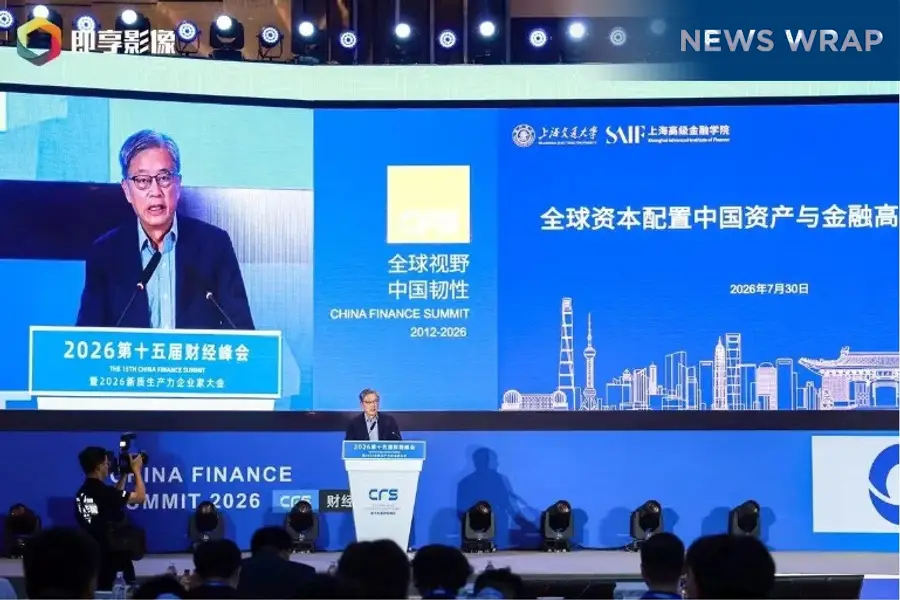
Amid global economic uncertainties and shifting geopolitical landscapes, China is doubling down on strategic pivots toward high-tech manufacturing, green technology and AI. The ongoing shift — framed domestically as developing “new quality productive forces” — took center stage at the 15th China Finance Summit held in Shanghai on July 30 and 31. Themed “Global Vision, Chinese Resilience,” the event drew over 1,000 attendees and 180 speakers, highlighting Beijing’s ongoing effort to restore private business confidence and project an “open for business” image to the world.
Underscoring the strategic importance of such initiatives, the summit featured prominent figures from government and academia. Key attendees included Zhou Hanmin, a member of the Standing Committee of the Chinese People’s Political Consultative Conference (CPPCC), and Tu Guangshao, former executive vice mayor of Shanghai. They were joined by leading scholars from institutions such as the Hong Kong University of Science and Technology (Guangzhou) and Shanghai Jiao Tong University, bridging the gap between policy directives, academic research, and corporate execution.
AI integration emerged as a main focus at the event, moving beyond theoretical tech discussions to practical applications across traditional sectors. The event highlighted innovations ranging from AI agents to brain-computer interfaces and smart consumer hardware.
Awards recognized these practical applications. Lenovo (0992.HK) received a product award for its AI mini PC, while other domestic firms were recognized for integrating AI into everyday consumer goods, such as smart tea-brewing machines. Enterprise software also saw significant recognition, with companies like Shanghai Wicresoft winning the 2026 Digital Intelligence Innovation Pioneer Award.
According to summit organizers, private sector entrepreneurs are the primary drivers of this digital transformation. This spotlight on business leaders aligns with broader state efforts to revitalize private sector growth, which Beijing views as essential for long-term economic resilience.
As Chinese enterprises face increasingly complex international regulatory environments and trade barriers, corporate globalization and legal compliance have become urgent priorities. Panel discussions at the summit emphasized the “compliance foundation” needed for overseas investment and expansion, reflecting a growing anxiety among businesses trying to navigate broader geopolitical decoupling.
To stabilize foreign investment and signal market openness, the summit prominently featured and awarded multinational brands alongside domestic heavyweights. Global names such as DHL (DHL.DE), Domino’s Pizza (DPZ.US), and Lotte Group (004990.KS) were recognized for their industry influence and globalization efforts, sharing the stage with Chinese manufacturing giants like Sany Group (6031.HK) and French chemical manufacturer Arkema (AKE.PA).
The summit also highlighted innovation in the traditional food and beverage sectors, honoring Master Kong (0322.HK) with both individual leadership and product awards for its beverage lines. By showcasing this diverse mix of domestic innovators and committed foreign enterprises, the summit aimed to reinforce China’s narrative of maintaining economic vitality through technological advancement and international cooperation.
To subscribe to Bamboo Works weekly free newsletter, click here
Related Articles

Senior Material’s quarterly profit surges, but investors unimpressed
Andre Juice’s profit plunges 40% in third quarter
RELATED ARTICLES
-
INTERVIEW: DataCanvas empowers industries as AI utility provider
- Where China’s AI models make their money
-
PCI Technology stuck in low-margin ICT systems integration
600728.SHG
- AI in China’s medical aesthetics sector: From non-core services to clinical device integration
- Insilico revenue soars above $100 million on AI drug partnerships
-
Chuangxin Industries’ profit doubles on higher selling prices, lower energy costs
2788.HK