Geopolitical tightropes: What Tesla and TAL reveal about a new era of U.S.-China business
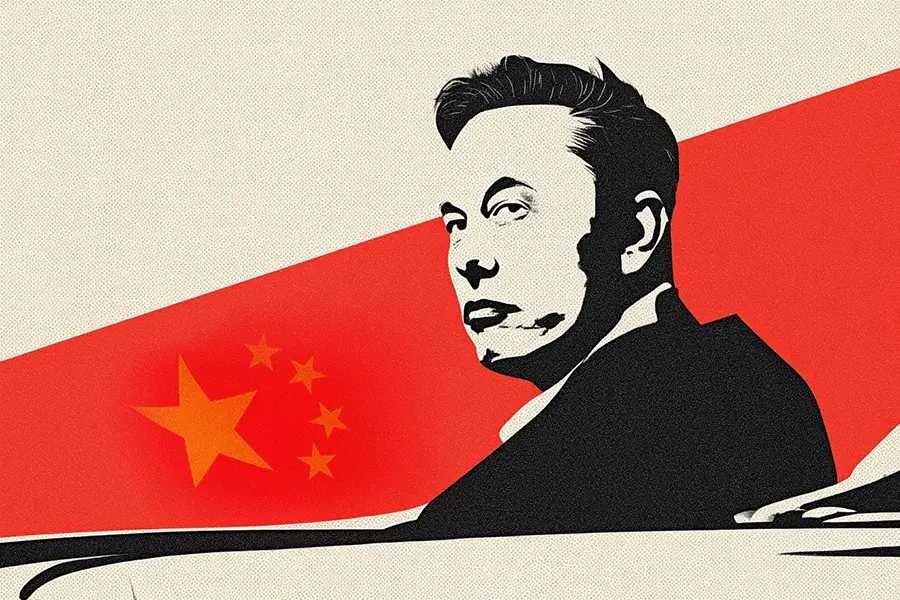
A rumored move by Elon Musk and a controversial acquisition by a Chinese education giant are exposing growing regulatory minefields in cross-border commerce
Key Takeaways:
- Elon Musk’s rumored plan to sell Tesla’s China operations underscores the intense governance and technological pressures facing multinational corporations
- TAL Education’s controversial acquisition of an American digital reading company highlights why foreign firms need to prioritize proactive communication
By Brad Burgess and Doug Young
Geopolitical tensions between China and the West are fast becoming a defining force in the global business landscape, reshaping how multinationals operate across borders. This dynamic is currently playing out in two distinct storylines that, while from entirely different sectors, reveal the subtle but mounting pressures on cross-border commerce. On one hand, reports say Elon Musk may be preparing to sell his Tesla (TSLA.US) China operations to pave the way for a merger with SpaceX (SPCX.US). On the other, Chinese private education powerhouse TAL Education Group (TAL.US) recently made a fire-sale purchase of an American digital kids’ literature company, triggering national security scrutiny from U.S. lawmakers.
According to a report in the Wall Street Journal, Musk is reportedly considering a sale of Tesla’s Chinese operation to clear the path for a potential merger between the EV maker and his recently listed space company. Musk has publicly dismissed the report as absurd, but, as we’ve seen in the past, a public refutation doesn’t mean strategic gears aren’t turning.
The underlying logic for such a move is relatively straightforward. A divestment would remove any China connections from SpaceX’s highly sensitive business ecosystem, which includes critical work for NASA and the Starlink low-orbit global satellite network. There are also compelling technology and governance incentives. For instance, integrating operations would benefit shared technology initiatives, like the Terafab chip development plan in Texas. Musk’s current control over Tesla is also relatively low compared to SpaceX, so a merger would grant him significantly greater control over the automaker.
Divesting the China business, however, would have a massive impact. Tesla China accounts for more than half of the automaker’s global production and is a critical export hub for Europe and Asia. The entity’s structure is also unique. Unlike traditional automotive partnerships in China, it is not a joint venture. It was established as a fully owned business — a concession likely granted both to import best practices to China’s EV ecosystem and as a bargaining chip amid pressure from the first Trump administration.
If a sale happens, it would likely be viewed as a significant loss of face for Beijing. The Chinese government could also plead grievance, pointing out the exceptional benefits it originally extended to the U.S. automaker. We don’t view Tesla’s modular structure as a new template for Western companies; it remains an exception to the rule. Nonetheless, it’s a striking example of how sensitive technology and political risks are forcing a rethink of traditional global integration. European regulators, already viewing China through a skeptical lens, would undoubtedly keep a close watch on whatever independent entity might emerge.
TAL’s U.S. acquisition: A double-edged sword
Looking at the reverse flow of capital, TAL’s recent acquisition in the U.S. provides a textbook example of how sudden regulatory transitions can catch a foreign company off guard. TAL purchased Epic, a leading U.S. digital literature provider targeting children, for just $95 million in a bankruptcy sale last year. It was a remarkable discount, considering Epic’s previous Indian owner paid $500 million for the company just four years prior. The deal generated immediate, massive returns, with TAL booking a $400 million gain in its recent quarterly results, highlighting TAL’s aggressive pivot toward overseas growth after facing severe domestic crackdowns.
However, this diversification maneuver is shaping up to be a double-edged sword. Almost immediately, U.S. lawmakers called for a national security review of the transaction. Some might intuitively compare this to ByteDance and the forced divestiture of its U.S. TikTok operations. But we believe the nature of this scrutiny is distinctly different. With TikTok, the core geopolitical fear centers on addictive algorithms and the potential for a foreign government to manipulate content in digital echo chambers.
Epic, conversely, is a children’s digital library. The backlash here stems from an entirely different domestic sensitivity in the U.S.: a heated societal debate regarding parental rights and the appropriateness of reading materials in public schools and libraries. It’s less about fear of Chinese authorities injecting Confucian classics into a kids app, and more about who has the authority to curate children’s content.
The primary issue here is one of corporate strategy and communication. The U.S. children’s education space is highly regulated and incredibly sensitive. Yet TAL approached the U.S. market much like it might approach the domestic Chinese market: moving swiftly into a gray space with a cheap deal, while hoping to fly under the radar. It didn’t proactively check with political consultants or regulators to explain its content controls or assuage parental concerns. While tech veterans like Alibaba (BABA.US) are slowly learning how to proactively navigate foreign regulatory waters, companies like TAL have little experience outside their home market. Culturally, proactive transparency just isn’t in their DNA. But as geopolitical tensions mount, there can be severe consequences for acting first and answering questions later. Moving forward, both U.S. and Chinese companies must realize that cross-border deals can no longer afford to be opaque.
About China Inc
China Inc by Bamboo Works discusses the latest developments on Chinese companies listed in Hong Kong and the United States to drive informed decision-making for investors and others interested in this dynamic group of companies.
Subscribe to China Inc on your favorite app:


Related Articles

RELATED ARTICLES
-
TAL Education finds gold – and risk – in U.S. acquisition

- SpaceSail seeks billions for China’s Starlink challenge, as revenue remains earthbound
-
Yiren Digital left in the cold after parent freezes $4.4 billion in wealth products
YRD.US
-
Digital China’s AI reboot gets stuck in its low-margin past
0861.HK
- RedNote separates its China business, while Texas Chicken plots a massive China entry
- TikTok, Southeast Asia boost prospects for Miduoduo IPO