From 4G boxes to SOS for motorists: Yodosmart finds second growth curve
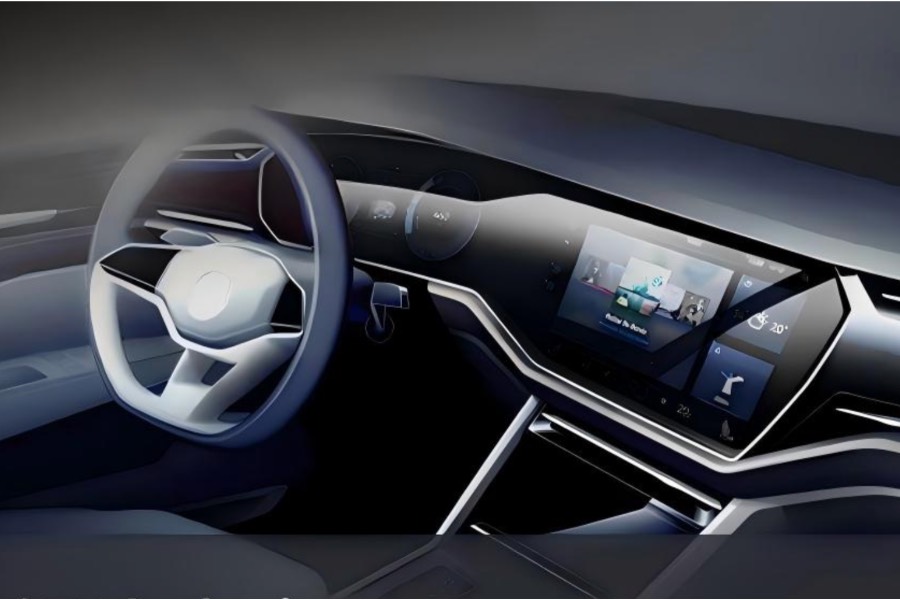
The car technology company has filed to list in Hong Kong, as it pivots from automotive communication boxes to automated accident emergency call systems
Key Takeaways:
- Yodosmart has renewed its Hong Kong listing application as a maker of vehicle communication, accident emergency call, and sensing and domain control products
- Accident emergency call systems sales surged more than fourfold in the first five months of 2026, overtaking vehicle communication as the company’s top revenue source
By Lee Shih Ta
As Chinese car exports accelerate, breaching the 7 million-unit threshold last year, automakers are finding themselves facing not only new competition in unfamiliar markets, but also speed bumps from local safety standards that must be cleared. Such requirements, which lie hidden in the shadows of the global expansion wave, are bringing some unexpected bounty to manufacturers in the supply-chain for safety-oriented systems.
One of those, Hangzhou Yodosmart Automotive Technology Co. Ltd., which renewed its Hong Kong listing application last week, is unearthing fresh growth from those compliance requirements. The company supplies in-vehicle communication, emergency call, and sensing and domain control products tailored to a wide range of vehicles. Lately, it has found a major new cash cow in emergency call, or eCall, systems that contact rescue centers and transmit location and vehicle data when accidents occur.
Yodosmart’s pedigree came from its founders’ background at research institutes when it launched a decade ago. Chairman Li Wei previously worked at the No. 52 Research Institute of China Electronics Technology Group Corp. and Cethik Group for over 20 years, while general manager Lu Chaohong previously headed Cethik’s smart automotive operations.
Grounded in this academic and product development background, Yodosmart quickly worked its way into the supply chain of a top-10 domestic automaker just two years later. The company began volume shipments for its SUV-use vehicle communication products for a top-10 manufacturer in 2020, and by 2022, its deliveries exceeded the 500,000-unit mark.
Its core product, the Telematics Box, or T-Box, functions as the vehicle’s “communication box.” It bridges cellular networks with the cloud, enabling vehicle condition monitoring, remote control and software updates. Moving from design wins to mass supply typically takes nine to 24 months, with subsequent production orders extending for two to three years. Consequently, the company’s revenue remains tightly tethered to life cycles for individual vehicles produced by its clients.
Turbocharged growth in 2024
Multiple 4G vehicle communication projects completed their production ramp-up and advanced into large-scale delivery in 2024, turbocharging Yodosmart’s revenue that year to 398 million yuan ($59 million), nearly double the previous year. But that growth was fleeting, punctuated by model life-cycle dynamics.
By 2025, as automakers retooled their production schedules and model mixes, Yodosmart’s 4G product revenue tumbled from 332 million yuan in 2024 to just 240 million yuan last year. Newly commercialized 5G products picked up some of the slack, but failed to plug the shortfall. Still, the company managed to salvage overall revenue growth of 12.8% last year, as its newer eCall and sensing and domain control businesses took the baton. In effect, Yodosmart’s growth engine pivoted from 4G mass production toward safety compliance products fueled by demand from export-bound models.
The company began bundling emergency call and vehicle communication solutions into export models in 2023, securing multiple international certifications the following year. That effort has paid off in booming revenue for the eCall business, which surged more than fourfold year-over-year to 78.76 million yuan in the first five months of 2026, equal to 43.9% of total revenue.
That jump helped the eCall business eclipse Yodosmart’s older vehicle communication segment for the first time, resulting in overall 37.1% revenue growth to 179 million yuan for the five-month period. More crucially, the eCall business boasts a 30% gross margin — more than double the 12.6% for vehicle communication — signaling this newer revenue stream should also help to lift Yodosmart’s profitability.
Profitability lags business pivot
That said, the revenue transition has yet to fully filter down to the company’s bottom line. Yodosmart’s net profit grew from 10.94 million yuan in 2023 to 40.15 million yuan in 2024, but then dipped 1.4% to 39.57 million yuan in 2025, primarily weighed down by listing fees, climbing personnel costs, and dwindling government subsidies. Its adjusted net profit still grew 14.5% year-on-year to 57.81 million yuan in 2025.
In the first five months of 2026, the company swung to a net profit of 4.38 million yuan from a 630,000 yuan loss a year earlier, while its adjusted profit more than doubled to 13.14 million yuan. These figures indicate the newer eCall ramp-up has begun to bolster the company’s core earnings, though a tiny 2.4% overall net profit margin remains notably low.
The nascent bottom-line improvements, while encouraging, don’t signify that Yodosmart’s transformation is fully complete. Despite the shift from 4G to eCall products, the company’s legacy and new businesses are all anchored by the same core client, which appears to be Chery, based on descriptions in the listing document. As of the end of May 2026, its largest customer accounted for 77.4% of its revenue, with its top five clients collectively sweeping up 96% of its sales. The company is bringing a new factory online in the city of Wuhu, which is Chery’s headquarters, in East China’s Anhui province. Yet the added capacity remains heavily tailored for the client.
While such close collaboration can strengthen customer stickiness, it also makes adjustments more difficult for models from other customers.
Thus, Yodosmart next major task will be not merely selling more eCall units, but validating its product template across a broader array of automakers. China’s mandatory standard for in-vehicle emergency call systems, slated to take effect on July 1, 2027, could help to redirect demand from export models back to the domestic market. However, 5G vehicle communication and sensing and domain control still represent a minuscule fraction of Yodosmart’s overall revenue and have yet to prove they can become another new growth curve.
Its high degree of specialization and unique product mix make it difficult to identify direct Hong Kong-listed peers for Yodosmart. Shares of closely related Shenzhen-listed counterparts Flaircomm Microelectronics (301600.SZ) and Gosuncn Technology (300098.SZ) are down between 20% and 30% this year.
For investors, Yodosmart’s attraction is its eCall business that has replaced 4G as a new growth engine, and China’s 2027 mandatory standard that could boost demand at home for those eCall products. Nonetheless, the company’s overwhelming reliance on a single customer, and its relatively low profitability are important caution signals. At this stage, Yodosmart looks more like a relatively mature automotive electronics supplier rather than deserving a valuation premium as a high-growth tech stock.
To subscribe to Bamboo Works weekly free newsletter, click here
Related Articles
RELATED ARTICLES
-
Digital China’s AI reboot gets stuck in its low-margin past
 0861.HK
 - Zhejiang Energy Marine steams ahead on green shipping boom
-
The next big EV idea for investors? Bethel bets on the intelligent chassis
603596.SHG
-
PCI Technology stuck in low-margin ICT systems integration
600728.SHG
-
Restructuring hits Want Want’s bottom line, as top line ekes out growth
0151.HK