PCI Technology stuck in low-margin ICT systems integration
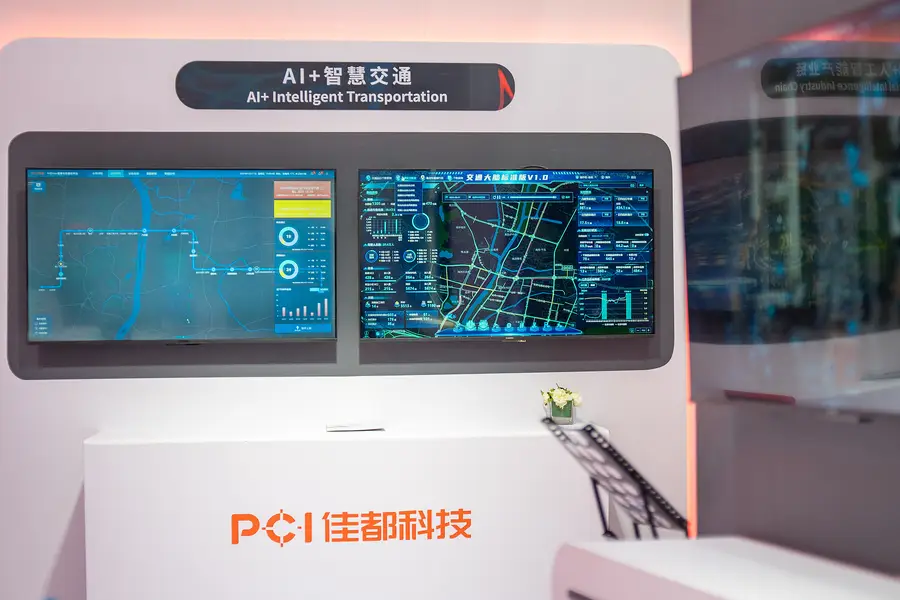
The Hong Kong IPO candidate is trying to redefine itself as an AI+transportation services provider, yet still relies heavily on its low-margin systems integration business
Key Takeaways:
- PCI Technology has applied for a Hong Kong IPO, holding about 3% of the Chinese market for intelligent city cluster multi-modal transit systems, ranking fifth
- The company remains heavily dependent on its low-margin, legacy ICT systems integration business, resulting in low overall gross margins
By Li Shih Ta
Shortly after graduating in 1992 from Sun Yat-sen University, a top school in the southern boomtown of Guangzhou, Liu Wei founded a technology company with several classmates. Their business focused on one of the most readily monetizable opportunities at the time —creating digital systems for enterprises using information and communication technology (ICT) products, mostly computer servers and switches. Chinese enterprises were accelerating their digitalization efforts at that time, providing a strong business opportunity for Liu and his partners through their demand for ICT products.
But the business model’s biggest drawback is its lack of differentiation from rivals, all of whom are simply distributing and reconfiguring products made by other companies. That means the best place they can appeal to customers is on price, often leading to competition that makes it difficult for companies to gain any pricing power.
Over 30 years later, Liu’s PCI Technology Group Co. Ltd. (600728.SH) is seeking to launch a new chapter by listing in Hong Kong, offering up a narrative centered on the latest themes of the 2020s, including a move into transportation-specific large models and intelligent city solutions. Still, the company’s listing document, filed last week, shows it remains highly reliant on its low-margin legacy systems integration business.
After accumulating experience and clients as an ICT distributor during his early years, Liu Wei gradually has shifted his business more recently to focus on smart city rail transit solutions. This became PCI’s core strategy after a 2013 reorganization. The company has worked most recently to integrate AI technology into its transportation scenarios, launching a transportation management platform and a transportation vertical large model.
PCI Technology’s current positioning is no longer that of a pure ICT distributor and systems integrator. Rather, the company bills itself as a provider of AI-enabled intelligent city cluster multi-modal transit products and solutions provider. Its operations are primarily divided into two segments: its legacy digital transformation solutions, providing ICT infrastructure and integration services across various industries; and its newer intelligent city cluster multi-modal transit solutions, encompassing rail transit and urban traffic management systems.
Intelligent transportation indeed appears to possess big growth potential. The company’s listing application cites third-party data indicating that China’s intelligent city cluster multi-modal transit market was worth 83.6 billion yuan ($12.25 billion) in 2024. PCI Technology holds approximately 3% of that market, ranking fifth, with potential for improvement. By the end of 2025, PCI Technology’s solutions had been deployed in 47 cities, covering more than 120 subway lines and over 2,400 stations. Additionally, its urban traffic management systems are operational in more than 100 regions.
Dependence on low-margin legacy business
PCI Technology’s revenue increased from 6.23 billion yuan in 2023 to 10.13 billion yuan last year, representing 62.6% growth over the two-year period. Notably, its revenue grew 27.4% year-on-year in 2025, reflecting the company’s continued strong project acquisition capabilities within the ICT and urban digitalization markets.
Despite its strong top-line growth, however, the company’s revenue structure remains heavily dependent on low-margin operations, which are weighing on its gross profit margins.
Its gross margin declined from 12.6% in 2023 to just 9.4% in 2025, reflecting steady downward pressure due to its growing reliance on its legacy enterprise digital transformation services. Revenue from those services increased from 62.1% of its total in 2023 to 70.9% in 2025, solidifying its place as the company’s largest income source. But the gross margin for that business was a razor-thin 3.9% in 2025. The gross margin for its newer smart city transportation-related businesses remained above 20%, but its revenue share declined.
In 2023, the company recorded a net profit of about 395 million yuan. It fell into the red with a 118 million yuan loss in 2024, before returning to positive territory with a 173 million yuan profit last year. The volatility stemmed primarily from a significant non-cash loss in 2024, when fair value changes in the company’s financial assets contributed approximately 253 million yuan to its losses. That shows its business is still relatively healthy, even as its bottom line remains vulnerable to non-cash factors.
Numerous competitors
Still, the company faces strong competition in both of its main business lines. Within the intelligent transportation sector, CRSC (3969.HK) primarily focuses on core systems such as rail transit signaling, sitting at the upstream end of the industrial chain with superior technology and greater scale. Meanwhile, China Transinfo Technology (002373.SZ) specializes in urban traffic data and platforms, directly competing with PCI Technology for the same government and transportation management clients.
In its legacy ICT systems integration business, PCI Technology also faces competition from numerous diverse rivals. Giants like Dawning Information (603019.SH) and Inspur Electronic Information (000977.SZ) dominate upstream segments, controlling critical server and computing power infrastructure with significant scale and technological advantages. At the other end of the spectrum, PCI Technology must also contend with a multitude of smaller system integrators predominantly reliant on price competition.
PCI Technology sits in an intermediary position between these extremes. While it possesses capabilities in rail transit systems and also performs substantial system integration and project implementation roles, its disadvantage lies in its operation across multiple industrial segments. That makes it difficult to develop a specialized, dominant advantage within any single dimension. This operational profile complicates its valuation thesis: it lacks the hallmark high-margin, asset-light characteristics of pure-play AI companies, yet does not exhibit the stable cash flow patterns typical of traditional engineering firms. Consequently, it exists in an ambiguous middle ground between investment narratives.
The company’s decision to pursue a Hong Kong listing clearly aims to reshape market perception through its latest AI+transportation narrative. However, market reception will ultimately hinge on how well it can really execute such a transformation. Should the intelligent transportation and AI segments progressively increase their revenue contribution and reverse its overall gross margin erosion, investors may eventually give the company a premium valuation. Conversely, if its low margins persist, the valuation rationale could revert to that of a traditional systems integrator.
To subscribe to Bamboo Works weekly free newsletter, click here
Related Articles
RELATED ARTICLES