Rebounding lithium prices returned the miner to the black this year, but falling spot prices and planned supply restarts are testing the durability of its rebound
Key Takeaways:
- Ganfeng Lithium returned to the black in the first half of the year with a profit of 3.65 billion yuan to 4.6 billion yuan for the six-month period
- Rebounding lithium prices have already pulled back from recent highs, as Ganfeng hopes to leverage volume ramp-ups at its mines to lower costs
By Lee Shih Ta
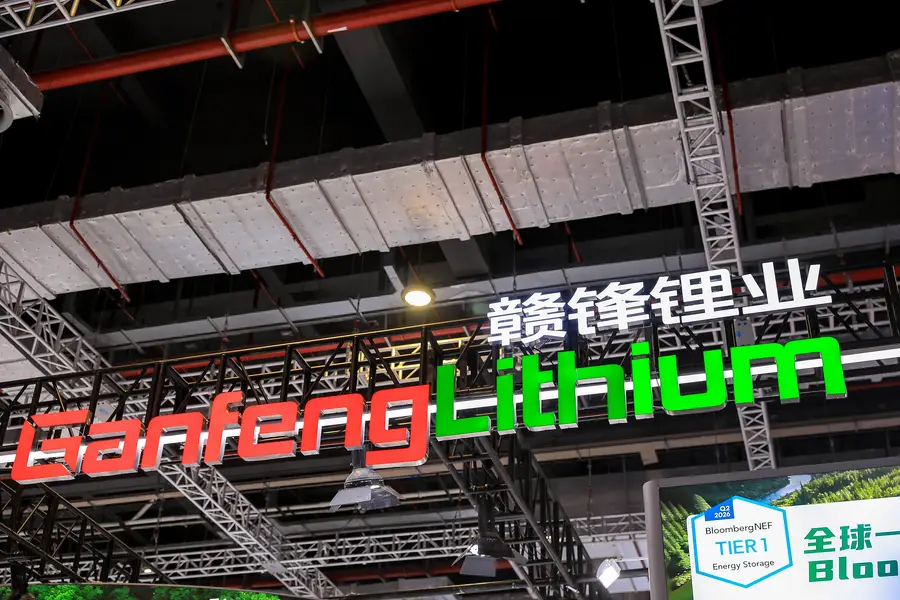
After a rough period of nearly three years, the lithium market has finally rebounded this year, driving a rapid recovery for miners like Ganfeng Lithium Group Co. Ltd. (1772.HK; 002460.SZ). This industry leader, whose business spans lithium mining, lithium salts, and battery production, is once again at the forefront of a nascent recovery for its cyclical sector.
Ganfeng said last week it returned to the black in the first half of 2026 with a profit of 3.65 billion yuan ($539 million) to 4.6 billion yuan, reversing a net loss of 531 million yuan a year earlier. Excluding non-recurring items, the first-half profit ranged between 3 billion yuan and 4.2 billion yuan, compared to a year-ago loss of 913 million yuan.
It’s worth noting that Ganfeng’s return to the black extended from the first into the second quarter of this year. The company, whose lithium products are a key component in new energy batteries, previously reported its revenue rose by 143.8% year-over-year in the first quarter to 9.2 billion yuan, while its profit totaled 1.84 billion yuan, or 1.42 billion yuan excluding non-recurring items.
Based on calculations using those figures, the company earned a profit of 1.81 billion yuan to 2.76 billion yuan in the second quarter. Ganfeng’s first-half profit is already more than double 1.61 billion yuan profit it recorded for all of 2025, reflecting improvements to its financial health with rebounding lithium prices and higher utilization rates.
The latest profits also include income from asset disposals, as the company sold a portion of its shares in PLS Group during the period, and recorded an increase in investment income from associates and joint ventures. But price hikes for lithium salts, alongside Ganfeng’s ramp-up in output, alongside higher battery production and sales, were the main pillars of this year’s turnaround.
Price rebound
Oversupply in 2024 and 2025 caused lithium prices to hover at low levels for a prolonged period, forcing a large number of higher-cost mines to halt production or delay development. Other factors also affected the industry, including a suspension of production at some of Ganfeng’s lithium mines in Jiangxi province in the middle of last year, and Zimbabwe’s tightening of lithium raw material exports at the beginning of this year.
The resulting decline in inventory, combined with growing demand for data center-based energy storage products created by the rise of AI, have helped to further support lithium prices. As of early June, lithium hydroxide contracts on the CME were up 86% over the last year, returning above the $20,000-per-metric-ton mark for the first time since the end of 2023.
That said, lithium prices have recently pulled back from recent highs. As of July 16, the spot price of battery-grade lithium carbonate in China was about 151,000 yuan per metric ton, down about 10.9% over the past month, although still significantly higher than lows from the middle of last year. Rising expectations for resumption of production in the Jiangxi mining areas, combined with growing expectation for the restart of suspended projects in regions such as Australia, are once again raising concerns that growing supply may outpace demand.
During the latest downturn, the nature of lithium demand has also changed. Electric vehicles (EV) still account for roughly 70% of demand for lithium batteries, but global EV sales only grew by 0.9% in the first five months of this year, while China’s sales actually fell by 15%. Grid-scale energy storage has rapidly picked up the slack, with global installations up by more than 20 times over the last five years to account for about 15% of battery demand last year. The storage industry’s use of lithium iron phosphate (LFP) technology has created a strong second demand curve for the metal, making lithium’s recovery prospects stronger than for other battery metals such as cobalt and nickel.
Ramping up self-owned mines
For Ganfeng, rising lithium prices are only half of its profitability equation. The other half stems from its self-owned resources. The company’s latest profit forecast points out the ongoing addition of new capacity from its lithium projects is an important factor driving its improving cost structure. Phase one of its Goulamina project in Mali is expected to add 506,000 metric tons of lithium concentrate in annual capacity, after already producing 336,600 metric tons last year. Its Cauchari-Olaroz salt lake project in Argentina produced 34,100 metric tons of lithium carbonate last year, with a target of 35,000 metric tons to 40,000 metric tons this year. And the first phase of its Mariana salt lake project in Argentina has also begun production, with annual capacity of 20,000 metric tons of lithium chloride.
Smooth development of those projects will further lessen Ganfeng’s reliance on externally purchased lithium ore, which could magnify profits during periods of high prices. And even when prices pull back, self-ownership of its lithium supplies could provide a better buffer. As it produces more of its own lithium and prices recovered, the company’s overall gross profit margin last year rose more than 4 percentage points to 15.8% from 11.4%. That figure surged to about 29.7% in the first quarter, based on calculations using revenue and operating costs from the first quarter of this year.
Ganfeng’s shares have largely moved in sync with lithium prices lately. When expectations for tighter supplies heated up, the company’s Hong Kong-listed shares rose swiftly in May to a 52-week high of HK$91.20 on May 8. But the shares nosedived after that as lithium carbonate prices pulled back, closing at HK$39.84 on July 16, down by more than half from their peak. The stock also fell 4.5% over the two days after its earnings forecast last week.
The analyst community is generally positive on the company, with Soochow Securities maintaining a “buy” rating on its estimates that lithium carbonate prices will range between 150,000 yuan and 180,000 yuan per metric ton this year. But that may be overly optimistic, given the most active lithium carbonate contract had already sunk below that level, to about 147,000 yuan per metric ton, on July 16.
The recent plunge in Ganfeng’s share price seems to indicate that market focus has shifted from the company’s individual performance to the broader outlook for lithium prices. If those prices continue to fall, pressures from inventory, liabilities and overseas investments could continue to haunt the company’s stock in the months ahead.
To subscribe to Bamboo Works weekly free newsletter, click here
Related Articles
RELATED ARTICLES