Qingling switches gears with leasing deals to boost NEV sales
The loss-making Chinese truck maker is partnering with a finance provider and a dealership to offer vehicle installment plans, but the strategy comes with a catch
Key Takeaways:
- Under the leasing terms, Qingling Motors is obliged to buy back vehicles if the repayments fall into arrears
- Rising orders for new energy vehicles have yet to drive an earnings turnaround at the automaker, whose shares have fallen nearly 50% this year
By Lee Shih Ta
Back in the day, getting paid for a vehicle fresh off the production line marked the end of a transaction for an automaker. But China’s truck market is navigating towards new business models.
As competition intensifies, financial leasing options are becoming more widespread to help customers spread the considerable cost of buying eco-friendly commercial trucks, and manufacturers are also staying involved in after-sales services.
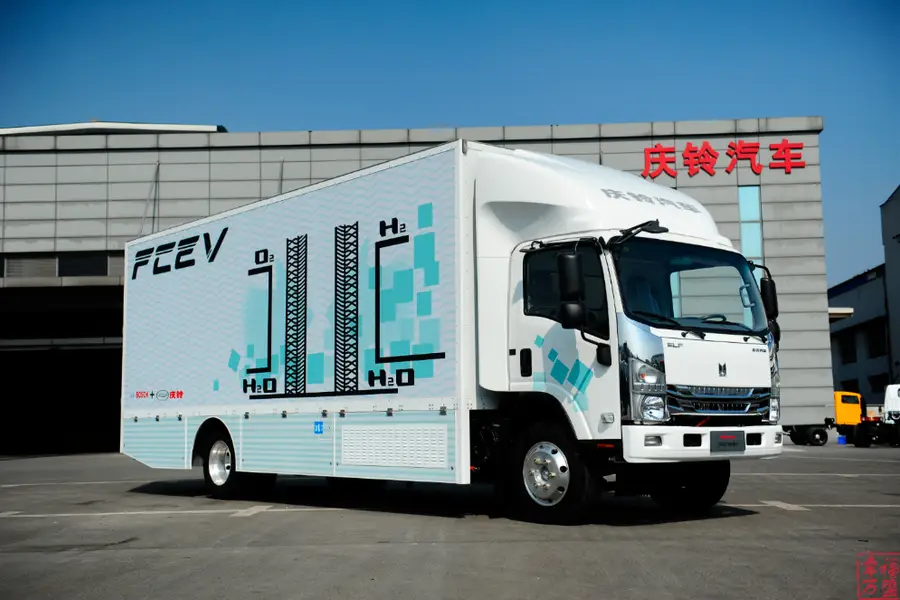
Qingling Motors Co. Ltd (1122.HK) is one of the truck makers exploring new approaches. It launched financial leasing last year and has just entered a new deal covering 30 new energy vehicles (NEVs) that would require it to buy back any of the trucks whose payment installments slip into arrears.
The Chongqing-based business began in 1985 as a joint venture with Japan’s Isuzu Motors Ltd. (7202.T) before being reorganized and listed in Hong Kong in 1994. Drawing on Isuzu’s technology and brand, Qingling entered China’s mid- to high-end commercial market, with products spanning light to heavy-duty haulage vehicles, pickup trucks, parts and accessories.
Qingling is now accelerating a shift toward NEVs, with sales rising 94% to 10,001 units in 2025. However, its total vehicle sales edged up just 0.14% to 33,226 units, suggesting the cleaner energy segment has yet to ignite overall growth. Commercial vehicles in this category cost more to buy, and sales volumes remain limited, although rising from a low base.
The leasing option introduced last year helps spread the cost. Financial institutions purchase the vehicles and lease them on to customers or dealers. Qingling receives full payment upfront, while the lease holders pay rental costs and interest in installments. Once the lease ends and all outstanding amounts are settled, lessees can acquire the vehicles for 1 yuan each.
But upfront cash does not mean the automaker is off the hook, as illustrated by Qingling’s latest leasing contract. On Oct. 5, the automaker entered an agreement with parties including Haitong Unitrust (1905.HK) and a logistics dealer that covered 30 new energy vehicles with a maximum aggregate repurchase price of approximately 12.64 million yuan ($1.89 million).
Under the terms, Haitong Unitrust funds the vehicle purchase, and the lessee pays in installments. If the lessee defaults, triggering the repurchase conditions, Qingling must pay an agreed price to take over the vehicles and associated debt rights. The arrangement lets the company collect full payment upfront while carrying some of the risks associated with leasing.
Qingling is extending its business beyond sales into leasing and ongoing services. Its controlling shareholder, Qingling Motors (Group) Co. Ltd, disclosed in March that it had established a leasing, sales and maintenance center for NEVs.
Other truck makers are taking a similar route. BAIC Foton Motor (600166.SH) offers leasing for commercial NEVs, with support services including charging, maintenance and financing. Jiangling Motors (000550.SZ) is also strengthening its NEV operations, expanding into used vehicles and battery-swapping light trucks.
Leasing reduces the initial outlay for logistics customers, and the accompanying services can help boost fleet efficiency, while automakers get the benefit of ongoing revenue. But if returns fail to cover operating costs and any losses from defaults, the new model could become an added burden.
Underlying risks
Qingling’s new approach has boosted orders, but earnings have yet to improve. In the first half of 2026, orders rose 72.3% from the year-earlier period, driven by financing services, dealer consolidation and operating vehicles on customers’ behalf. Yet total vehicle sales fell 2.4%, while revenue sank 15.77% to 1.75 billion yuan and the bottom-line loss widened to 90.89 million yuan. The company blamed the slippage on weaker overseas demand for commercial vehicles.
Converting orders into deliveries and profits remains a challenge, and leased vehicles could turn into a liability. Under the repurchase arrangement, if the dealer and co-debtor fail to deliver two straight payments on time and in full, the financial institution can require Qingling to make a lump-sum repayment. This covers the overdue rental fee, the principal portion of outstanding rent and the residual purchase price.
Qingling must pay up to obtain full ownership of the vehicles, the receivables and associated rights, allowing it to pursue outstanding payments or dispose of the trucks. But the repurchase price is based on the unsettled debt, regardless of vehicle condition or market value. Each vehicle in this batch costs 421,200 yuan, with a security deposit of just 10,000 yuan. If disposal proceeds fall short and the debtor cannot make up the difference, the company could still incur a loss.
A framework for handling repossessed vehicles is therefore a critical success factor for the business model. Qingling has outlined plans to expand into the business of re-leasing, reconditioning and selling used vehicles. Selling could recover funds more quickly but exposes the company to fluctuating prices on the second-hand market. Re-leasing would generate ongoing income but carries the costs of getting the vehicles ready for the road again and assessing the new lessee’s ability to pay. The speed of that process will determine cash recovery and ultimate returns.
Qingling’s shares closed unchanged at HK$0.465 the day after the announcement, but are down 49.5% so far this year, a much deeper drop than the roughly 4% and 11% declines in Foton and Jiangling shares through the end of September. Unlike Qingling, both those automakers were profitable in the first half. Financial leasing may have opened another sales channel for Qingling, but the firm will need to turn orders into profits while controlling repurchase risk if it wants to regain investor confidence.
To subscribe to Bamboo Works weekly free newsletter, click here
Related Articles
RELATED ARTICLES
-
Qingtao Energy reaches solid-state battery milestone, but model remains unproven
-
CiDi drives beyond China with new British partnership
3881.HK
-
Its stock slumping, Breton looks for life under mountain of debt
1333.HK
- Zeekr’s August sales double to record as China’s NEV penetration tops 65%
-
Its revenue surging, can co-built fleets help Pony AI drive to profits?
2026.HKPONY.US
- Avatr parks its NEV listing in Hong Kong, complete with losses and state ownership
- China’s NEV slowdown, and a dating app rejects AI