Tuhu Car drives out of China garage with Australian acquisition
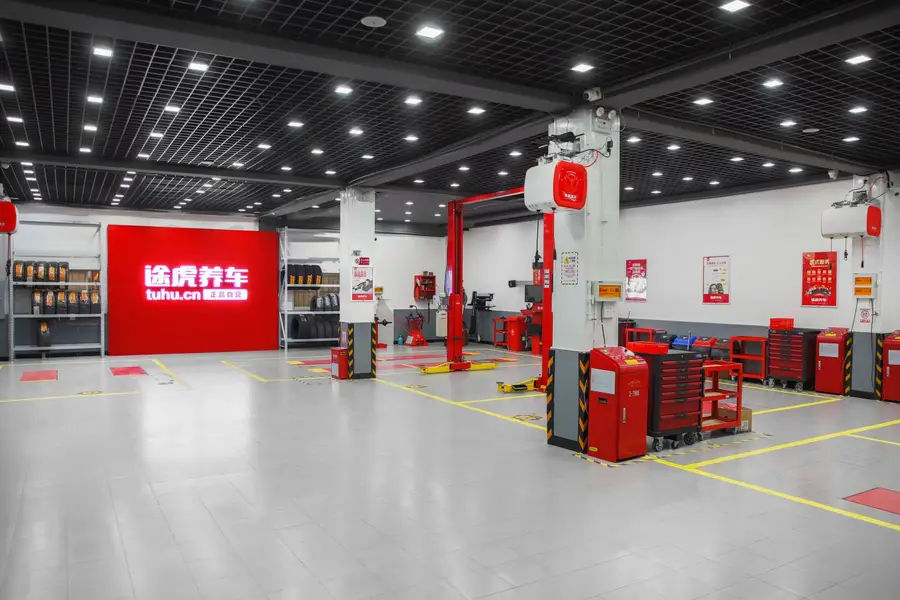
The world’s largest independent auto aftermarket services chain will pay nearly $200 million for an Australian peer, as it seeks to diversify beyond its anemic home market
Key Takeaways:
- Tuhu will gain 279 stores and $367 million in annual revenue with its planned purchase of Australia’s MyCar Tyre & Auto
- The move will help Tuhu diversify beyond China’s sputtering and ultra-competitive auto market, where its profit dropped 40% in the first half of this year
By Edith Terry
When Chen Min launched his online-to-offline business selling tires in 2011, he quickly discovered that couriers wouldn’t ship his products locally due to their heavy weight. So the former Hewlett-Packard software engineer took matters into his own hands, buying his own van to deliver tires to auto repair workshops around Shanghai himself.
Fast forward 15 years, when his business, Tuhu Car Inc. (9690.HK), has evolved into the world’s largest independent chain for aftermarket auto services, with 8,825 Tuhu Workshops in its network at the end of June. Nearly all of those are franchisees, supplied by the company’s 31 regional distribution centers across China and 738 local centers that can quickly supply auto parts to individual workshops.
His company thrived for years on a Chinese auto market that became the world’s largest, with an estimated 469 million vehicles on the road in 2025 as potential customers. But that math has also attracted new entrants, leading to price wars between Tuhu and others like JD Auto Care, backed by e-commerce giant JD.com, offering rock-bottom prices like 99 yuan packages for basic services.
Making matters worse, growth in China’s auto market has evaporated in recent years as the nation’s economy slows. As that happens, increasingly value-conscious consumers are looking for better deals for car repair and maintenance, or even putting off such work outright.
Faced with that reality, Chen began looking abroad by opening his first Tuhu auto repair shops in Hong Kong and Malaysia starting in 2024, building up a small network of 21 workshops in those two markets so far.
But he has suddenly stepped on the global accelerator, with Tuhu’s announcement last week of its plan to acquire Australian peer MyCar Tyre & Auto from German tire maker Continental AG for a payment of A$278 million ($194 million), which is based on the company’s enterprise value of A$403 million plus adjustments for net debt and working capital. Tuhu said it has secured 1 billion yuan ($149 million) in acquisition financing from its banks, with other funding coming from internal resources.
The enterprise value is approximately 25.5 times MyCar’s pre-tax profit of A$15.8 million last year, and the deal is still awaiting approval by Australian regulators.
Smaller market, older cars
Government data shows Australia had just 22.3 million registered vehicles on the road in January 2025 – a tiny fraction of China’s total – and the market is roughly flat in terms of sales growth. But the average age of vehicles is 11.54 years, making the country fertile ground for aftermarket services and maintenance.
Australia’s market for such services was worth $8.3 billion in 2025 and is growing at 5.3% annually, according to GMI Research. Tuhu should also find some synergies from its core China business as a growing number of Chinese brands like BYD and Great Wall enter the market. As China revs up its motor vehicle exports, Chinese cars accounted for 35.5% of new car sales in Australia in June alone. And as the first Chinese-owned repair chain in the market, Tuhu could be well placed to capitalize on that trend.
MyCar’s network of 279 stores last year made it a major player in a market still dominated by German and Japanese car brands. Unlike Tuhu’s franchise business model, MyCar’s workshops are self-operated. The chain also has its own apprenticeship training system with about 200 trained technicians.
MyCar’s revenue of A$524.6 million last year is about one-seventh Tuhu’s 16.46 billion yuan for the year, and would have boosted Tuhu’s figure by 15% to about $2.8 billion if the two were combined.
Investors gave the deal a strong thumbs up, with Tuhu’s shares rising 11.3% the day after the announcement last week. With a price to earnings (P/E) ratio of about 32, Tuhu’s stock may seem pricey at current levels, though using its adjusted profit gives it a lower ratio of 15. By comparison, U.S. giant AutoZone (AZO.US) trades at a ratio of 20, while O’Reilley Automotive (ORLY.US) trades at 27. And despite Tuhu’s rich valuation, 10 out of 12 analysts surveyed by Yahoo Finance still rate the stock a “buy” or “strong buy.”
Stalling home market
Tuhu has good reason to be looking abroad for growth, as its China business shows signs of stalling, especially on its bottom line. The company’s revenue grew by 11% year-over-year to 8.8 billion yuan in the first half of 2026, which looks relatively respectable given the bad state of China’s car market. But its gross margin fell by nearly 2 percentage points to 23.3% in the latest six-month period from 25.2% a year earlier, while its net profit fell by an even steeper 40% to 184 million yuan.
The company’s transacting users, a key metric, rose 17.2% to 31 million in the first half of 2026 from 26.5 million a year earlier, while registered users of its apps rose by a similar 16.4% to 175 million.
The numbers show that Tuhu’s user base is still expanding, along with its store network, which grew by 22.5% year-on-year with the addition of 817 new workshops in the first six months of the year. That expansion rate was double the company’s revenue growth for the period, showing how competition was pushing down average transaction values. Tuhu did not present specifics regarding average transaction values, but the element was cited as a major factor affecting its business in its 2025 annual report “as more customers opted for cost-effective products.”
While Tuhu might not want to be specific about price competition, Chinese social media is awash in tips about how to avoid ripoffs by independent auto repair and maintenance vendors offering prices 40% to 60% lower than similar direct services from major auto brands. Tuhu’s franchise-based business model also opens it up to complaints about service problems and inconsistency, since it has less control over those outlets’ day-to-day operations.
Car owners have complained that after ordering products online, they were pushed to buy more expensive products at Tuhu’s workshops by technicians claiming the original products were out of stock. Such issues should be less problematic at the company’s new Australian operation, since those stores are all directly operated by MyCar.
Australia isn’t the only global marketplace where Tuhu is looking for opportunities. The company also disclosed in late June that it made a confidential filing for a U.S. IPO, which would complement its existing Hong Kong listing. That suggests that Chen Min is looking for funding channels beyond Hong Kong, possibly for additional acquisitions to take it further beyond its original China market.
To subscribe to Bamboo Works weekly free newsletter, click here
Related Articles

RELATED ARTICLES
-
Autohome skids as China’s car market slams on the brakes
 ATHM.US2518.HK
 - Uxin drives deeper into the red as used car prices tumble
- Yusheng IPO tests bumpy road for China’s used car market
- New SORL’s IPO plows into winter for China auto stocks
-
Chery tiptoes into Japan with EV ‘kei’ microcar joint venture
9973.HK
-
Wall Street renaissance for China stocks? DSC listing offers mixed picture
DSC.US