Fortior navigates choppy geopolitical waters with Dutch chip acquisition
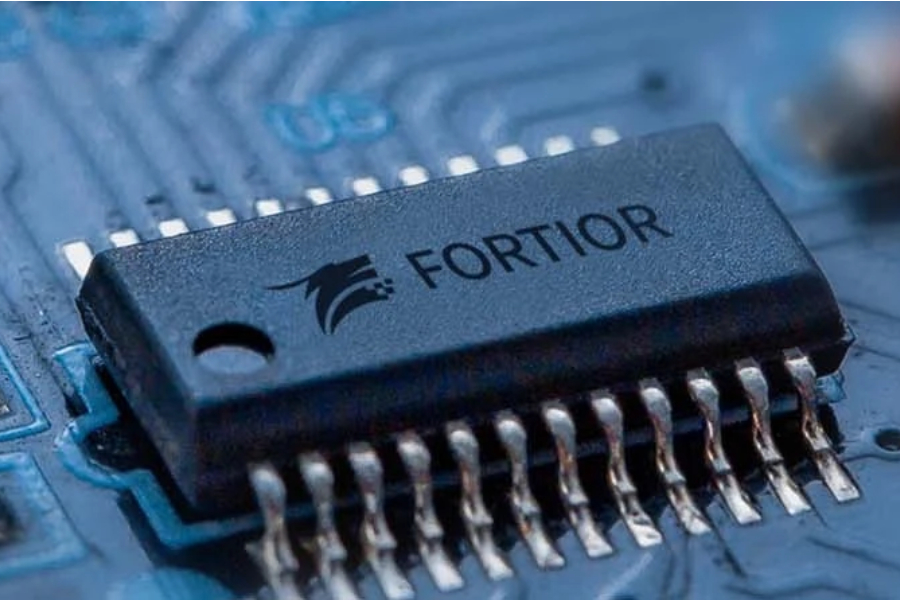
China’s leading maker of brushless DC motor chips has announced a plan to buy Sciosense, a Chinese-Dutch joint venture, for $118 million
Key Takeaways:
- Fortior plans to acquire Sciosense, a fabless designer of sensor chips whose customers include Mercedes, BMW and Tesla
- Sciosense is a Sino-Dutch joint venture set up in 2019, at a time when Chinese investors were buying European high-tech assets at bargain prices
By Edith Terry
A Sept. 30 announcement saying Fortior Technology (Shenzhen) Co. Ltd.’s (1304.HK; 688279.SS) planned to buy Sciosense, a Dutch designer of environmental and ultrasonic flow sensors, was low-key, coming the day before China’s weeklong National Day holiday.
In an earlier time, Fortior, a maker of motor drive and control integrated circuits (ICs), might have chosen to announce the $100 million-plus deal with more fanfare, flexing its technical and financial muscle for all to see. But those days have disappeared lately, replaced by a tense geopolitical climate that has brought major high-tech M&A between China and the West to a near halt.
That said, the acquisition looks like a good fit for Fortior, giving it a smart component foothold in the brushless DC motor control industry chain. As a Dutch firm, the deal also would give Fortior access to Sciosense’s European client base.
Perhaps that’s why investors gave the plan a guarded thumbs-up, with Fortior’s stock ticking up by 5.4% over the five trading days since the announcement.
The deal has a transaction value of up to $118 million, including a fixed $60.8 million payment and a variable, performance-based amount of up to $35 million. As part of the deal, Fortior would also assume $22.2 million of Sciosense’s debt.
Sciosense is a joint venture whose 51% owner is a limited partnership controlled by Beijing Wise Road Asset Management, a chip-focused Chinese private equity company. The other 49% is owned by Austria’s ams-OSRAM (AMS.SW), a maker of intelligent sensors.
From a portfolio perspective, the purchase is a good match. Fortior gains access to Sciosense’s sensor technology and global base of customers, which includes the likes of Mercedes-Benz, BMW and Tesla. Meanwhile, Sciosense gains access to Fortior’s deep financial resources, as well as its customer base in China.
Global diversification
Fortior derived more than 90% of its revenue from China last year, earning 717.7 billion yuan ($107 billion) in its home market out of a total of 773.9 billion yuan. Fortior is also quite new to the sensors that are Sciosense’s specialty, only deriving its first revenue from that category in the first half of this year.
The deal could also help to address Sciosense’s high cost structure, which has weighed on the Dutch company’s profits. In its announcement, Fortior said Sciosense has relied on a high-cost European contract manufacturing ecosystem to make its chips, as well as high local labor costs, that ultimately slow down its pace of product development and weigh on its profits.
Fortior has plenty of cash to pay for the deal, after raising HK$2.47 billion ($314 million) last year in its Hong Kong IPO. It still had HK$740 million of that left for strategic investments and acquisitions at the end of last year. The company’s main IC business is also humming along nicely, with revenue up 50% year-on-year to 561 million yuan ($83.7 million) and profit rising 71% to 199 million yuan in the first half of this year.
Fortior sits in a pivotal, below-the-hood part of the global market for motors, making brushless DC drive chips that generate electromagnetic spin used in applications ranging from home appliances to electric vehicles, aerial drones and intelligent robots.
Fortior held 4.8% of a Chinese brushless DC drive chip market that was valued at 9.6 billion yuan in 2024 and growing at an annual rate over 20%. The global market for those chips was worth more than three times that amount at 30.7 billion yuan, showing Fortior’s potential for international growth with the new acquisition. Fortior is also distinguished as the only Chinese company among the top 10 vendors in its category, which included global giants like Texas Instruments (TXN.US), Infineon (IFX.DE) and STMicroelectronics (STM.US), according to its IPO prospectus.
Sensor boost
Sciosense’s revenue of 16.5 million euros ($18.5 million) in the first half of this year will add substantially to Fortior’s own new sensor segment, which contributed a nominal 6,000 yuan in revenue in the first half of this year. That said, Sciosense’s loss of 1 million euros in the first half of 2026, extending a 3 million euro loss the previous year, is less positive.
While few business leaders are likely to object to the deal, the same may not be true among politicians in the current climate of tense China-EU relations. European leaders have been warning that the bloc’s tech sector could soon face a “China Shock 2.0” as Chinese firms shift into more high-tech manufacturing. The EU also wants to reduce its large trade deficit with China, which reached a record 360 billion euros last year, and screen Chinese foreign direct investment (FDI) more carefully to protect strategic industries.
Reflecting its concerns, new restrictions on Chinese investment into Europe’s tech sector have been under discussion since last December, and could be on the agenda during a Beijing visit this week by a delegation led by EU trade commissioner Maros Sefcovic.
The EU does not have a central organization screening local acquisitions by foreign firms, and each of its 27 member countries has its own regulatory framework for FDI.
Even so, the Netherlands is a prime example of an EU member that has come under heavy pressure from Washington regarding Chinese activities in the country. Washington has leaned on the country to stop ASML from selling its most advanced chip-making equipment to China, and last year applied similar pressure for leadership change at chipmaker Nexperia, which is based in the Netherlands but owned by a Chinese company.
In a July report, the Hague Center for Strategic Studies rated the Dutch semiconductor industry as being “at very high risk of Chinese foreign interference.” It called for stricter vetting of personnel at sensitive chip sites and a public-private fund to replace “high-risk” foreign hardware, presumably referring to hardware made in China.
Sciosense was founded before the recent tensions, with the Chinese side supplying capital and the European partner providing technology. Its establishment came at the end of a decade described by the London-based Center for European Reform (CER) as “a European garage sale of high-tech firms to China, enabling Chinese investors to acquire intellectual property, know-how and supply-chain leverage” at bargain prices.
According to CER, China’s state banks and official creditors channeled around 138 billion euros into the EU between 2000 and 2023, mainly into critical infrastructure, minerals and high-tech. Acquisitions included Silex, Okmetic, LFoundry and Nexperia. The EU began clamping down after Russia’s invasion of Ukraine in 2022, particularly on M&A.
To subscribe to Bamboo Works weekly free newsletter, click here
Related Articles
RELATED ARTICLES
-
ESWIN Computing powers up its RISC-V growth story for Hong Kong investors

-
Volume chipmaker ASR looks to climb up the value chain
688220.SHG
- E-paper maker rewrites growth story using its chip stockpile
- CXMT IPO tests China’s state-driven chip dream
-
Geopolitical tightropes: What Tesla and TAL reveal about a new era of U.S.-China business
TSLA.US
-
RLX casts smoke screen with new European acquisition, overseas revenue blip
RLX.US
- XTX Technology rides surging memory prices to Hong Kong IPO