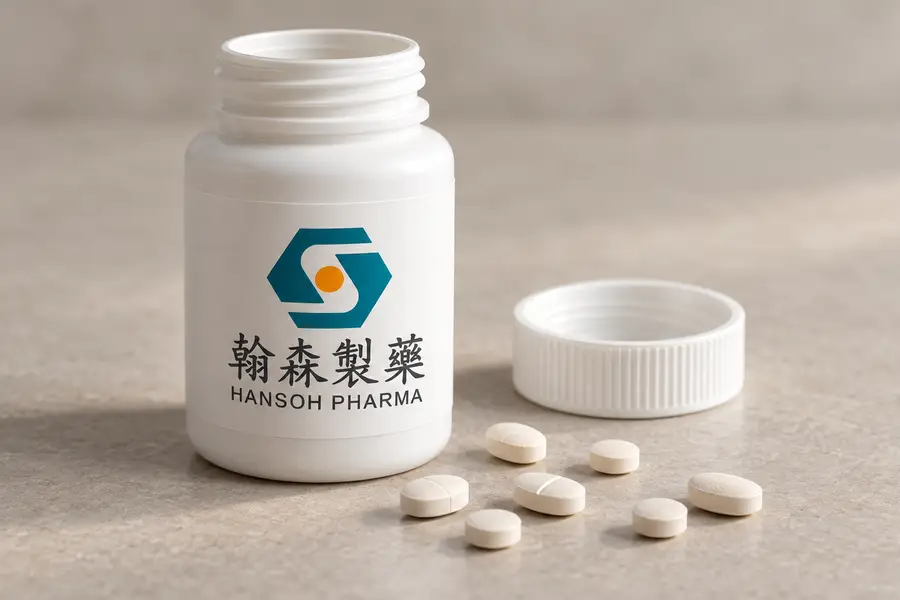
The Chinese firm has lost its regulatory approval to sell a lung cancer drug in Europe over a data-protection error, and must reset the clock on the launch process
Key Takeaways:
- Hansoh Pharma’s marketing permission was revoked after its application was found to include data-protected references to a rival AstraZeneca drug
- Despite the setback, Hansoh’s valuation is supported by rising domestic revenue from innovative drugs, out-licensing deals and new weight-loss treatments
By Molly Wen
Just seven months after a Chinese-developed cancer drug was cleared for sale in Europe, the regulatory approval has been abruptly revoked, throwing the launch timetable into question.
The drug, designed to block the EGFR protein that helps cancer cells proliferate, was the first Chinese product of its kind to get the green light from the European Union’s medical regulators.
But Hansoh Pharmaceutical Group Company Limited (3692.HK), which developed the drug, announced on Sept. 27 that the European Commission’s health and food safety body had revoked the marketing authorization, citing an issue with comparative data in the application.
Although the clinical results for the Chinese medication itself were not in dispute, the drugmaker must restart the entire application process, leaving an uncertain timeframe for sales to get underway in Europe.
The drug in question, aumolertinib, is an EGFR tyrosine kinase inhibitor (EGFR-TKI) marketed under the brand name Aumseqa. Already on sale in China, it is used to treat lung cancer in patients with mutations in the epidermal growth factor gene that regulates cell growth.
Drug withdrawals are typically driven by clinical failures or safety risks. But in this case the lost approval stems from a lawsuit AstraZeneca brought against the European Commission over background references to its own EGFR drug, Tagrisso, in the Chinese marketing application. AstraZeneca argued that Hansoh’s 2022 filing cited clinical results for Tagrisso that were still protected under EU rules. The two drugs are both third-generation EGFR-TKIs, competing in the same market.
In its statement, Hansoh described the setback as a procedural issue unrelated to the quality, safety, efficacy or clinical value of the product. The drugmaker said it had supplied complete and independently generated Phase Three clinical data and European pharmacokinetic bridging data, only including Tagrisso results for context. However, at the time the AstraZeneca findings were still subject to data protection that would not expire until 2024.
Hansoh vowed to submit a new marketing application relying on its own clinical data, saying the European Medicines Agency had indicated a willingness to shorten the standard review timeline. But the likely duration of the process remains unclear. An existing marketing authorization for the United Kingdom remains unaffected, but as yet there have been no sales of the drug outside of China.
In its home market, aumolertinib is a major contender among targeted therapies for EGFR-mutated non-small cell lung cancer. First approved in China 2020, the drug has steadily expanded its range of approved uses to include several stages of treatment and in combination with chemo- or radiotherapy.
As its therapeutic applications grew and were folded into China’s medical insurance program, aumolertinib increased its sales from more than 2 billion yuan in 2022 to 5.53 billion yuan ($825 million) in 2025, becoming the best-selling domestically developed innovative drug that year. Tagrisso’s sales remained at around 4 billion yuan over the same period.
Steady earnings growth
For now, the EU delay has had limited earnings impact, aside from the deferred opportunity to begin overseas sales. Founded in 1995, Hansoh derives most of its earnings from China. In the first half of 2026, revenue rose 11.7% to 8.30 billion yuan while profit increased 35.8% to 4.26 billion yuan. Revenue from innovative drugs grew 15.4% to 7.09 billion yuan, accounting for 85.4% of total turnover. Oncology revenue reached 5.47 billion yuan, or about 65.9% of the total, with aumolertinib among the segment’s core products.
Beyond aumolertinib, several of Hansoh’s late-stage drug candidates are nearing market entry. Another treatment for lung cancer, risvutatug rezetecan (HS-20093), is making rapid progress, with Chinese medical regulators accepting its marketing application for priority review. The drug is a targeted B7-H3 antibody-drug conjugate (ADC) for treating small cell lung cancer, binding to a protein on the surface of tumor cells. Meanwhile, a Phase Three trial of a drug for aggressive bone cancer, HS-20093, has also met its primary endpoint, and the corresponding marketing application was accepted on Sept. 24. Exclusive rights to develop, manufacture and commercialize that drug outside mainland China, Hong Kong, Macao and Taiwan were granted to GSK in 2023.
Metabolic treatments are becoming another important product line for Hansoh. Its internally developed dual GLP-1/GIP receptor agonist, olatorepatide, achieved mean weight loss of up to 19.3% at 48 weeks in a Phase Three trial involving overweight or obese Chinese adults. Its marketing application for weight management was accepted in June this year. In July, Hansoh also licensed overseas rights to an oral anti-inflammatory drug candidate, HS-20118, to Avere, securing $120 million upfront, up to $2.18 billion in milestone payments, and royalties on future sales.
As more of its innovative drugs move into the commercial arena, Hansoh is already commanding a valuation premium, trading at a price-to-earnings ratio of about 27, with a market capitalization exceeding HK$200 billion. Sino Biopharmaceutical Ltd. (1177.HK), which also focuses on innovative drugs, trades above that with a multiple of around 37 times. The EU setback does not affect immediate earnings, but investors will want to see how quickly the process can be restarted and wrapped up. Hansoh will need to demonstrate it can move beyond out-licensing deals to launch independent products in established European and U.S. markets.
To subscribe to Bamboo Works weekly free newsletter, click here
Related Articles
RELATED ARTICLES
-
Cancer drug sales power up Kelun-Biotech’s profit engine
 6990.HK
 -
Drug setback leaves Ascletis with an all-in bet on weight loss
1672.HK
- Insilico revenue soars above $100 million on AI drug partnerships
-
TransThera completes late-stage trial enrollment for Tinengotinib cancer drug
2617.HK
-
Biokin’s world-first bispecific ADC hits milestones, speeding commercialization
688506.SHG
-
Salubris refiles for Hong Kong IPO as generics lose steam
002294.SHE
- Mega licensing deal lifts 3SBio profits but core sales slip