Just 14 months after its market debut, the drug developer is under investigation over regulatory concerns that its IPO demand was artificially inflated
Key Takeaways:
- Cloudbreak’s IPO drew strong retail demand but weak institutional interest, and the shares have since dropped sharply below their issue price
- A clause in an earlier capital-raising gave shareholders the right to retrieve their investment with interest if the company did not go on to deliver an IPO
By Molly Wen
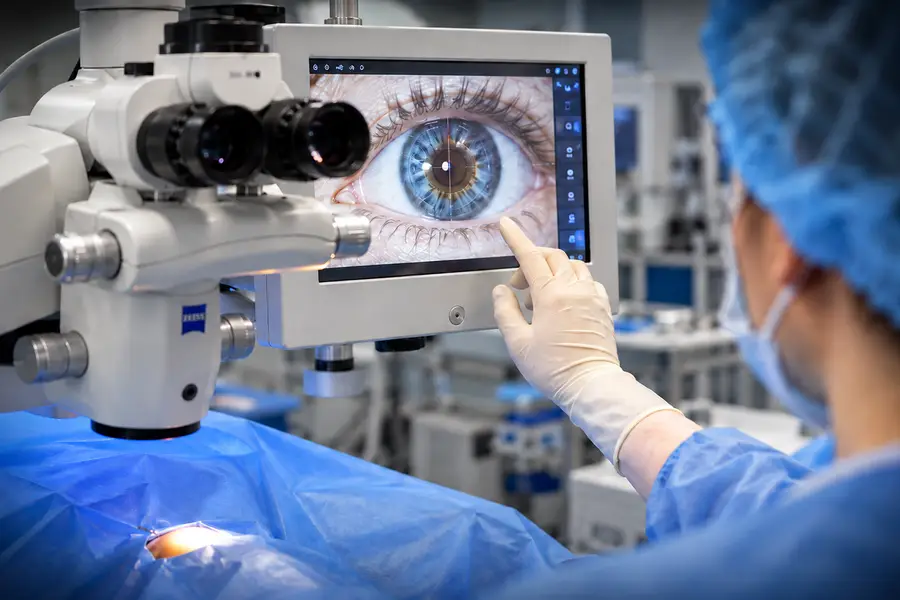
Hong Kong’s securities regulator has halted trading in eye-drug developer Cloudbreak Pharma Inc. (2592.HK), citing what it described as serious concerns over suspected IPO rigging.
Just over a year after the biotech made its market debut, the Securities and Futures Commission (SFC) announced on Sept. 10 it had launched a probe into whether the offering was manipulated to give an inflated impression of share demand.
In its brief statement, the regulator said it acted to protect the investing public and would not provide further information while the investigation was ongoing. Cloudbreak has not publicly responded to the share suspension and the concerns about the IPO.
The clinical-stage biotech, which focuses on developing ophthalmic drugs, listed under Chapter 18A of the Hong Kong Stock Exchange rules in July last year, with CCB International and Huatai International as joint sponsors. With its shares priced at HK$10.10, the company raised about HK$525 million in net proceeds from the global offering.
The response to the IPO was split along retail and institutional lines. The Hong Kong portion aimed at retail investors was 78.78 times subscribed, while the international offering targeting mainly institutional and professional investors fell short of full take-up at just 0.89 times. Cloudbreak later redirected some shares that had been earmarked for the international segment, raising the Hong Kong proportion from 10% to 20% of the offering, without triggering a standard clawback mechanism for reallocation.
The move itself was consistent with listing arrangements, but it did not tally with standard market logic. Institutional investors typically have access to more comprehensive due diligence and tend to deploy larger amounts of capital. The subscription results in this case showed a clear divergence of views about the merits of investing in the company.
Cloudbreak’s shares performed poorly from the outset. The stock closed nearly 39% below the offer price at HK$6.20 on the first day of trading. Although the stock rebounded at one point, it never managed to match the IPO price. By Sept. 9, before trading was halted, the stock had fallen to just HK$1.19, 88% below the issue price, shrinking the firm’s market value to about HK$1.1 billion.
As a loss-making company with treatments still at the clinical stage, Cloudbreak relies on continued external funding. The drug developer logged no revenue for the first half of 2026, while R&D expenses reached about $31.85 million, leaving the firm with a loss of $47.95 million. A profit of $5.19 million for the same period of 2025 was mainly due to fair-value changes in convertible preferred shares.
Its most advanced drug candidate is an eye-drop solution to treat pterygium, a growth on the eyeball. This treatment, CBT-001, is currently undergoing global Phase Three trials. The company was also seeking permission for a Phase Three Chinese trial of a drug for myopia, CBT-009, but withdrew the application this year.
Pressure to list
Cloudbreak made repeated attempts to secure a listing before achieving its goal last year. Four applications were filed with the Hong Kong exchange between November 2023 and June 2025, with the first three submissions lapsing.
The eagerness was not just driven by financing needs. A redemption clause in an earlier capital-raising likely acted as an added impetus.
Under the terms of a Series C financing round, holders of preferred shares had the right to redeem their investment with 10% annual interest if the company failed to deliver a listing by Dec. 31, 2022. The agreement stipulated that the rights would be suspended once a listing application was filed but would be reinstated if the IPO process was not successfully completed. In other words, persistence in seeking an IPO had the practical benefit of easing potential redemption pressure, as well as offering a route to fresh funding.
After the IPO, Cloudbreak used its listed status to seek new capital. It entered into an agreement in June with the financial services firm ARC Group under which it can issue up to $15 million, or about HK$117 million, in new share tranches for subscription by ARC. Cloudbreak said the proceeds would mainly be used for drug R&D, repayment of bank loans and working capital. However, as of Aug. 31, when half-year results were announced, this financing channel had yet to be tapped.
By end-June Cloudbreak had about $32.75 million in cash and cash equivalents, falling from $40.15 million in the middle of 2025. Over the same period, bank borrowings rose from about $440,000 to $6 million. Sustained losses are not unusual for a company taking the Chapter 18A route to a listing for pre-profit biotechs. The real question is whether its existing cash can support R&D through the next milestone, and whether the company can keep raising funds from the capital markets.
If the regulatory scrutiny constrains the scope for further financing, Cloudbreak could face bigger challenges than a falling share price.
To subscribe to Bamboo Works weekly free newsletter, click here
Related Articles
RELATED ARTICLES
-
Cold-chain provider Shanghai Shengsheng joins pharma IPO hopefuls
- Investors pile onto TenNor IPO with hopes for new type of gastric drug
-
Montage forecasts strong profit growth as shares plunge on Korea probe
688008.SHG
-
Salubris refiles for Hong Kong IPO as generics lose steam
002294.SHE
- Insilico revenue soars above $100 million on AI drug partnerships