Cancer drug sales power up Kelun-Biotech’s profit engine
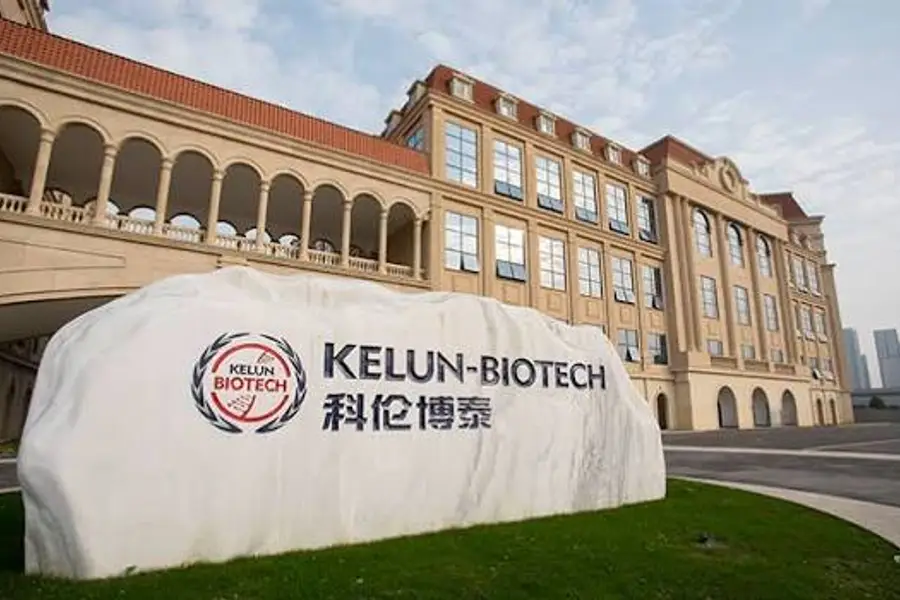
The firm made more money from precision oncology treatments than from licensing deals in the first half, after gaining insurance coverage for its core drugs in China
Key Takeaways:
- The company’s flagship drug has also delivered encouraging results for patient survival in a global trial led by multinational partner Merck
- Kelun-Biotech has scaled up its commercial team across China to drive rising sales of its antibody-drug conjugates
By Molly Wen
Innovative drugmakers mark a major milestone on the path towards commercial maturity when they start to sell actual products at scale, rather than just the rights to their most promising discoveries.
The latest financial results from a Chinese developer of novel cancer treatments has just delivered evidence of that crucial transition, with drug sales doubling and exceeding revenue from out-licensing deals.
On Aug. 17 Sichuan Kelun-Biotech Biopharmaceutical Co. Ltd. (6990.HK), specializing in targeted therapies known as antibody-drug conjugates (ADCs), reported a modest 2.93% rise in first-half revenue to 978.3 million yuan ($146 million) and swung to a net profit of 388 million yuan from a year-earlier loss.
The outcome may look unspectacular, but the significance lies in the earnings breakdown, which shows the firm has begun to generate growth from sales of its own products. Revenue from licensing and collaboration agreements fell nearly 50% to 315 million yuan, while sales of pharmaceutical products generated 657 million yuan in the first half, already surpassing the 543 million yuan for the whole of 2025.
The surge came after the company’s core drug, sacituzumab tirumotecan (sac-TMT), was added to China’s medications catalogue from the start of the year to treat breast and lung cancers that resisted initial therapy. Two other cancer drugs, tagitanlimab and cetuximab N01, also made it onto the list, giving Kelun-Biotech a trio of products in China’s medical insurance scheme across multiple indications, boosting sales.
The company also nearly doubled the size of its commercialization team in the year to June 30, to more than 800 people, according to the earnings statement. Its expanded network covers more than 2,000 core hospitals across 30 provinces and more than 300 prefecture-level cities, with more than 1,000 hospitals generating sales. Accordingly, sales and distribution expenses more than doubled, climbing to 391 million yuan from 179 million yuan in the year-earlier period. Front-loaded spending of this kind is hard to avoid when a new drug is launched and distributed in the market, as sales are ramped up. The company was upbeat about the earnings outlook, reiterating its target of 100% growth in full-year revenue from pharmaceutical sales.
At the bottom line, the 388 million yuan profit far exceeded market expectations, but the jump was mainly driven by 703 million yuan in income from an agreement to settle an ADC patent dispute with Suzhou MediLink Therapeutics. The deal required MediLink to share a portion of its out-licensing income and future profits with Kelun-Biotech. Excluding this income, the company logged an adjusted net profit of 47.9 million yuan, still marking a turnaround from the loss a year earlier and signaling an improvement in underlying operations.
Overseas pipeline progress
After commercial advances in China, a key factor for future growth will be the pace at which the core cancer drug sac-TMT can be clinically developed globally, through a partnership with multinational pharmaceutical firm Merck.
The drug is designed to target the TROP2 protein on tumors, carrying a payload that then blocks and kills the cancer cells. A global Phase Three trial covering 776 patients with advanced endometrial cancer tested the effectiveness of the drug as a monotherapy against a control group receiving only chemotherapy.
Interim trial data released in May indicated that sac-TMT showed statistically significant benefits in overall survival and progression-free survival, the first such ADC to achieve improvements by both measures in this patient population.
Merck is currently conducting 17 Phase Three trials of the drug, covering seven major cancer types including lung, breast, gynecological, gastrointestinal and genitourinary cancers. Meanwhile, Kelun-Biotech is advancing five Phase Three studies in China of the drug as a first treatment following diagnosis, mainly targeting non-small cell lung cancer and breast cancer.
If these studies deliver positive readouts, the drug could evolve from a later-stage therapy into a blockbuster product spanning multiple tumor types and treatments, creating a market opportunity far beyond its currently approved indications.
However, even as Kelun-Biotech delivers encouraging financial and clinical results, the risks should not be overlooked. More than 10 TROP2 ADC candidates are being developed, with drugmakers including Innovent Biologics, Hengrui Pharma and Daiichi Sankyo accelerating their programs, potentially leading to multiple competing products over the next two to three years. Whether the company’s first-mover advantage can translate into sustainable market share is unclear.
Kelun-Biotech currently trades at a price-to-earnings ratio of 718 times, far above the roughly 66 times for BeiGene (688235.SH; 6160.HK; BGNE.US), which already has a blockbuster drug in its portfolio. Investors appear to have already priced in an optimistic outlook for Kelun-Biotech, although it remains to be seen whether the company can keep delivering on those expectations.
To subscribe to Bamboo Works weekly free newsletter, click here
Related Articles