Salubris refiles for Hong Kong IPO as generics lose steam
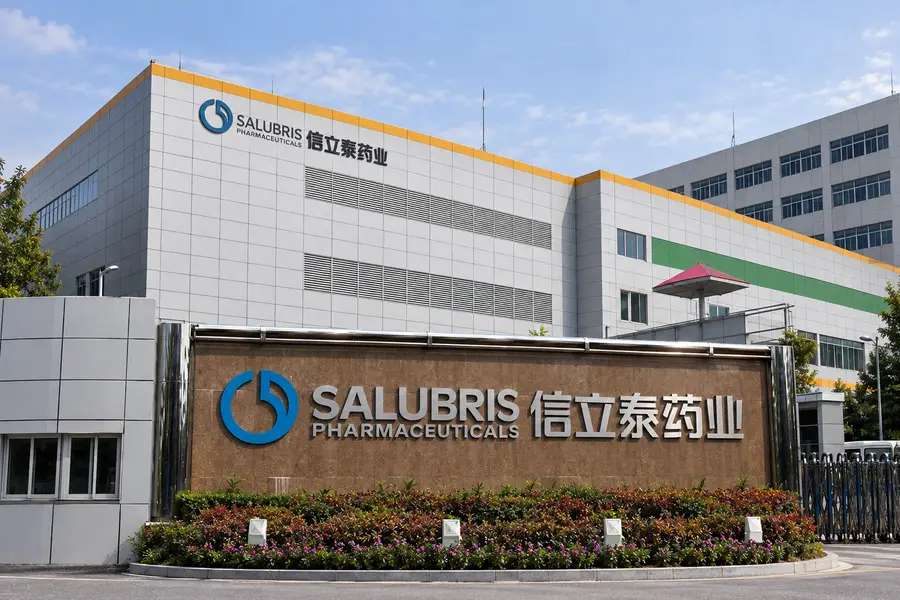
The producer of cardiovascular drugs is accelerating its shift towards innovative pharmaceuticals, under pressure from price cuts and expiring patents
Key Takeaways:
- Salubris built its early success on generics, but China’s volume-based buying has squeezed its traditional business
- With ample cash flow, the company is likely aiming to access international capital and drug partnerships by pursuing a Hong Kong listing
By Molly Wen
A Chinese pharmaceutical company specializing in cardiovascular drugs is heading down a well-trodden path to a dual listing, as it transitions from generics to innovative therapies.
After 17 years on the mainland stock market, Shenzhen Salubris Pharmaceuticals Co. Ltd. (002294.SZ) is making a renewed attempt to list on the Hong Kong Stock Exchange to lift its profile and tap international capital.
It hopes to join major players including Fosun Pharma, Baiyunshan Pharmaceutical and Hengrui Pharma in establishing a double equity presence as China’s drug industry, under price pressure at home, looks to expand its reach in global markets.
The application was filed in early September with Goldman Sachs, Citigroup and CITIC Securities as joint sponsors.
Salubris focuses on the CKM segment spanning cardiovascular, kidney and metabolic drugs. It has gradually shifted toward innovative drugs while expanding its portfolio around CKM conditions, with its business now straddling generics, biosimilars and medical devices. In 2025, Salubris ranked second in the Chinese market for in-hospital sales of cardiovascular drugs with an 11.3% share.
The company’s annual revenue rose to 4.35 billion yuan ($649 million) last year, from 4.01 billion yuan in 2024 and 3.37 billion yuan in 2023, translating into a compound annual growth rate of about 13.7%. Net profit rose over the three years from 581 million yuan to 605 million yuan and 653 million yuan. In the first half of 2026, revenue grew 16.3% to 2.48 billion yuan from the year-earlier period, while net profit was about 390 million yuan.
Behind this steady growth, the revenue mix is shifting dramatically. The company built its early business on generics, with its core product TaiJia becoming China’s first-to-market generic version of clopidogrel, an anti-clotting drug. At its peak, TaiJia generated more than 3 billion yuan in annual sales and helped Salubris reach 4.65 billion yuan in revenue in 2018. But since China introduced mass-procurement policies for the state medical system, generic drug prices have been under pressure. TaiJia’s retail price fell from 14.5 yuan to 22.26 yuan per pack in 2023 and to 6.99 yuan in the first half of 2026. From 2023 to 2025, generics declined from 48.8% to 30% of the company’s total pharmaceutical sales.
Innovative drugs have become the new growth engine for Salubris. The company has six such drugs on the market, all focused on CKM. From 2023 to 2025, innovative drugs increased from 30.1% to 52.1% of the firm’s total pharmaceuticals revenue, rising further to 54.8% in the first half of this year, while its gross profit margin went from 68.3% to 74.6% over the same period. However, spending to launch new products has also shot up, with selling and distribution expenses reaching 1.76 billion yuan last year, equivalent to more than 40% of revenue.
Patent expires
The key driver of innovative drug revenue is currently the hypertension drug XinLiTan. In 2013 XinLiTan became China’s first domestically developed angiotensin II receptor blocker (ARB), a class of drug used to treat high blood pressure and heart failure. By 2025 sales had reached 1.48 billion yuan, accounting for nearly 40% of total pharmaceuticals revenue, giving Salubris the top ranking in China’s ARB market.
However, the patent covering its active ingredient expired in July this year. Although patents relating to the drug’s formulation and preparation processes remain valid until 2028, the expiry of the compound patent means other drugmakers can legally develop generics using the same active ingredient. Salubris acknowledges in its listing application that its market share could slip in coming years as lower-priced generics enter the market.
Salubris has accelerated new product launches over the past two years to open additional revenue streams. From 2024 to 2025, FuLiTan, XinLiTing, XinChaoTuo and FuLiAn were approved in quick succession. Among them, XinChaoTuo is the second-in-class globally for ARNi hypertension drugs and is China’s first home-produced novel drug in this category. Meanwhile, the company has broadened the use of EnNaLuo, a treatment for renal anemia. Salubris has now expanded beyond hypertension into CKM areas including heart failure, kidney disease, diabetes and the high-cholesterol condition dyslipidemia. It has a pipeline of 79 innovative drugs across R&D platforms covering small molecules, antibodies, siRNA, cyclic peptides and gene editing.
Unlike many biotech companies that have yet to turn a profit, Salubris enjoys ample cash flow. Annual net cash inflow from operating activities reached 839 million yuan, 1.19 billion yuan and 1.05 billion yuan from 2023 to 2025. Since its Shenzhen listing in 2009, the company has distributed more than 7.8 billion yuan in dividends, more than twice the amount it has raised from the market. The Hong Kong listing may therefore be aimed more at gaining access to international capital, advancing overseas clinical trials and pursuing international collaborations for innovative drugs.
As the revenue mix has shifted, pressures have also been rising. Volume-based procurement in China is squeezing its generics business, its flagship product has lost one of its patent protections, and uncertainties surround the ramp-up of new products.
A Hong Kong listing could open new channels for financing and international expansion, but innovative drugs will need to keep picking up the baton in the race for growth.
To subscribe to Bamboo Works weekly free newsletter, click here
Related Articles

RELATED ARTICLES
-
CSPC Innovation pursues Hong Kong IPO as parent profits shrink
 300765.SHE
 -
BRIEF: Capital Securities gets regulatory nod, refiles for Hong Kong IPO
601136.SHG
-
Drug setback leaves Ascletis with an all-in bet on weight loss
1672.HK
-
Drug spin-off trend gains traction with IPO by Hengrui offshoot
1276.HK600276.SHG
- Precision-drug maker Impact Therapeutics ignites IPO frenzy
-
Alebund soars in Hong Kong debut on kidney treatment hopes
9637.HK