Yudo seeks investor warmth with unglamorous temperature control technology
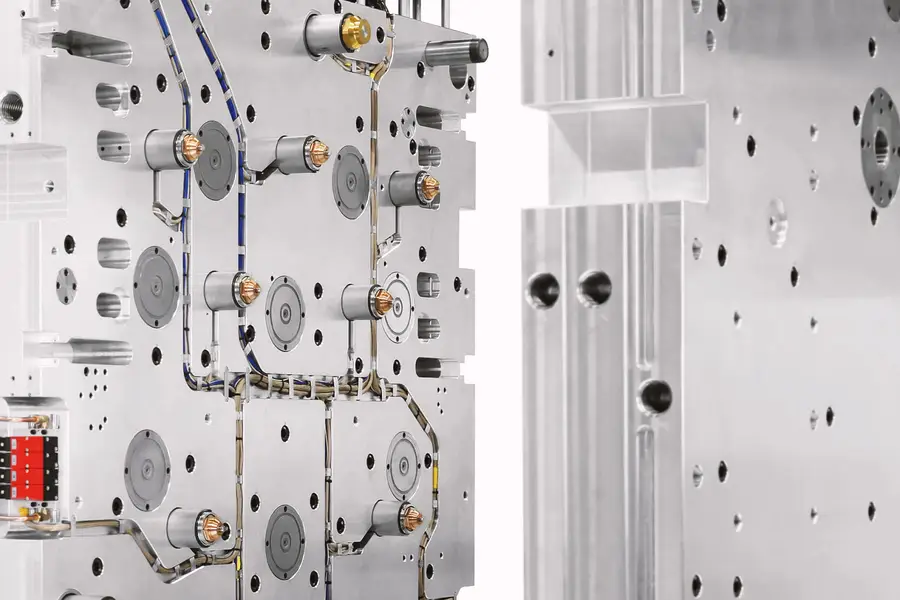
The maker of hot runner systems is gearing up for a Hong Kong IPO, positioning itself as an industry leader that generates stable profits and cashflow
Key Takeaways:
- Yudo has filed for a Hong Kong IPO to raise funds for expanding and upgrading its production capabilities and ramping up R&D
- The maker of hot runner systems for heat management in manufacturing boasts high profit margins with a vertically integrated model that generates lots of cash
By Warren Yang
In an era where investors are obsessed with the latest cutting-edge technologies, Yudo Holdings Co. Ltd. probably won’t wow many with its business. But as it gears up for a Hong Kong IPO, this seemingly unglamorous cash machine could prove to be a rare gem in a market flooded with flashier yet money-losing duds.
The maker of precision thermal management systems has signed on heavyweights CICC and Citic Securities as joint sponsors for its listing, banking on its market-leading global footprint, robust cash flow and high margins to fire up investor interest. The company plans to use proceeds from the share sale to expand and upgrade its production capabilities, and ramp up R&D, according to its prospectus filed last week. Yudo is also seeking potential overseas acquisitions, so extra cash can come in handy when good targets emerge.
To some eager to find an AI link to Yudo, the term thermal management may conjure up images of ultra-cool liquid plates chilling Nvidia chips inside buzzing data centers. Indeed, temperate control is critical for those energy-guzzling facilities.
But AI aficionados will be disappointed to learn those functions have nothing to do with Yudo’s version of thermal management. The company’s products revolve around plastic injection molding — specifically, what’s called hot runner systems. These are the heated manifold assemblies and temperature controllers that keep molten resin flowing smoothly inside metal molds to produce everything from automotive dashboards and washing machine doors to bottle caps and household containers.
This type of thermal management is far removed from the glitz of AI. But it has a huge market that is projected to grow nearly 30% to about $405 billion annually by 2030 from 2025 as manufacturers modernize their processing lines, according to third-party data included in Yudo’s prospectus. Within this space, Yudo’s specialty area, hot runner systems, alone hit $3 billion globally in 2025 in terms of sales.
Fueled by structural shifts — including electric vehicle (EV) lightweighting that requires intricate engineered plastic parts, green mandates forcing factories to process variable recycled resins, and a push for automated zero-scrap injection molding — growth in the hot runner system market is expected to accelerate to a 5.2% compound annual rate for the five years from 2026 to 2030 from a more modest 1.5% for the preceding five years.
Yudo is in pole position to capitalize on these trends. In its prospectus, the company says it’s the world’s largest provider of hot runner systems by revenue, with 12.5% of the market in 2025. The company’s revenue growth is hardly mind-blowing, but has slightly outpaced the broader industry in recent years. Its sales increased about 1.6% to $373 million in 2024, and grew another 2% to $381 million last year.
And Yudo doesn’t need aggressive top-line growth to generate cash — a stark contrast to many flashy tech ventures that boast rapid revenue gains but also quickly burn through cash and struggle to turn a profit. The company’s gross profit margin exceeds 50%, a remarkable figure for a manufacturer, thanks to its ability to produce critical components completely in-house, as well as its operational scale.
Yudo has 13 manufacturing plants globally — including a “Mega Hub” in Suzhou, the world’s largest dedicated hot runner system factory by floor area — and operations in 83 locations across 39 countries.
Loyal clientele
Another nice thing about Yudo is its loyal clientele, with more than 90% of its revenue coming from repeat customers. The company’s hot runner systems are highly customized and require routine maintenance, component replacements and software upgrades, which bring in extra dollars over their lifecycles.
All this leaves Yudo’s operations comfortably in the black. The company reported an IFRS net loss for 2025, but that was purely due to a non-cash accounting adjustment for the fair value of its convertible preferred shares. Under international accounting rules, such pre-IPO instruments are classified as liabilities. When a company’s valuation rises ahead of its listing, the paper value of those obligations increases accordingly, triggering a purely technical accounting loss. Once it completes its IPO, these shares automatically convert into ordinary equity, permanently removing any potential for future non-cash charges from those instruments.
On an adjusted basis stripping out such non-operational items, Yudo made a net profit of $87.9 million in 2025, representing a healthy net margin of 23.1%. Better yet, the company generated more than $88 million in net cash from operations, which means it effectively converted every dollar of its profit into cash.
Unlike asset-heavy industrial manufacturers whose profits are routinely trapped in mounting inventory or receivables awaiting payment, Yudo’s business model benefits from upfront customer payments for customized hot runner builds and steady cash inflow from repeat clients. So the company’s profits aren’t merely paper-based, but represent an actual liquid cash stream.
Reflecting that, the company paid out dividends to its ordinary shareholders in each of the last three years, including $58 million in 2024 and $26 million last year, and said it may continue to make similar payments post-IPO.
Yet Yudo is not without structural vulnerabilities, as evidenced by a slightly worrisome 3.4% year-on-year revenue decline in the first half of this year. This highlights the company’s heavy geographic concentration, with Greater China accounting for 56.1% of sales and South Korea contributing a significant 16.7%, even though it touts a global presence. When manufacturing activity stumbles or geopolitical frictions flare across East Asia, Yudo can feel the pain quickly.
Current valuations of other listed manufacturing equipment makers can serve as a benchmark for Yudo.
Among them, Haitian International (1882.HK), the world’s largest producer of plastic injection molding machinery by volume, trades at a trailing price-to-earnings (P/E) ratio of 7.6 at the moment. But given that Haitian once commanded a higher valuation before its stock slumped this year, and its gross profit margin is well below Yudo’s, CICC and Citic bankers may push for a higher, double-digit multiple.
A trailing P/E ratio of 10 would give Yudo a market capitalization of approximately $879 million based on its adjusted net profit for 2025. Assuming a typical 15% public float, that would allow the company to raise about $132 million.
Yudo may not dominate headlines with some world-changing innovation or breakneck revenue growth. But as long as people need cars, home appliances and medical devices, its hot runner machinery will keep glowing and generating cash. The company should tick many boxes for any investors preferring stability over hype.
To subscribe to Bamboo Works weekly free newsletter, click here
Related Articles

RELATED ARTICLES
-
PCI Technology stuck in low-margin ICT systems integration
 600728.SHG
 - Rethinking bigger Is better: China’s long march toward higher-capacity energy storage cells
-
Digital China’s AI reboot gets stuck in its low-margin past
0861.HK
- GoNature treks to Hong Kong in search of investor dollars
- Zhejiang Energy Marine steams ahead on green shipping boom
-
Can Longcheer buy its way to the top of the AI rack?
9611.HK603341.SHG
-
The next big EV idea for investors? Bethel bets on the intelligent chassis
603596.SHG