Cold-chain provider Shanghai Shengsheng joins pharma IPO hopefuls
China’s biggest supplier of temperature-controlled services for the drug sector has renewed a Hong Kong listing plan, raising questions with hefty pre-IPO payouts
Key Takeaways:
- Turnover has grown steadily, driven by demand from drug developers, but payments to shareholders and executives have made the bottom line bumpy
- The company’s controlling shareholders benefited from large dividends signed off shortly before the IPO filing
By Molly Wen
As China’s innovative drug sector heats up, the investor spotlight has fallen on the cold-chain systems that underpin the pharmaceutical supply chain.
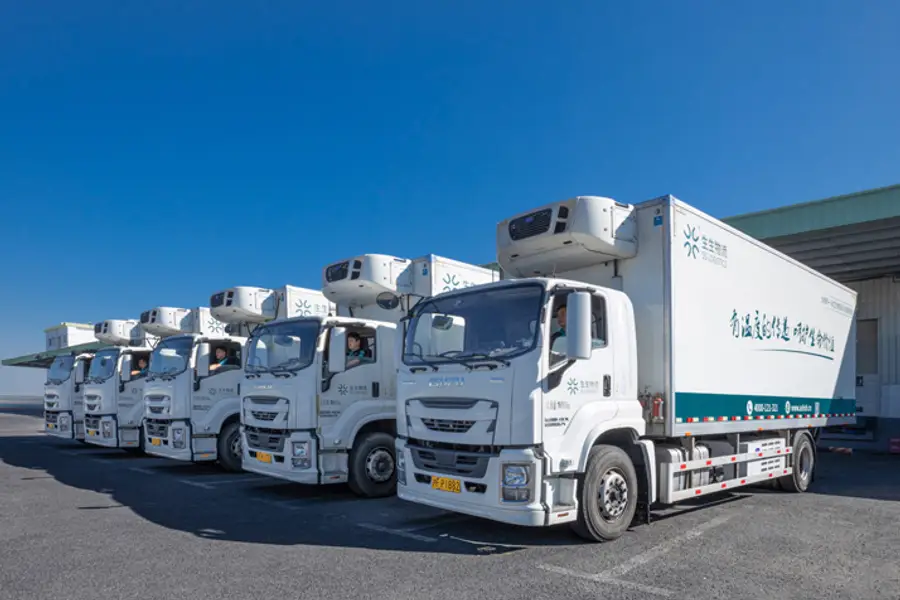
Insulated packaging, refrigerated trucks and special depots help to ensure that temperature-sensitive medicines, vaccines and samples for clinical trials are delivered or stored safely.
The cold-chain business has been growing in tandem with the rising volume of research into new drugs, and now a Chinese leader in the sector is seeking a Hong Kong listing, following in the footsteps of some of the companies it serves.
Shanghai Shengsheng Pharmaceutical Cold Chain Technology Co. Ltd. filed on July 22 for a main board listing, with plans to invest the proceeds in expanding its facilities in China and overseas. The application, sponsored by CICC and Sinolink Securities, marked a second Hong Kong flotation attempt after the company withdrew an earlier plan for a mainland IPO.
With roots reaching back to 2009, Shanghai Shengsheng specializes in temperature-controlled services for clinical trials, while also providing cold-chain logistics for medical products and producing related equipment and materials.
According to industry data in its IPO paperwork, the firm was China’s largest provider of cold-chain services for the pharmaceutical and life science industries by revenue in 2025. It was the only Chinese company to rank among the world’s top 10 suppliers of such services specifically for clinical trials. Over the three years covered by the IPO application, it served more than 7,000 customers, including biopharmaceutical companies, laboratories and firms conducting research, development or manufacturing in the drug sector.
The required standards of temperature control and tracking for high-value biologics, vaccines and cell or gene therapies are much more stringent than for other businesses using cold-chain logistics. At the pre-clinical and clinical stages, the focus is on delivering small and frequent batches of time-sensitive materials. Once products are launched on the market, providers need to step up with nationwide networks, cost control and compliant distribution at scale.
In recent years, wider adoption of emerging therapies such as antibody-drug conjugates (ADCs) and bispecific antibodies has driven steady growth in demand for temperature-controlled supply chains. Research data in the IPO document projected the global market would grow from $31.3 billion in 2025 to $45.1 billion by 2030. In China, the market increased from 18.8 billion yuan ($2.78 billion) in 2020 to 28 billion yuan in 2025, representing a compound annual growth rate of 8.3%. It was further forecast to grow 8.9% to 43.4 billion yuan from 2026 to 2030.
This has translated into steadily rising turnover at Shanghai Shengsheng, with revenue of 614.2 million yuan in 2023, rising to 654.5 million yuan a year later and 727.6 million yuan in 2025. The upward trend continued into 2026, with revenue increasing 8.3% to 256.4 million yuan in the first four months, from 236.8 million yuan in the same period a year earlier. Its gross profit margin also improved from 32.9% in 2023 to 37.9% in the first four months of 2026.
Nevertheless, the bottom line has been highly volatile. A net profit of 92.03 million yuan was logged in 2023, but the figure plunged by more than 70% to 26.4 million yuan in 2024. Net profit rebounded to 139 million yuan in 2025. But in the first four months of 2026, Shanghai Shengsheng’s net profit fell around 9% to 45.24 million yuan.
Big payoff
The primary cause was a series of share-based payments, apparently to compensate or retain leading executives after the failed attempt at a Shanghai IPO. Around 72.12 million yuan was paid out in 2024 compared with just 1.6 million yuan in 2023. Shanghai Shengsheng applied for a Shanghai main board listing in 2023 but voluntarily withdrew its application the following year after a first round of inquiries. In 2024, the firm’s five highest-paid executives received 55.93 million yuan in share-based payments, equal to about 77% of the total. Company founder Ju Jibing, who is also on the management team, was a major beneficiary.
Aside from that windfall, Ju and his wife also benefited from repeated cash dividends, with a combined pre-IPO stake in the company of 42.62%. Shanghai Shengsheng paid out dividends of 20.1 million yuan in 2024 and 20 million yuan the following year. On June 12, shortly before its second filing with the Hong Kong Stock Exchange, the company approved a further dividend of 30.6 million yuan.
Shanghai Shengsheng also faces financial pressure from rising receivables and weaker liquidity. Its trade receivables increased from 157.9 million yuan in 2023 to 226.1 million yuan in 2025, while turnover days on money owed to the company lengthened from 98 days to 106 days. As collections slowed, cash and cash equivalents fell sharply to 207.1 million yuan as of April 30 this year, from 625.4 million yuan at the end of 2025.
In addition to liquidity challenges, the company has faced governance questions over low-priced share transfers and the big dividends paid before its IPO bid. As Hong Kong IPO candidates come under greater scrutiny, it remains to be seen whether the company can allay any concerns about its financial practices or earnings outlook to move forward with its listing plan.
To subscribe to Bamboo Works weekly free newsletter, click here
Related Articles

RELATED ARTICLES