Volume chipmaker ASR looks to climb up the value chain
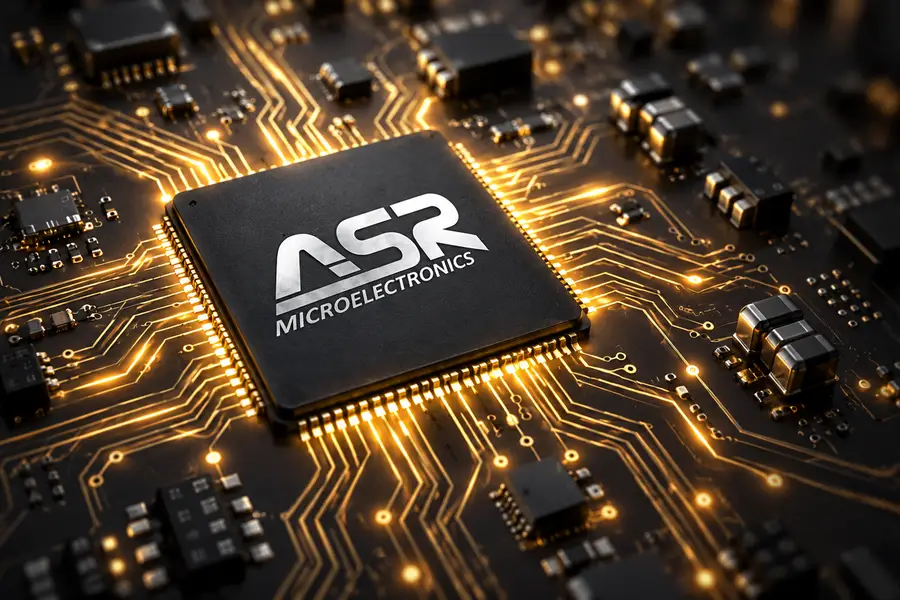
The global leader in cellular connectivity chips has filed for a Hong Kong listing as it accelerates its push into the higher-margin business of specialized ASIC chips
Key Takeaways:
- ASR Microelectronics logged a 29% rise in first-half revenue and turned a small profit for the period, helped by rising demand for application-specific chips
- The company still makes most of its money from general-purpose chips, but custom ASIC solutions rose to 13% of turnover, with a big order backlog
By Lee Shih Ta
China’s biggest provider of cellular chips for smart devices, ASR Microelectronics Co. Ltd. (688220.SH), is aiming to tap Hong Kong’s equity market as it shifts its focus towards premium products for AI-enabled connectivity and computing.
Nearly five years after joining Shanghai’s STAR Market, the company filed for a secondary listing on the main board of the Hong Kong Stock Exchange on Sept. 11, citing plans to invest in next-generation chip design.
The company has come a long way since its Shanghai equity debut in 2022, becoming the world’s biggest supplier of cellular connectivity chips by shipment volume last year, according to industry data cited in its prospectus. ASR also passed a profit milestone in the first half of this year, while expanding from general-purpose processors into higher-margin ASIC chips that are customized for specific tasks.
ASR founder Vincent Tai has a long pedigree in the chip industry. He led an earlier firm, RDA Microelectronics, to aNasdaq listing before the company was acquired by tech conglomerate Tsinghua Unigroup. Tai went on to establish ASR in 2015 and remains in the roles of company chairman and chief strategy officer.
ASR acquired Marvell Technology’s mobile business unit in 2017 to strengthen its capability in cellular baseband, which connects a device to networks, and processor applications. A year later it secured a cloud AI chip project from a leading AI company. In 2024 ASR became the world’s largest supplier of medium-speed Category 1 chips, going on to capture 37.8% of the global cellular connectivity chip market by volume in 2025.
Earnings lag
Still, the scale of its shipments has yet to translate into plentiful profits. Revenue rose from 2.6 billion yuan ($388 million) in 2023 to 3.82 billion yuan in 2025, while the company posted net losses of 506 million yuan, 693 million yuan and 390 million yuan over the three-year period. Heavy R&D spending and low prices per unit have weighed on profitability. The average selling price of ASR’s wireless connectivity chips fell from 12.6 yuan in 2023 to 10 yuan in 2025, while annual R&D expenses exceeded 1.1 billion yuan throughout the period.
But the picture began to shift this year, as ASR gained greater traction with higher-end products. Revenue rose 29.1% to 2.45 billion yuan in the first half of 2026, while gross profit jumped 72.3% to 700 million yuan and gross margin increased to 28.5% from 21.4%. The bottom line swung to a profit of 84.24 million yuan from a loss of 245 million yuan a year earlier, although the company remained 58.67 million yuan in the red excluding non-recurring gains and losses. Mass production of 5G products pushed the average selling price of wireless connectivity chips to 11.3 yuan from 9.4 yuan. Meanwhile, revenue from custom ASIC solutions increased to 322 million yuan from 126 million yuan, taking the segment’s overall revenue share to 13.1% from 6.7%, with a gross margin of 36.9% surpassing the average for the whole company.
The customized chip business has given ASR another way to monetize the design expertise it has built over the years. Unlike standard chips, which rely on high shipment volumes to spread R&D costs, ASICs can be designed to specific requirements and generate extra revenue once they enter volume production. As of the end of June, ASR’s custom ASIC order backlog exceeded 1.5 billion yuan, a year-on-year rise of 416.5%. The firm had also delivered dozens of projects, including 4nm node designs.
Industry trend
The strategy also reflects a broader shift in the global chip industry towards purpose-built AI chips, as technology companies try to cut costs and become less reliant on general-purpose GPUs. Broadcom generated $16.7 billion in AI semiconductor revenue in its latest fiscal quarter, up 221% from the year-earlier period. MediaTek, whose core business is built around smartphone chips, is similarly extending its technology into AI data centers, with its first custom AI chip scheduled to enter production in the fourth quarter of this year.
ASR benefits from experience in cellular baseband, complex System on a Chip (SoC) design and volume production, but the project-based ASIC business comes with inherent uncertainties. ASIC revenue fell to 217 million yuan in 2025 from 336 million yuan in 2024, only rebounding in the first half of this year. The current order backlog can only translate into sustainable profits if customers come back with further orders after receiving their first round of products.
As ASR targets premium solutions, some of its early shareholders have begun to cash out. Alibaba (9988.HK; BABA.US), which invested in 2017 through a tech subsidiary, sold a 3% ASR stake last year and another 1.86% this year, leaving it with a holding of around 10.58%. The sales are part of a broader wave of divestment from semiconductor companies with mainland listings. Seven companies, including AMEC, Montage Technologyand ASR, disclosed shareholder sell-down plans on May 22 covering an estimated 12.69 billion yuan based on share prices at the time. Meanwhile, despite its first-half profit, ASR drew on about 378 million of net cash for operating activities in the period, rising from 272 million yuan a year earlier, mainly due to increased inventories, prepayments and receivables.
Valuations among Hong Kong-listed AI chip stocks vary widely. Pure-play AI GPU company Iluvatar CoreX (9903.HK) trades at a price-to-sales ratio of about 44 times, compared with about 12.6 times for intelligent-driving chip company Horizon Robotics (9660.HK) and about 5.9 times for Black Sesame (2533.HK). By comparison, ASR has a market capitalization of about 37.2 billion yuan and trades at about 8.5 times its trailing 12-month revenue.
The market still regards ASR as a maker of cellular connectivity chips, which accounted for more than 70% of its first-half revenue. Rising ASIC income and higher gross margins could lift the valuation over time, but the question remains whether the company’s track record in chip design can be turned into a higher-value, next-generation business.
To subscribe to Bamboo Works weekly free newsletter, click here
Related Articles
RELATED ARTICLES
-
China’s AI push propels chipmaker Biren toward breakeven
 6082.HK
 - XTX Technology rides surging memory prices to Hong Kong IPO
-
AsiaInfo calls on AI, space communications to revive its flagging business
1675.HK
-
Longsys rides soaring memory wave to Hong Kong IPO
301308.SHE
- CXMT IPO tests China’s state-driven chip dream
-
GigaDevice’s profit soars as celebrity founder sells down stake
3986.HK603986.SHG