China’s AI push propels chipmaker Biren toward breakeven
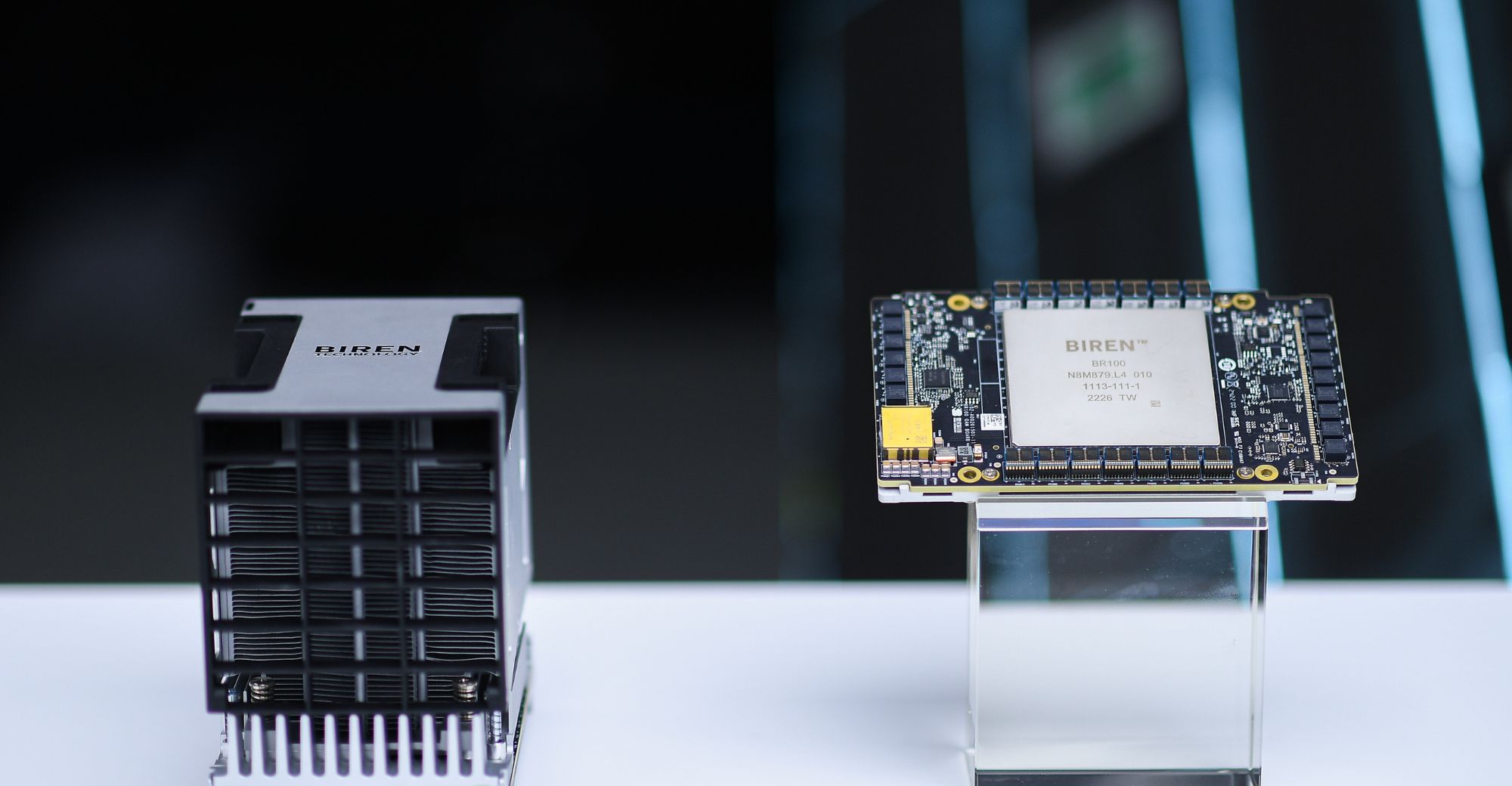
The producer of GPUs for AI applications has flagged up a more than 18-fold leap in revenue and a sharply reduced loss, as it starts to capture economies of scale
Key Takeaways:
- The company projected its six-month revenue would reach at least $170 million, already exceeding its full-year turnover for 2025
- But as China steps up its bid for self-reliance in AI hardware, fast product cycles mean R&D spending is likely to stay high
By Lee Shih Ta
As China’s demand for AI computing keeps rising, chipmakers are facing a new test. Can they capitalize on the soaring demand to turn product lines into profits?
Until now, makers of the specialized AI chips have focused on developing the technology to allow China to close in on self-sufficiency in advanced computing. But increasingly they will be judged by their ability to boost their shipments of graphics processing units (GPUs) and staunch the flow of red ink.
One of China’s rising stars in the AI microchip sector, newly listed Shanghai Biren Technology Co. Ltd. (6082.HK), has just laid down a marker that it is speeding along the path towards profitability.
The maker of general-purpose GPUs and AI computing hardware issued an earnings alert on Aug. 16 that predicted a leap in half-year revenues and forecast its net loss would shrink by at least two thirds.
Citing rapid growth in the AI industry, the company said it expects to post revenue in a range from 1.15 billion yuan to 1.30 billion yuan ($170 million to $193 million) for the six months to the end of June, from 58.9 million yuan a year earlier. That translates into a colossal jump of 1,852% to 2,107%, taking six-month revenue past the company’s full-year total for 2025. The net loss for the half year was projected to shrink to between 320 million yuan and 400 million yuan, 75% to 80% less than the 1.60 billion yuan deficit in the same period a year earlier.
China’s push for AI resilience could help the sector move beyond its seemingly endless phase of burning through cash, judging from recent earnings reports. Moore Threads (688795.SH), sometimes dubbed the Nvidia of China, narrowed its first-half net loss to 11.56 million yuan, while MetaX Integrated Circuits (688802.SH) cut its first-quarter loss to 98.84 million yuan. Tianshu Zhixin (9903.HK) has gone a step further, forecasting a profit for the first half, although mainly enabled by fair-value gains on financial assets.
Investors welcomed Biren’s improving fortunes. Its shares rose 6.97% to close at HK$38.98 after the profit alert, roughly double the HK$19.60 IPO price in January. Based on brokerage forecasts for 2026 revenue, Biren trades at a forward price-to-sales ratio of about 37 times, broadly in line with Tianshu Zhixin at around 35 times, but below the Moore Threads and MetaX multiples of 75 and 90. Those two firms enjoy a more pronounced scarcity premium as GPU makers with mainland listings. Biren is priced on a par with its Hong Kong-listed peer, Tianshu Zhixin, suggesting investors are already factoring in rapid revenue growth.
A closer look at Biren’s earnings record shows that deliveries of high-end products were concentrated in the second half of last year, when revenue reached about 976 million yuan. Compared with that figure, revenue in the first six months of 2026 still grew by roughly 18% to 33%, indicating that shipments are still accelerating.
As for the bottom line, Biren expects its adjusted loss for the first half to narrow to between 290 million yuan and 360 million yuan, down 35% to 47% from the year-earlier period. With some items falling out of the accounts after the listing, such as non-cash changes in redemption liabilities, the adjusted figure offers a clearer guide to operations. Rapid growth in revenue and gross profit, combined with a slower rise in expenses, pointed to emerging economies of scale, the company said. If revenue continues to outpace spending, profitability should come into view.
In its product mix, Biren has been moving beyond standalone GPUs toward complete computing systems. In 2025, it scaled up deliveries of its BR106 and BR166 products and deployed intelligent computing clusters, including a system with 2,048 GPUs. Large-model customers make their purchasing decisions based on cluster stability and cost, not just on chip performance.
That helps explain why Biren, founded in 2019 by a former president of SenseTime, has been devoting more resources to software and systems. Its software platform BIRENSUPA has expanded support for mainstream frameworks used by large language models, including PyTorch, vLLM and SGLang. The company also completed compatibility work last year for models including DeepSeek, Qwen and Zhipu GLM. One of the biggest hurdles facing Chinese GPUs is that many customers have built their workflows around Nvidia’s CUDA ecosystem. The easier the migration, the cheaper it will be for companies to switch.
High R&D costs to continue
Supplying systems could also mean bigger orders and help chipmakers reduce the risks of a concentrated client base. In its earnings forecast, Biren said it had continued to diversify its customers and deployed key applications at scale, a trend worth watching in future earnings releases. A broader mix of telecom operators, intelligent computing centers and enterprise customers could make revenue more sustainable, easing the reliance on a handful of large projects.
Gross margin is another key test. Biren’s revenue more than tripled last year while gross margin remained at 53.8%. That suggests the ramp-up has not overly relied on price cuts to win orders, leaving more room to absorb costs.
But R&D will remain a drain in the near term. The company spent nearly 1.48 billion yuan on R&D last year, more than its full-year revenue, and will need to keep investing in its next-generation BR20X products, software platforms, optical interconnects and supernode solutions. GPU product cycles move quickly, making it difficult to rein in spending once products start generating sales. Achieving breakeven will still depend on revenue outpacing R&D and operating expenses.
The half-year projection suggests Biren is moving in the right direction. But its eminent peers are also narrowing their losses. The ability to achieve mass shipments, cut customer migration costs and keep large clusters running reliably will be key to future earnings.
To subscribe to Bamboo Works weekly free newsletter, click here
Related Articles
RELATED ARTICLES
-
PPLabs eyes capital refresh as losses linger on heavy investments

- SiliconFlow’s AI ‘token factory’ dream gets $300 million vote of confidence
- Ingdan bets on ‘token factory’ in its latest attempt to harness AI
- China’s ‘Stroller King’ gets a push from its high-end Cybex brand
- Yidu Tech swings to profit as AI healthcare edges toward viability
- Where China’s AI models make their money
-
Huaqin stock rises in Hong Kong debut as AI data center business booms
3296.HK603296.SHG