The former e-commerce company wants to become a high-tech infrastructure operator, adding new momentum to its current core chip distribution business
Key Takeaways:
- Ingdan has unveiled an “AI token factory” offering computing capacity for high-tech companies
- The chip distributor is already benefiting nicely from its expansion into AI chips, estimating its revenue potentially doubled in the first half of 2026
By Warren Yang
If there’s one thing Ingdan Inc. (0400.HK) excels at, it’s catching major technology waves quickly.
The company went public in Hong Kong back in 2014 when it was known as Cogobuy, which sold general electronic components to businesses. Following a 2019 restructuring to capitalize on the rapid rise of advanced technology, it shifted its focus to wholesale distribution of integrated circuits (ICs) and AI internet of things (AIoT) services, eventually renaming itself as Ingdan, meaning “hard egg,” in 2022 to reflect the new identity.
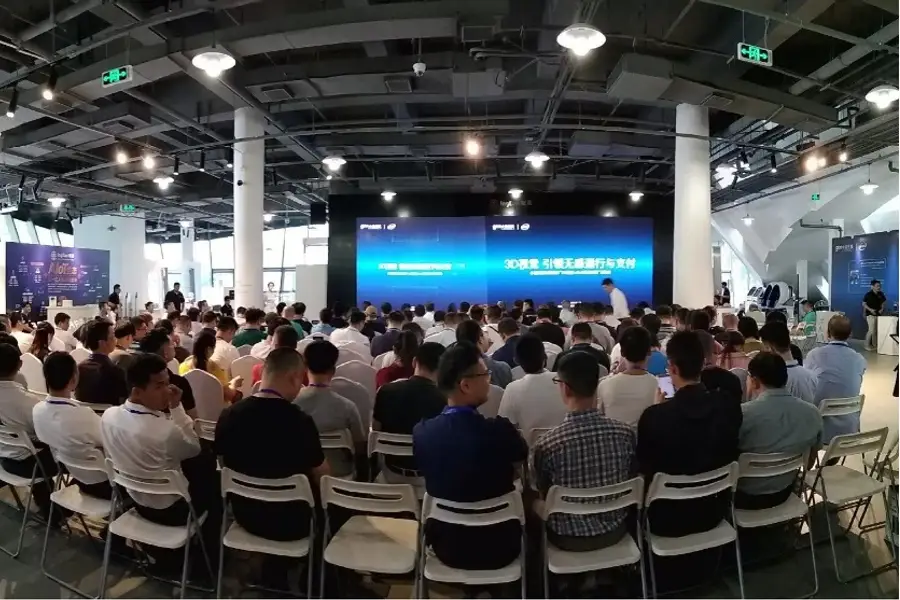
As generative AI captivates the world, Ingdan last month announced its newest journey –building a “vertical AI token factory.” When it unveiled the new business, the company said it had already secured potential orders exceeding $1 billion. That sounds rather promising, though how much of that will turn into actual sales remains to be seen.
Ingdan currently generates most of its revenue from its chip distribution and technology services like custom hardware design, which puts it in pole position to capitalize on the current AI boom.
Last Friday, the company said it expects to post revenue of 12 billion yuan ($1.67 billion) to 14 billion yuan for the first half of this year, up as much as 100% year-on-year. It estimated that its profit from operations grew 60% to 100% year-on-year during the six-month period from 275.6 million yuan a year earlier. Management attributed the explosive profit growth to strong demand for hardware used for cutting-edge applications like AI data centers and robotics.
Investors seem to appreciate the company’s pivot to its current focus centered on AI products and services. Ingdan shares have rallied 85% in the past year, easily outperforming the broader Hong Kong market.
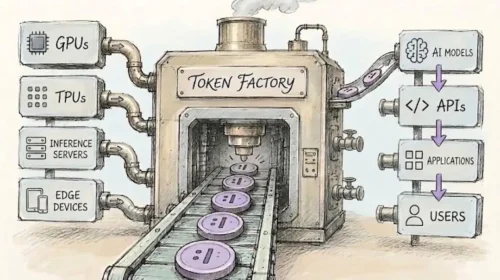
Now, Ingdan is betting that as the AI revolution accelerates, the real recurring value is moving from AI hardware sales to processing power. Unlike what the name suggests, the company’s AI token factory has nothing to do with the cryptocurrency, blockchain, or digital coins that enchanted investors for most of last year. In AI, a token is simply the fundamental unit of data, such as a fragment of text, code, or visual data, that an AI model processes and generates.
With its token factory, Ingdan is looking to provide specialized, full-stack computing infrastructure for enterprise clients in fields like humanoid robotics, autonomous vehicles and vertical AI models. The company is essentially positioning itself as a high-tech utility, charging customers based on the volume of computing work performed.
Traditional chip distribution that is Ingdan’s current mainstay is essentially a low-margin wholesale middleman business, with distributors buying products in bulk and reselling them for modest, one-time markups. Reflecting this economic reality, Ingdan’s gross profit margin is quite low, at just about 7% last year.
By contrast, the AI token factory model transforms those same chips into proprietary infrastructure, with Ingdan retaining hardware ownership and selling computing output as an ongoing service. Instead of capturing a single slice of profit at the point of sale, Ingdan can collect high-margin, recurring service fees over the lifetime of the hardware.
And Ingdan can cross-sell its new AI token services to its established network of more than 10,000 corporate clients, converting hardware buyers into recurring users of its computing capacity. By enabling its existing clients to replace heavy upfront hardware expenditure with usage-based fees, Ingdan can scale its computing platform with virtually zero customer acquisition cost, at least initially.
Different skill set
Yet this new business pivot can be easier said than done, as operating computing infrastructure requires a completely different skill set than traditional hardware wholesaling. While chip distribution relies heavily on procurement logistics and trade financing, running a distributed computing platform requires power supply management and other resources that incur heavy costs and require different expertise.
Ingdan plans to deploy its token factory capacity using a hybrid model, combining its own proprietary data center clusters with third-party computing nodes scattered across domestic and international locations. But maintaining consistent uptime and high usage rates across such a fragmented network could quickly strain operating margins if capacity utilization drops even slightly below specific levels.
Furthermore, high-performance AI chips are very expensive, requiring immense upfront capital expenditure that can weigh on the company’s balance sheet. And that’s not the only financial implication. The value of AI chips depreciates rapidly as newer, faster products hit the market every 12 to 18 months. That means Ingdan will need to start booking depreciation costs in its income statements, which will eat into its bottom line.
The quality of Ingdan’s touted initial order book also warrants some skepticism. The company’s headline-grabbing figure of more than $1 billion sounds impressive, but what it has lined up are merely “intent service orders,” which are non-binding.
There’s no guarantee that the company can convert these expressions of interest into real agreements, especially because the high-tech sector is notoriously volatile, with high cash burn rates and uncertain commercial longevity. If the AI startups that Ingdan is targeting struggle to scale or secure funding, their usage-based token consumption could quickly evaporate.
And obviously, Ingdan is entering a competitive arena dominated by large cloud hyperscalers run by tech titans like Alibaba, Tencent and Baidu. To survive, it will need to carve out a niche as a specialized AI computing orchestrator, leveraging its expertise in robotics and IoT rather than trying to compete on generalized cloud computing power.
Ingdan shares currently trade at a price-to-earnings (P/E) ratio of 23, a lofty level for a hardware wholesaler. By comparison, Smart-Core Holdings (2166.HK), an electronic component distributor, is far lower at about 11. Much of that premium owes to Ingdan’s strong stock gains over the last year, and the current gap suggests investors are banking on the company’s ability to adapt.
Ultimately, though, Ingdan’s AI token factory pivot is a bit of a high-risk, high-reward strategic gamble. Its successful building of a steady pipeline of orders while keeping capital expenditure under control could transform the company from a low-margin hardware trader to a high-margin tech infrastructure operator. But execution could just as easily falter because of rising costs or customer churn, which would leave investors with dubious shares of a company tripped up by a transformation that failed to flower.
To subscribe to Bamboo Works weekly free newsletter, click here
Related Articles
RELATED ARTICLES
-
SiliconFlow’s AI ‘token factory’ dream gets $300 million vote of confidence
- PPLabs eyes capital refresh as losses linger on heavy investments
- INTERVIEW: DataCanvas empowers industries as AI utility provider
- Where China’s AI models make their money
- XTX Technology rides surging memory prices to Hong Kong IPO
- Rethinking bigger Is better: China’s long march toward higher-capacity energy storage cells