The maker of hydrogen fuel cell systems will redeploy HK$300 million of its IPO proceeds to repay bank loans and for general working capital
Key Takeaways:
- SinoHytec will redeploy HK$300 million in IPO proceeds originally earmarked for R&D and marketing to repay bank loans and for general working capital
- The company is finding a new business opportunity in energy storage systems as its core hydrogen vehicle-related business continues to contract
By Doug Young
Hydrogen power was all the rage two to three years ago, powering a group of companies to strong debuts in their Hong Kong listings at the time. But the industry has rapidly run out of fuel this year, sending investors fleeing and forcing many of those former highflyers to rethink their strategies as revenues shrink and their funds run low.
The latest rethink is coming from Beijing SinoHytec Co. Ltd. (2402.HK; 688339.SH), a maker of hydrogen fuel cell systems, which on Friday announced a major rejig to the planned use of its IPO funds raised more than three years ago. In a sign of the times, the overall theme is the company’s shift from using funds for business expansion to simply keeping the lights on at its shrinking operation.
The two biggest changes in its new plan will see SinoHytec shift a significant portion of its remaining IPO funds to repaying bank loans and for working capital.
The shift is being necessitated by a Chinese hydrogen energy vehicle industry that is developing far slower than many previously expected. At the time of its IPO in late 2023, Sino-Synergy Hydrogen Energy (9663.HK), another maker of fuel cell systems, cited third-party research saying fuel cell vehicle sales in China were expected to reach 150,400 units in 2027, and rise to 412,400 units in 2030. Much of that growth was being fueled by government policy, as Beijing provided funds and other incentives as part of its broader effort to promote new energy vehicle (NEV) development.
But fast forward just three years later, when a new report last month by SNE Research forecast hydrogen vehicle sales in China would reach just 38,000 in 2030, or less than a tenth of the earlier figure in Sino-Snyergy’s IPO prospectus. While it’s not unusual for third-party research houses to provide bullish industry forecasts for their IPO clients, the huge discrepancy shows the industry has failed to develop nearly as quickly as many hoped just two or three years ago.
That disappointment is best reflected in the huge decreases for hydrogen power stocks that have listed over the last four years. SinoHytec is indicative of the group, with its shares now down 87% from their IPO price of HK$60 at Friday’s close of HK$7.98. That’s actually better than Hong Kong peers like Guofu Hydrogen (2582.HK), Refire Group (2570.HK) and Sino-Synergy, which are all down by more than 90% since their listings over that time.
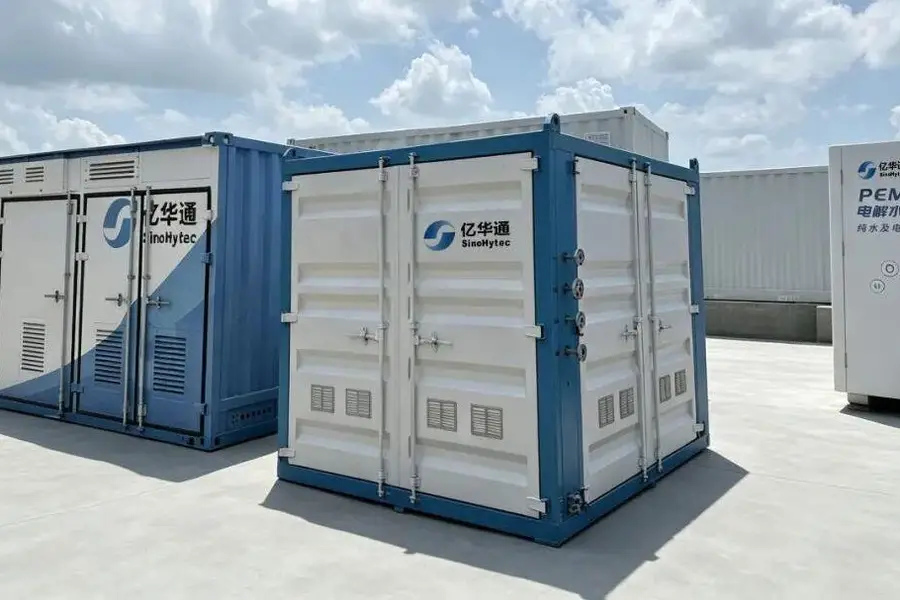
In the face of such difficulties, it’s not difficult to see why SinoHytec is redeploying some of its IPO funds. In a bid to stabilize its business, it’s also making a pivot to energy storage systems that have shown greater potential due to strong demand from AI data centers.
Unspent funds
We’ll discuss that pivot shortly, but first we’ll take a closer look at SinoHytec’s redeployment plan for its IPO funds. The company raised about HK$1 billion ($128 million) from its January 2023 IPO, and more than three years later had yet to spend more than half of that amount, with roughly HK$655 million left, according to its latest announcement.
While it’s nice the company still has so much money left, you have to wonder why it needed to raise so much money if it wasn’t going to spend it to advance its business. The likely answer to that question was that it raised the money because the market was hot at that time, and it made the IPO simply because it could at a high valuation.
Returning to the latest plan, the biggest downgrade has SinoHytec lowering its planned spending on new product R&D to just HK$121 million from a previous HK$445 million. It also sharply lowered the amount of IPO funds earmarked for product marketing and promotion to just HK$14 million from an original HK$133 million.
It will redirect HK$150 million of those funds to paying some of its HK$394 million in bank loans coming due within the next year. Another HK$150 million will be used as general working capital. The company had earmarked HK$112 million for general working capital in its original IPO plan, but that amount was probably used up long ago, hence the need for new funds to pay for daily operations.
SinoHytec said the original IPO spending plan reflected its judgement of market demand at the time. “Since listing, the operating environment faced by the group has undergone certain substantial changes, and the pace and priorities of funding for the intended uses have changed accordingly,” it noted.
One other significant adjustment in the latest spending plan adds that HK$220 million originally proposed for spending on overseas R&D for the company’s core hydrogen vehicle systems will now be expanded to include “diversified application.” That’s an apparent reference to the hydrogen-powered energy storage systems where the company is finding some early success.
Hydrogen storage systems were one of the few bright spots in SinoHytec’s otherwise bleak midyear financial report. But that said, it’s far from clear that this new product category has a proven market that will be able to take up the slack for weak hydrogen vehicle sales.
SinoHytec reported its revenue rose 2.8% to 73.9 million yuan ($11.1 million) in the first half of the year, ending two years of big declines, including a 29% drop last year to 259 million yuan. But its core hydrogen fuel cell systems continued to drop, falling 15.5% in the first half to 42.8 million yuan, making up 58% of sales. The company pointed out that just 500 hydrogen fuel cell vehicles were produced in China during the six-month period, down 60% year-on-year.
The weak fuel cell system sales were offset by a 72% rise in “other businesses” to 18.2 million yuan, as the company delivered more energy storage products during the period. Its bottom line also improved notably, with its loss narrowing to 105 million yuan from 165 million yuan a year earlier mostly due to cost controls.
The bottom line for SinoHytec is that its latest funding redeployment hints slightly of desperation as its funds run low and its hydrogen vehicle business also sputters. The shift to energy storage looks like a potential new direction, but we’ll need to see better sales for that category before saying whether it has legs. Meantime, the company’s stock is unlikely to rebound anytime soon, and could even face more downward pressure if its sales don’t show some more significant improvement in the next year.
To subscribe to Bamboo Works weekly free newsletter, click here
Related Articles
RELATED ARTICLES
-
New energy faces reckoning as solar makers pivot to AI, Beijing halts battery storage construction
 DQ.US
-
Deye chases Hong Kong IPO in face of draining new energy valuations
605117.SHG
- Can crypto power supplier Boco plug into the AI boom?
-
Nickel prices polish up its profits, but CNGR pivots towards phosphates
300919.SHE
- Booming electricity demand feeds KeLiang’s niche in power grid simulation
- Zhejiang Energy Marine steams ahead on green shipping boom
- After years on the sidelines, VNET seizes on China’s AI moment with new CATL tie-up