The producer of battery materials posted higher first-half earnings, helped by a rebound in nickel prices, as it expands into new technologies for energy storage
Key Takeaways:
- To keep pace with changing demand, CNGR has been investing in producing lithium iron phosphate batteries for premium EVs and renewable energy systems
- It announced plans to reallocate the remaining proceeds from its Hong Kong IPO from a South Korean nickel project into a Chinese phosphorus facility
By Lee Shih Ta
One of the hardest challenges for the new energy industry is predicting which technology will prevail in the next product cycle. Batteries are a case in point.
Various battery types using different compounds have emerged in recent years to power electric vehicles, electricity grids, solar storage systems and data centers. Automotive ternary batteries, with a cathode mix typically including nickel and cobalt, are now being supplanted by cheaper lithium iron phosphate batteries that can also be used as energy storage units. Meanwhile, next-generation alternatives such as solid-state and sodium-ion batteries are gaining momentum.
In a rapidly evolving market, going all in on a single technology would be a risky move, which is why CNGR Advanced Material Co. Ltd. (2579.HK; 300919.SZ) has decided to hedge its bets, and the strategy appears to be paying off.
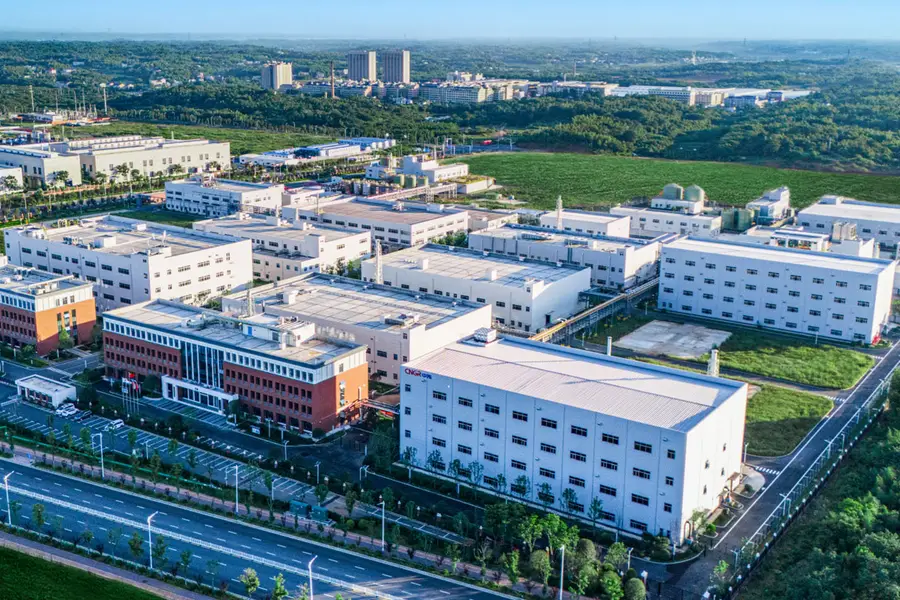
Starting out as a leading supplier of materials for ternary batteries, the company has expanded to cover elements for nickel, cobalt, phosphorus, sodium and solid-state batteries. Its operations have also spread upstream to encompass nickel, lithium and phosphorus resources, as well as processing, smelting and recycling
With this diversified approach, the company has just delivered higher half-year profits, helped by rising nickel prices. Earnings released on Aug. 24 show CNGR revenues jumped 57.5% to 33.58 billion yuan ($4.71 billion), while profit rose 78.4% to 1.31 billion yuan. Overall gross profit margin also increased to 12.8% from 11.9%.
Revenue from new energy metal products came to 10.11 billion yuan, around 30% of the total, with the profit margin rising to 12.3% from 7.4% in the year-earlier period, a rise attributed to a recovery in nickel product prices. The gross profit margin of nickel-based materials edged down to 17.1% from 17.8% but gross profit per ton increased to 15,100 yuan from 13,600 yuan, mainly due to higher benchmark prices.
Supply of nickel ore, which is 60% controlled by Indonesia, tightened early in the year, driving prices up more than 30%, according to analysis by Goldman Sachs. The investment bank later raised its forecast for the average nickel price in 2026 by 16% to $17,200 per ton. Indonesia’s annual production quota is also projected to be lower than last year, leaving supply dynamics as a key price driver.
Despite the positive factors for nickel, CNGR’s investment focus is shifting towards the raw materials for lithium iron phosphate batteries, tracking changes in demand.
The company announced plans to redirect the remaining HK$1.20 billion ($153 million) in proceeds from its 2025 Hong Kong listing, which were originally earmarked for a South Korean nickel project, into its phosphate mining and processing facility in Kaiyang, Guizhou.
China’s battery market is in a state of technological flux. In the first half of this year, lithium iron phosphate batteries accounted for 81% of China’s installed power battery capacity, while ternary batteries achieved just 18.9%. More importantly, growth in battery demand is moving from EVs to energy storage systems, where phosphorous-based products can offer cost and performance advantages.
China’s production of power and energy storage batteries rose 53.3% year on year in the first half, outpacing the 12% increase in domestic power battery capacity, indicating that new output is going towards energy storage and exports, Fastmarkets has reported, citing data from the automotive battery industry.
Global battery giants are also adjusting their strategies. LG Energy Solution (373220.KS) is shifting some of its North American EV battery capacity to energy storage. By the end of this year, five of its eight North American plants will produce energy storage batteries, while its technology mix is also moving from more nickel-dependent chemistries toward lithium iron phosphate, which is better suited to static energy storage.
New business starts to pay off
For CNGR, phosphorus has turned from a long-term bet into an income stream. Revenue from phosphorus-based materials rose about 55% to 1.04 billion yuan in the first half, while gross profit margin swung to 7.8% from negative 10.5% a year earlier. The upturn was attributed to economies of scale from the gradual release of production capacity, coupled with a recovery in downstream demand.
But ternary materials could still have room for growth, being widely used in high-end EVs for energy density and extended driving range, particularly in Europe and the United States. In the first half of this year, China’s installed capacity of ternary batteries still rose 14.2%, while global output of ternary precursors increased 26.1%. Meanwhile, many solid-state batteries also use high concentrations of nickel in their cathodes. CNGR holds a 26% share of the Chinese market in ternary precursors, while shipments of solid-state battery precursors reached 100 tons in the first half.
CNGR has been diversifying its battery materials on multiple fronts to stay ahead of technology trends and gain market share. Capital expenditures fell 35.1% to 1.11 billion yuan in the first half, indicating that investment in property, plant and equipment had slowed after a period of rapid expansion.
Nickel prices remain an important factor in near-term earnings. Over the longer term, as the battery industry enters an era of multiple coexisting technologies, the challenge will be to deploy capital where it can generate the highest returns.
To subscribe to Bamboo Works weekly free newsletter, click here