Can crypto power supplier Boco plug into the AI boom?
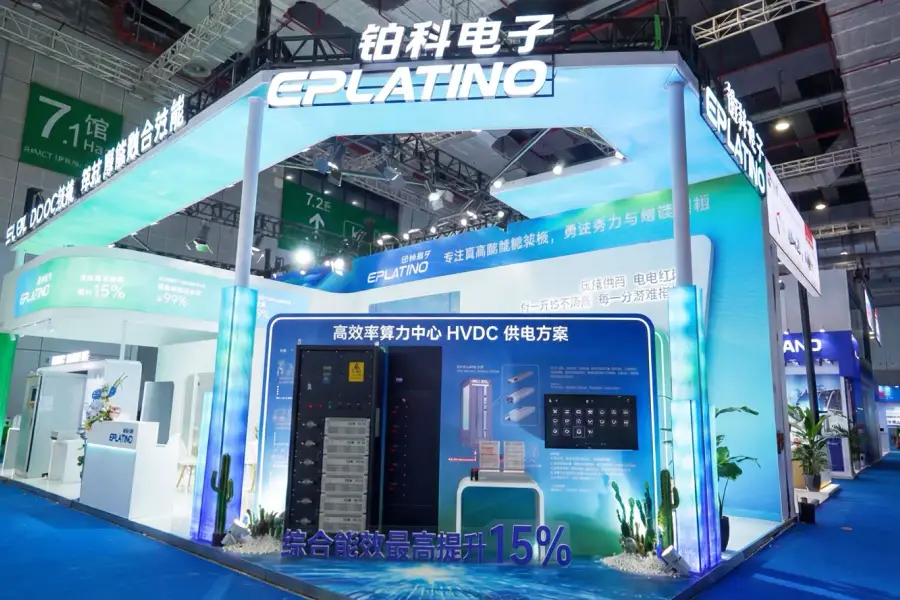
The maker of power units for heavy-duty crypto computing is looking to raise IPO capital for a switch into systems for AI servers and data centers
Key Takeaways:
- Boco Electronics has filed for a Hong Kong listing for a second time, citing plans to invest in R&D and strengthen its presence in the AI computing market
- Its power products for AI computing achieved a gross margin of 47.7% last year but accounted for just 0.7% of revenue
By Lee Shih Ta
At its core, the AI race is a competition for power, reliant on vast amounts of energy to drive servers and data centers.
With power supply at a premium, equipment manufacturers that serve the energy-guzzling crypto market are looking to adapt their technology to meet the rising demands of AI. One of those suppliers is Hangzhou Boco Electronics Co. Ltd., which recently reapplied for a Hong Kong IPO.
Boco makes power supply units for high-density computing as well as energy conversion and storage systems for industrial and residential use. It has been in the market for powering digital-asset mining for five years and is now using its experience as a springboard into the supply chain for AI data centers.
While the end uses differ, the underlying technologies overlap. Like data centers, cryptocurrency mining rigs need to operate reliably for extended periods under heavy processing demands and thermal loads.
Boco founder Yin Guodong graduated from Harbin Institute of Technology and spent more than a decade at Taiwan-based power supply giant Delta Electronics (2308.TW). There he rose through the R&D ranks to become technology director, leading the global development of high-end power supply equipment. After leaving Delta in 2016, he stayed in the server power sector, establishing ties with Shenzhen MicroBT, which designs and manufactures crypto-mining hardware.
Founded in 2021, Boco Electronics launched its first mining-rig power system the same year, with orders and investment from MicroBT. Income from MicroBT accounted for 89.9% of Boco’s revenue in 2023, but that figure had plunged to about 9% by the first quarter of this year. Still, Boco’s five largest customers provided 93.5% of its revenue during the same period, leaving it exposed to any purchasing shifts within its small client base.
Boco’s revenues have climbed from 261 million yuan in 2023 to nearly 1.05 billion yuan ($154 million) in 2025, while net profit jumped from 4.24 million yuan to 97.13 million yuan. Citing third-party data, the IPO paperwork described Boco as the second-largest provider of power systems for high-performance computing in mainland China by revenue in 2025, with a market share of 15.8% there and 6.9% globally.
As AI drives up server power consumption, performance needs are converging with those of mining rigs operating under sustained loads. But the products cannot simply be switched from one use to the other. They must go through a lengthy process of being redesigned, rigorously tested and then certified by server manufacturers and cloud computing customers.
AI revenue still marginal
Boco’s AI power supply products began to be adopted by customers in the fourth quarter of 2024, but the business is still far from taking over as a growth engine.
In 2025, products for mining machines and energy storage systems (ESS) generated revenue of 719 million yuan and 318 million yuan, accounting for 68.8% and 30.5% of the total respectively. Income from the AI computing sector contributed just 7.43 million yuan, a mere 0.7% of topline income.
AI-related revenue surged in the first quarter from 158,000 yuan to 1.35 million yuan, while sales volume doubled from 600 to 1,200 units. Yet the business still accounted for only 0.6% of revenue, albeit with a high margin. Its gross margin reached 47.7% in 2025, well above the 26.6% for specialized computing power equipment and 13.2% for ESS products. Boco could enjoy an earnings boost if it can bring more customers on board and put its AI-targeted technology into mass production.
In the first quarter, Boco’s revenue rose 35.3% to 215 million yuan from the year-earlier period, but the company swung to a net loss of 5.32 million yuan from a profit of 7 million yuan. R&D expenses surged about 70% to 28.5 million yuan, rising from 10.5% to 13.3% of revenue, while the company also recorded foreign exchange losses. The core business also came under pressure, as Boco cut prices to stay competitive as cryptocurrency values fell. The gross margin for its core specialized server business fell to 19.7% in the first quarter from 22.5% a year earlier, adding to pressure for a business transition.
Boco is seeking to integrate its power technologies for computing and energy storage, developing 20 kW liquid-cooled units, a power distribution system delivering 800 volts as direct current, and integrated solar-storage microgrids. Its goal is to expand beyond standalone power supplies into comprehensive systems spanning power supply, storage and load management for AI data centers. But those products remain at an early commercial stage, with no dedicated production line as yet.
Competitive pressure is also intense. Delta Electronics has launched a 120 kW rack-level power supply for AI servers and a data center solution integrating power supply, liquid cooling and energy management. U.S.-based Vertiv (VRT.US) operates across the spectrum of data center infrastructure, from uninterruptible power systems and power distribution to liquid cooling. Both companies are far ahead of Boco in market share and technology.
Even so, investors have been keen to buy into AI power and cooling stocks. Delta Electronics shares have risen about 86% so far this year, while Vertiv has climbed around 73%, showing that investors are willing to price in AI-driven demand well in advance. But AI power supply still contributes less than 1% of Boco’s revenue, while its microgrid solutions are far from launch ready. Its earnings are still fundamentally tied to mining-rig power products. Boco’s valuation will depend on how well the company can deliver new customers, orders and profits.
To subscribe to Bamboo Works weekly free newsletter, click here
Related Articles
RELATED ARTICLES
-
PPLabs eyes capital refresh as losses linger on heavy investments

- Rethinking bigger Is better: China’s long march toward higher-capacity energy storage cells
- Booming electricity demand feeds KeLiang’s niche in power grid simulation
- After years on the sidelines, VNET seizes on China’s AI moment with new CATL tie-up