Uni-President profit rises 9% in first half, as hidden worries linger
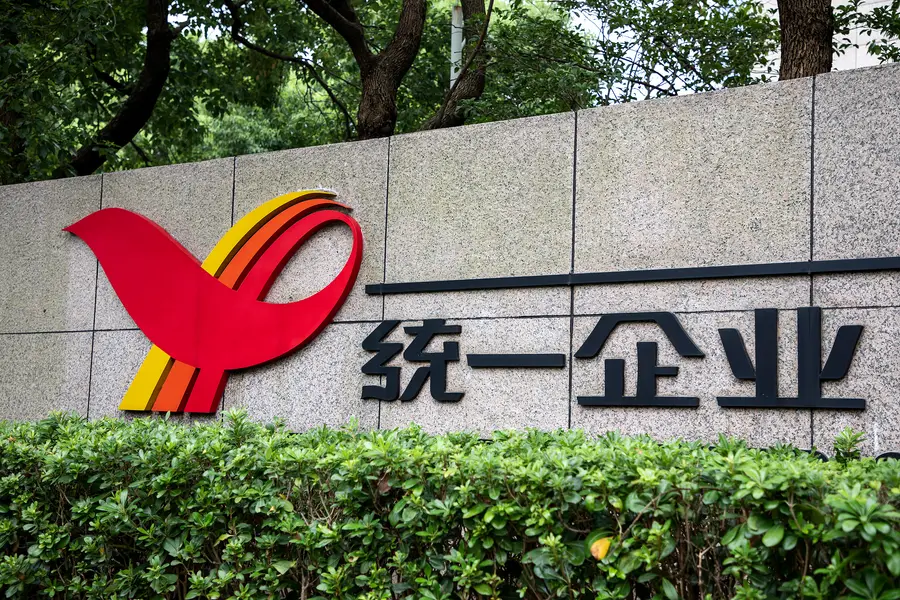
The food and drink maker’s bottom line growth in an increasingly competitive environment spotlights the company’s durability
Key Takeaways:
- Uni-President reported its profit for the first half of the year rose by 9% to 1.4 billion yuan, though its revenue rose just 1.4%
- Revenue from the company’s flagship beverage business declined slightly during the six-month period
By Lau Chi Hang
China’s population of 1.4 billion may translate to the world’s largest national appetite. But that doesn’t necessarily translate to booming business for its thousands of food and drink makers duking it out for a place at the table. In such an environment, even powerhouses like Wahaha, built by China’s former richest man Zong Qinghou, can vanish from Chinese supermarket and convenience store shelves almost overnight.
Given that rapid state of flux, any company that can maintain its position over three decades looks truly remarkable — and Uni-President China Holdings Ltd. (0220.HK) has emerged as a survivor in that sense. The company’s financial results for the first half of 2026, released last week, show its revenue rose by a marginal 1.4% year-over-year to 17.32 billion yuan ($2.57 billion). But its profit rose by a healthier 9% to 1.4 billion yuan.
Among its two major operating segments, revenue from its larger beverage business declined by 0.3% year-on-year to 10.75 billion yuan. But that was offset by the food business, which rose 4.7% to 5.63 billion yuan.
Chairman Lo Chih-Hsien’s deserves credit as the steady hand behind his long-established company’s ability to maintain its place in the market. Since taking over at Uni-President’s helm from his father-in-law and company founder Kao Ching-yuen in 2013, Lo has spent the last 13 years moving in step with the times of China’s rapidly evolving food and beverage preferences, even if its modest growth hasn’t made it a flavor of the day among investors.
Those investors have given the company a conservative trailing price-to-earnings (P/E) ratio of just 13 times, lagging the 20 times for instant noodle maker Nissin Foods (1475.HK). A faster growing field of specialty snack sellers are even more popular among investors, with Busy Ming Group (1768.HK) trading at 38 times and Liuliumei (6658.HK) at a sky-high 66 times – a level often reserved for hot tech startups.
Beverage business under pressure
Its tepid valuation may partly owe to the fact that Uni-President’s business is indeed under some pressure. Its core beverage segment must regularly defend its turf from newer brands constantly testing the latest flavor fads. Uni-President hasn’t been completely unscathed from those attacks, reflected in the slight decline for its beverages business.
As consumers become increasingly health-conscious and scale back on sugary drinks, Uni-President’s iced black tea and fruit juice lines have come under particular pressure. Seizing on those trends, leading bottled water seller Nongfu Spring (9633.HK) has aggressively expanded its Oriental Leaf sugar-free tea brand in recent years, hitting a sweet spot of consumer demand. Uni-President also offers its Chai Li Won line of tea-based drinks, but the brand accounts for a limited share of the company’s beverage revenue. Compared with Nongfu’s tea drink sales of more than 10 billion yuan in its latest half-year period, Uni-President is quite the tea peewee.
The bottled beverage market is also under assault from the explosion of bubble tea shops in recent years. New chains like Mixue, Chagee and Chabaidao have sprouted up like weeds, with China home to an estimated 400,000 such shops by the end of last year. The country’s new middle class with extra money in their digital wallets no longer minds spending a bit of that pocket change for a cup of better-tasting fresh bubble tea. Consumers can obtain those drinks more easily than ever thanks to a boom in food delivery platforms, further challenging traditional bottled beverages that are a convenience store staple.
Instant noodle image crisis
On the food side, Uni-President’s staple is instant noodles. But following many years of steady growth through iterations of all shapes and sizes, that market has slowed considerably as today’s consumers chase healthier options and increasingly view instant noodles as junk food. Many now believe such products are harmful when eaten over the long term, and put more focus on fresh foods, which can be ordered online and quickly delivered, often within an hour. Such speed is rapidly undermining the time-saving and fast-food advantages instant noodles enjoyed for years, causing demand to stagnate.
At the same time, competition within China’s instant noodle market remains fierce. Ting Yi ’s (0322.HK) Master Kong instant noodle brand has long been the market leader, with Uni-President trailing close behind. Its runner-up position also means that Uni-President is more vulnerable to attack from a more recent wave of latecomers to the instant noodle market. One of the more successful is Baixiang Food, whose market share has surged from 5.9% in 2021 to 15% in the first half of last year, rapidly encroaching on Uni-President’s 18% at the end of that period. That means that even the slightest misstep could cause Uni-President to be overtaken by this newer, aggressive rival.
Rising costs
Then there’s the question of production costs. Uni-President has managed to boost its gross margin over the last two years, largely on falling raw material costs. Among its two major segments, plastic bottles account for 20% and 30% of costs for the company’s beverages. Therefore, polyethylene terephthalate (PET) — the raw material used to make plastic bottles — is one of the most critical factors influencing the company’s costs.
Between 2023 and 2024, the price of PET fell from between 8,000 yuan to 10,000 yuan per ton, to just 6,000 yuan and 7,000 yuan, bringing substantial cost savings. However, the U.S.-Iran war has led to higher oil prices, which has translated to higher PET prices, since plastics are a petroleum product.
Despite such uncertainties, Uni-President’s financial position is quite strong. The company has no long-term borrowings, and while its current borrowings stand at 2.52 billion yuan, it had 1.61 billion yuan in cash at the end of June. The company’s turnover days for trade receivables and inventory are both relatively low, with the former falling from seven days last year to six days in the first half of 2026, while the latter was unchanged at 35 days.
The bottom line is that Uni-President won’t win over any investors for its fast growth in China’s fiercely competitive food and drink market. But given its deep cash reserves and historical ability to navigate a highly competitive and fast-moving Chinese market, its stock could still be attractive for its dividends and durability.
To subscribe to Bamboo Works weekly free newsletter, click here
Related Articles
Can Longcheer buy its way to the top of the AI rack?
Two auto giants hitch wagons to combat harsh industry winter
RELATED ARTICLES
-
Who needs Dingdong? Alibaba answers Meituan with super-sized Pupu bid
- PPLabs eyes capital refresh as losses linger on heavy investments
-
Cafe de Coral emerges to new dawn, as hidden concerns remain
0341.HK
-
Restructuring hits Want Want’s bottom line, as top line ekes out growth
0151.HK
- AI’s hidden appetite for specialty materials: The rapid rise of modified PPO resins