Specialized embodied robots: A massive next-generation opportunity

China’s power sector is opening the door for specialized embodied robots, but scaling up remains a costly, complex climb
By CLS Marketwatch
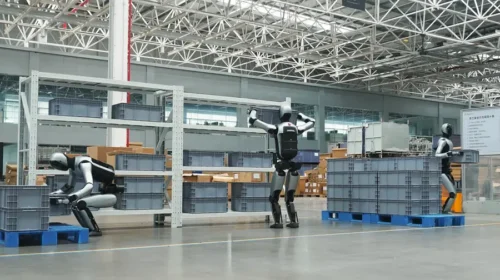
As a core medium for AI interacting with the physical world, embodied intelligent robots have made critical evolutionary advances over the past few years as industry chains mature. Within that broader category, specialized embodied intelligent robots, designed for high-risk industrial environments such as power, mining, maintenance and emergency response tasks, are grabbing increasing attention. With its vast infrastructure, highly standardized operational scenarios, and long-accumulated experience in use of automation, the power industry is considered a testing ground for mass deployment of specialized embodied intelligent robots.
The great leap of embodied robotics
Backed by concerted policy efforts and industry initiatives, embodied intelligent robots are taking significant strides toward large-scale adoption. Against the backdrop of such intensive initiatives, demand has been further strengthened by the introduction of industry standards and support measures, as well as a concrete target to deploy tens of thousands of units by the end of 2026.
This year alone, customers have placed large orders for embodied intelligence from sectors such as warehousing, logistics and power, with the State Grid Corp. of China’s purchasing plans drawing particular attention. China’s largest power grid operator plans to procure around 8,500 embodied intelligence devices during the year, with a total investment of approximately 6.8 billion yuan ($1 billion). Robot procurement by power grid operators has entered a broader new upcycle, and the market size could reach 10 billion yuan in the near term.
Power leads the way
As specialized embodied intelligent robots are rolled out, the pace of adoption is varying considerably across different fields. The power sector has taken the lead, while others remain largely in earlier stages. Nonetheless, inspired by the power sector’s progress, market expectations for large-scale robot deployment in other industries, such as mining, oil and gas, and rail transit, have risen sharply.
From a medium-term perspective, grid-related investments are expected to exceed 5 trillion yuan in coming years, which will stimulate substantial demand for robots. As investment in new power systems grows, demand is projected to grow further still. However, the power industry demands a high degree of operational precision, where drone technology is already well-developed and better suited. That raises questions about whether embodied intelligent robots can successfully gain a foothold there.
Meanwhile, adoption of embodied intelligent robots in mining, oil and gas, and rail transit is notably lagging. While demand has picked up somewhat, company feedback indicates a near-term surge is unlikely, primarily due to two constraints. First, cost pressures remain challenging, and the economic viability of mass utilization has yet to be fully validated. Second, non-standardized operational scenarios place high demands on robot adaptability, making it difficult for general-purpose products to directly meet complex on-site requirements. Companies are optimistic about the long-term industry outlook, but have yet to translate that to a significant uptick in demand so far.
Partnerships pave the path forward
Notably, general-purpose robotics and specialized robotics manufacturers haven’t competed against each other as much as previously anticipated. Instead, they’ve increasingly shifted toward collaborative R&D and complementary strengths.
Having cultivated extensive expertise in fields like power, mining and nuclear for years, specialized robotics makers have developed mature product lines, including wheeled and tracked robots as well as drones, and accumulated a wealth of scenario-specific insight and operational data. Yet their weakness lies in a lack of production capacity for humanoid robots and relatively limited knowledge in cutting-edge areas such as embodied intelligence algorithms. On the other hand, general-purpose robotics firms possess advanced technologies and scaled delivery capabilities, but lack in-depth understanding of specific operating environments, safety standards, and workflows in specific industries.
In such an environment, joint R&D has emerged as an ideal model. For example, Hangzhou Shenhao Technology (300853.SZ), a leading power sector player, has teamed up with Deep Robotics; mining giant Citic Heavy Industries (601608. SH) is jointly developing an industrial-grade, explosion-proof robotic dog with Unitree Robotics; and in the nuclear industry, Jingye Intelligent Technology (688290.SH) has also formed a strategic partnership with Deep Robotics. Specialized robotics makers undeniably have better understanding of specific application contexts and possess vast amounts of accumulated data that are difficult to replicate in the short term.
Looking at price trends and corporate strategies, the cost of humanoid robots is falling rapidly. Humanoid robot shipments in China totaled 14,400 units last year, but are expected to leap to between 100,000 and 200,000 units in 2026. Unitree is a case in point of how fast prices are falling. The unit price of its humanoid robots dropped from 593,400 yuan in 2023 to 260,700 yuan in 2024, and fell further to 167,600 yuan in the first three quarters of 2025. Operating in a market where pricing has yet to stabilize, most specialized robotics makers are choosing to focus their resources on independent R&D of core components and software algorithms.
Overall, 2026 is shaping up as a starting point for mass adoption of specialized embodied intelligent robots in China. The power sector, with its vast infrastructure, highly standardized operations and sizable procurement plans, has become the first to unlock a billion-dollar market opportunity. While other specialized sectors offer promising long-term potential, they are still constrained by cost pressures and the need to adapt to specific operational scenarios, thus slowing their adoption rate. On the whole, the industry’s path from pilot projects to full-scale adoption is still awaiting further validation.
CLS Marketwatch provides insights and analysis on China’s industries. You can contact the author at liujingyi@cls.cn
To subscribe to Bamboo Works weekly free newsletter, click here
Related Articles

RELATED ARTICLES