The maker of robotic arms for industrial use is taking advantage of a new opportunity for mainland listings as it expands into the market for embodied AI
Key Takeaways:
- Dobot aims to raise around $177 million on Shenzhen’s ChiNext, becoming the first Hong Kong-listed firm to raise capital under the new policy
- Price pressures are intensifying in its core market for collaborative robots, prompting the pursuit of new revenue from more advanced AI technology
By Lee Shih Ta
Less than two years after a Hong Kong IPO, a Chinese robotics maker is set to become the first company to add a mainland listing under a new policy to boost Shenzhen as a financial hub.
However, the Hong Kong equity performance has been volatile. Within months of their 2024 debut, shares in Shenzhen Dobot Corp Ltd. (2432.HK) more than tripled in price, valuing the firm at over HK$30 billion. But as the fervor for robotics stocks cooled, the shares lost most of their gains and are now trading more than 60% below their peak.
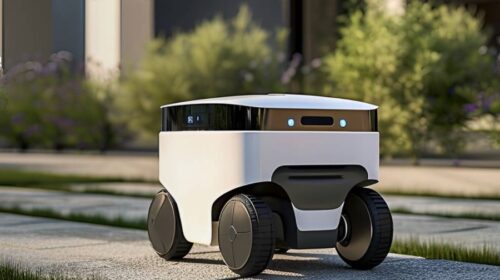
Dobot makes lightweight automated systems for use alongside human workers, known as collaborative robots, or “cobots” for short. Plans to expand into higher-end robots captured investors’ imagination when Dobot first hit the Hong Kong market, and now the company is looking to raise further cash to pursue its ambitions.
This time, investors are focusing more closely on earnings and tangible commercial progress, as competition in the robotics market heats up.
Dobot announced on June 22 that the Shenzhen Stock Exchange had accepted its application to list on the ChiNext market under an initiative to make it easier for companies in southern China’s manufacturing and technology belt to access capital in both Hong Kong and the mainland.
The company said it plans to raise 1.2 billion yuan ($177 million), about 2.4 times its 2025 revenue. Of the proceeds, 550 million yuan will go to a multi-legged robot project and 250 million yuan to humanoid robots. Another 100 million yuan will be spent on boosting marketing capabilities, and 300 million yuan is earmarked for working capital. Two-thirds of the money raised will be invested directly in next-generation robot products, with a focus on developing embodied intelligence.
While AI start-ups Zhipu and MiniMax have been seeking to list on Shanghai’s STAR Market, Dobot’s A-share plan is based on a policy Shenzhen introduced last year targeting Hong Kong-listed companies operating in the Greater Bay Area spanning Guangdong, Hong Kong and Macao.
Founded in 2015, Dobot is a Chinese leader in collaborative robots. According to third-party research, it held a 13.2% market share by sales volume in 2025, ranking first globally for a second straight year. Its revenues rose from 287 million yuan in 2023 to 374 million yuan the following year and 493 million yuan in 2025, a cumulative growth rate of 71.8%.
Industrial applications accounted for 54.5% of revenue in 2025, while income from advanced robotic arms known as six-axis collaborative robots jumped 44.7% to 302 million yuan and revenue from embodied intelligent robots surged nearly 419%.
In the first quarter of this year, revenue doubled to 112 million yuan from the year-earlier period, indicating an accelerating growth pace.
Growth pains
But rising turnover has yet to translate into profits, due to heavy R&D spending, the costs of global expansion, and intensifying rivalry in the robotics arena. The company posted annual net losses of 103 million yuan, 95 million yuan and 84 million yuan between 2023 and 2025. Accumulated uncovered losses stood at about 345 million yuan at the end of last year, and Dobot does not expect to break even before 2028.
R&D expenses rose nearly 60% last year to 115 million yuan, equal to around 23% of revenue, with nearly 40% of that amount invested in embodied intelligence. Cash flow from operating activities went from negative 158 million yuan in 2023 to negative 42.59 million yuan in 2025.
At the same time, overall gross margin slipped from 48.47% in 2023 to 46.49% in 2025, while the average selling price of Dobot’s robotic arms sank from 65,900 yuan in 2021 to 38,200 yuan in 2025, reflecting an industry shift towards competing on price rather than technological merits.
Since last year, humanoid robots have become one of the hottest segments in the global AI industry. Tesla (TSLA.US) is advancing its Optimus program, Figure AI has received backing from Microsoft, OpenAI and Nvidia, while Chinese companies including Ubtech Robotics (9880.HK) and Unitree Robotics are competing for a place in the next-generation market.
Meanwhile, Dobot has supplanted the long-time industry leader in collaborative robots, Universal Robots, as the world’s top-ranked supplier, after the Danish firm’s market share fell from 17.2% in 2023 to 8.2% in 2025, according to industry research.
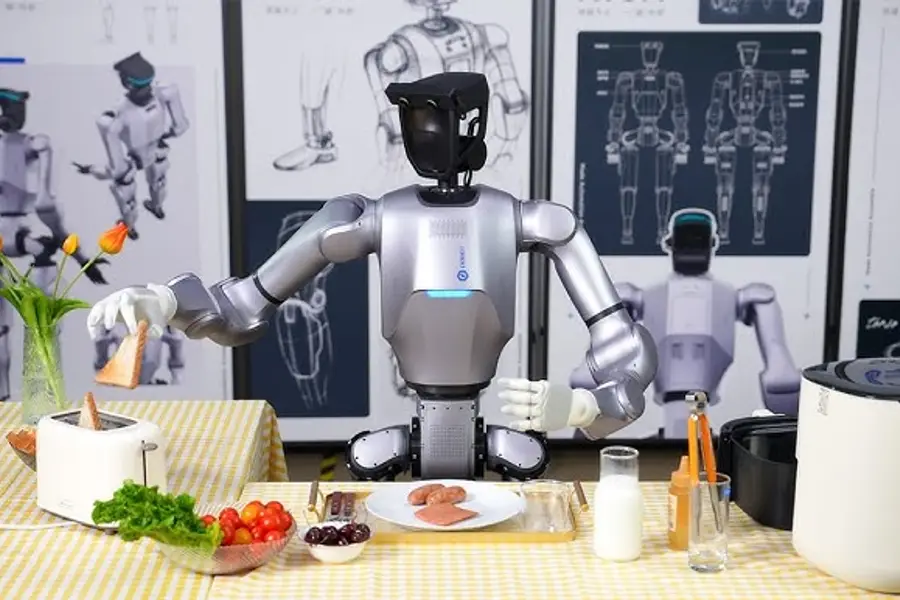
Looking to expand into higher-end products, the company launched q humanoid robot, the Dobot Atom, this year and built a global sales network to support it, but the revenue stream remains limited.
Based on its current market value of about HK$12 billion, Dobot trades at a price-to-sales ratio of about 21 times, already a stretch for an unprofitable industrial robotics company. The market already appears to have priced in some of the hopes around humanoid robots and embodied intelligence.
Dobot’s planned listing comes as investors pay closer attention to how robotic technology is being rolled out in the marketplace. The company is looking to secure a capital boost before industry competition heats up further, helped by the new rules for Shenzhen listings, as it positions itself as a player in embodied intelligence. Investors will be watching to see whether it can turn its “cobot” expertise into new revenue from embodied AI and, eventually, profits.
To subscribe to Bamboo Works free weekly newsletter, click here