The cement and concrete arm of the China Resources group has flagged up a deepening loss, hit by falling prices for its products and rising manufacturing costs
Key Takeaways:
- China Resources Building Materials predicted a nine-month loss of up to $127 million after logging a profit in the year-earlier period
- Cost-cutting efforts and transport efficiencies could not offset falling prices for cement, concrete and aggregates and higher costs for coal
By Lee Shih Ta
In the business of building materials, producers have limited room to shrink their fixed costs to cope with waning demand. Instead, they must slash their prices to win orders.
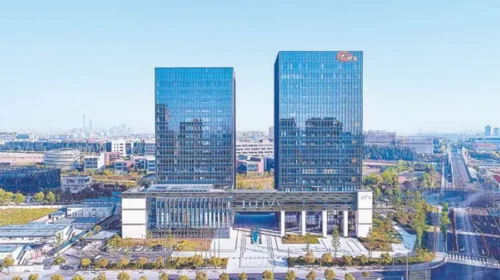
Such is the predicament for a leading supplier of cement and concrete in southern China, as a property downturn casts a long shadow over the construction supply chain. China Resources Building Materials Technology Holdings Ltd. (1313.HK), an arm of China Resources Group, has just predicted a swing into the red for the first nine months of the year, driven by falling market prices and cost pressures.
In its Oct. 12 earnings alert, CRBM forecast a loss of 750 million to 850 million yuan ($112 million to $127 million) for the three quarters, compared with a profit of 331 million yuan in the same period a year earlier, compounding the losses it logged in the first half.
Fewer property projects mean less demand for construction materials such as aggregates and concrete. Official Chinese statistics show that investment in property development fell 19.9% in the first eight months from the year-earlier period, while national cement output slipped about 8% in the first half. Cement producers and building material suppliers must compete for a limited pool of orders, intensifying price competition.
CRBM’s revenue fell 15.4% to 8.64 billion yuan in the first half for a net loss of 441 million yuan, against a profit of 307 million yuan a year earlier. Gross margin went from 18.5% to 8.3%, showing how quickly the drop in selling prices is squeezing the profit on each sale.
The property market was also weak last year, but cement selling prices and coal costs were less of a problem. Average cement selling prices rose 3.8% in the first half of 2025, while coal purchase prices fell 17.8%, helping the company’s gross margin rise from 15% to 18.5%. By contrast, selling prices for cement, concrete and aggregates fell by 15.5% to 18.6% in the first half of 2026, while coal purchase prices rose 5.9%. The company still cut its cement unit cost by 3.4%, but the steeper fall in selling prices pushed its gross margin sharply lower.
Although full-year profit rose in 2025, boosted by gains on subsidiary disposals and lower charges for goodwill impairment, the core business was under pressure, as revenue fell 8.6% and gross profit slipped by 7.3%.
The concrete business illustrates how increased volumes may not offset falling prices. The amount of concrete sold by CRBM rose 15.7% in the first half, but average selling prices fell 18.6%. Cement and aggregate prices also declined, leaving all three major product lines under strain from narrowing margins.
The company’s capacity utilization rates also highlight weakening demand, at 53.5% for cement and 31.4% for concrete in the first half, both below year-earlier levels. Even when equipment is underused, the company must continue paying plant, staffing and maintenance expenses, further squeezing profits.
Cutting logistics costs
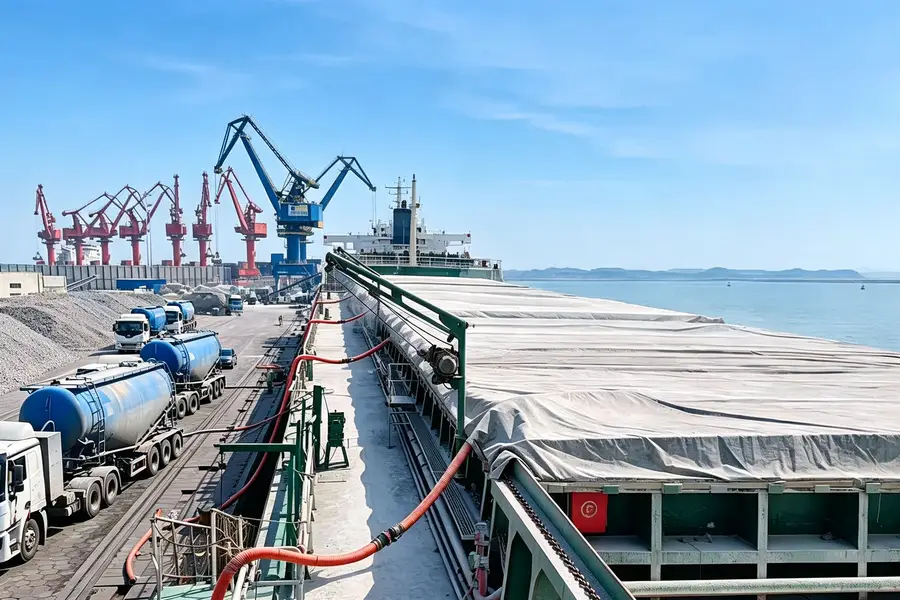
CRBM distributes its cement, aggregate and concrete through the Xijiang River waterway and transshipment terminals in the Pearl River Delta. It controls logistics costs by arranging shipments in both directions and capturing economies of scale, while also exploring business opportunities involving new-energy electric vehicles. For low-priced products shipped in large volumes, such as cement, transport efficiency affects profit per ton. But the transport and transshipment system still needs sufficient cargo volumes. When construction orders decline, the cost benefits of the logistics network are harder to translate fully into profits.
The company has also sought growth beyond cement in recent years. In 2023 it dropped a reference to cement in its name as it sought to become a diversified building materials company. But cement, concrete and aggregates still accounted for more than 90% of first-half revenue. The newer businesses have yet to generate sufficient earnings to offset the downturn in its core markets.
The company’s shares had already weakened before the profit warning, falling about 40% in the year to date. They jumped 4.9% the day after the earnings alert, but the bounce was not enough to signal a trend reversal. Based on its Oct. 13 share price of HK$0.96 and book value per share of 6.30 yuan at the end of June, the company trades at a price-to-book ratio of about 0.13 times, below the 0.38 for Anhui Conch Cement (0914.HK). That discount reflects investor caution about CRBM’s earning power and returns on assets.
Cost cuts can cushion the blow, but they are unlikely to deliver a meaningful recovery in gross profit without an improvement in orders and prices. That also helps explain why the company has struggled to change market sentiment. Its low price-to-book ratio shows that investors are still waiting to see whether its assets can generate steady returns. To win them over, the company must first deliver better outcomes on product prices, capacity utilization and gross margins. Then it would need to demonstrate that its newer businesses can gradually reduce the earnings dependence on traditional building materials.
To subscribe to Bamboo Works weekly free newsletter, click here
Related Articles

RELATED ARTICLES
-
Is Tinci Materials limping to a Hong Kong IPO?
 002709.SHE
 - AI’s hidden appetite for specialty materials: The rapid rise of modified PPO resins
-
Red Avenue shares slump in Hong Kong trading debut
9607.HK603650.SHG
-
Modern Dairy squeezes profits from tough milk market
1117.HK
-
Trademark tussle could further dilute Helen’s incredible shrinking bar tab
9869.HK
- Dekon swings to the red on Chinese pork glut
-
Can HSC break free from vicious cycle of global leadership but unsteady profits?
688353.SHG