After pricy robotics push, CSG powers up for Hong Kong listing
The provider of equipment for power grids and industrial automation is seeking to raise funds for AI-related product upgrades and overseas expansion
Key Takeaways:
- CSG returned to profit two years ago after reducing its exposure to the automotive sector, but has invested heavily in a move into industrial robotics
- Its mainstay business of technology for power grids contributed about 94% of first-half revenue growth
By Lee Shih Ta
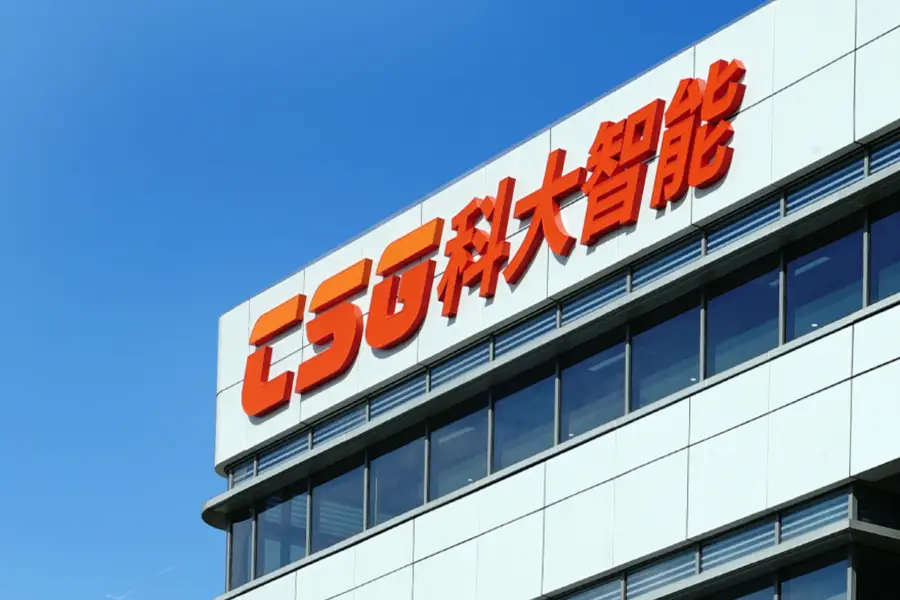
The product list ranges from vehicle charging systems to energy storage solutions and industrial robots. But after a bumpy move into new areas, CSG Smart Science & Technology Co. Ltd. (300222.SZ) has been falling back on its original business of power-grid hardware to energize its earnings.
Now the supplier of intelligent equipment is aiming to raise capital on the Hong Kong market to upgrade its key businesses for the AI era and pursue overseas growth.
The company, which has traded on Shenzhen’s ChiNext board since 2011, revived an application to list on the Hong Kong Stock Exchange on Oct. 22, with Huatai Financial and Guoyuan Capital as joint sponsors.
In its listing paperwork, CSG identified its growth engines as power equipment, energy storage and industrial robotics. But the segments are far from equal in their current contribution to earnings. Equipment for power distribution and consumption led the way in the first half of the year with 74.3% of revenue, followed by 24.5% for robotics and just 1.2% for energy storage.
From power grids to auto factories
CSG was founded in 2002 with early investment from a company affiliated with China’s University of Science and Technology, starting out with equipment to monitor, control and protect power grids. The university link helped to gain customers’ trust, but the business was reliant on grid investment patterns and project schedules. When growth slowed after the firm’s listing, founder Huang Mingsong maintained that some projects were still awaiting planning and approval.
CSG subsequently expanded through acquisitions, entering the field of factory automation and lifting gear by buying Shanghai Yongqian M&E in 2014. In 2016, it added production lines for automotive body welding to its businesses, as well as automated guided vehicles (AGVs) for transporting materials, increasing its dependence on spending by car manufacturers.
When the automotive industry weakened in 2019, related revenue fell while costs rose. CSG recognized a goodwill impairment charge of 1.6 billion yuan ($240 million) that year and reported a full-year net loss of 2.6 billion yuan. As some of the affected subsidiaries continued to struggle, the company sold automotive welding and AGV units in 2024, as well as its controlling stake in a provider of charging infrastructure for electric vehicles.
The disposals and lower expenses helped CSG to turn a profit in 2024 after a net loss of 171 million yuan the previous year. Net profit rose further to 85.67 million yuan in 2025, while revenue rose 15.2% to 1.52 billion yuan in the first half of this year and net profit grew 40.3% to 111 million yuan.
The remaining robotics business, covering industrial lifting or stacking gear and inspection robots, serves clients in industries including lithium batteries, auto manufacturing and power. Robotics revenue rose 8.5% in the first half, but uneven product demand and intensifying competition for stackers pushed its gross margin down to 25.1% from 26.3%.
Lift from grid orders
The rest of first-half income came almost entirely from power distribution and consumption equipment. Increased orders pushed segment revenue up 20.1% to 1.13 billion yuan in the six months, contributing about 94% of overall growth. Higher sales of integrated primary-secondary circuit breakers, which carry bigger margins, also lifted the segment’s gross margin to 24.8% from 23.2%. Its gross profit rose 25.6% to 285 million yuan, accounting for about 75% of the group’s total, while gross profit from robotics increased just 3.7%.
The latest in automated grid technology integrates functions to detect faults, isolate affected lines and restore power. CSG has supplied China’s largest state-owned power grid for more than 20 years, giving it a firm industry foothold. According to data cited in the listing application, CSG was China’s second-biggest supplier by revenue last year of both integrated circuit breakers and feeder terminal units (FTUs), with market shares of 3.8% and 14.7%.
While its industry standing is an advantage, CSG must still tender for most of its contracts, with bids covering materials, delivery and after-sales costs. Grid companies also generally require suppliers to reserve capacity, meaning CSG must procure materials in advance and wait for payment after delivery.
While operating expenses must be paid throughout the year, income is concentrated in the second half, particularly the fourth quarter. CSG therefore recorded a net operating cash outflow of 159 million yuan in the first half, with net receivables and bills receivable totaling nearly 1.76 billion yuan at the end of June. Operating cash flow was positive for the full year in 2025, but working capital still needs to be carefully managed for expansion.
Through its Hong Kong listing, CSG hopes to boost the use of AI in its products and serve the equipment needs of data centers, as well as expanding its power business overseas, with a focus on the Middle East. This year, it acquired a 70% stake in transformer maker Zhejiang Jiangshan Yuanguang Electrical, broadening its product range and gaining access to overseas certifications and sales channels.
CSG’s mainland shares rose earlier this year but have since been in retreat, with a year-to-date loss of around 15%. Yet its price-to-earnings ratio remained around 74, above roughly 22 for NARI Technology (600406.SH) and 25 for XJ Electric (000400.SZ). CSG will need to demonstrate sustained profitability to justify that premium.
CSG’s specialized products and customization capabilities help it win orders but its new offerings such as power equipment for AI data centers have yet to prove their commercial viability. Whether the company can price its shares reasonably and turn new orders into steady returns will shape Hong Kong investor confidence going forward.
To subscribe to Bamboo Works free weekly newsletter, click here
Related Articles

RELATED ARTICLES
-
ESWIN Computing powers up its RISC-V growth story for Hong Kong investors

- Booming electricity demand feeds KeLiang’s niche in power grid simulation
- Topstar rolls out shaky robotics IPO, complete with volatile profits, falling revenues
-
Orbbec motors into rapidly cooling robotics IPO market
688322.SHG
- Specialized embodied robots: A massive next-generation opportunity
-
Orbbec’s booming robotic ‘eye’ sales fail to wake up its bottom line
688322.SHG
- Can crypto power supplier Boco plug into the AI boom?