New World looks to REIT in bid to rescue its shaky foundation
The company plans to list a commercial real estate investment trust in Shanghai, making it Hong Kong’s first developer to issue a C-REIT on a Mainland stock market
Key Takeaways:
- New World Development’s application to issue a C-REIT in Shanghai has received a notice of acceptance from the Shanghai Stock Exchange
- The struggling Hong Kong developer expects to receive net proceeds of up to 3.2 billion yuan from the listing
By Lau Chi Hang
History is repeating itself in Hong Kong’s real estate market that, in many ways, has defined the city’s economic cycles over the last century.
That reboot is playing out in one of Hong Kong’s top property companies, New World Development Co. Ltd. (0017.HK). In the 1980s, the company’s second-generation successor, Henry Cheng, took the reins from his father, Cheng Yu-tung, and embarked on an aggressive acquisition spree in his bid to one-up his famous father.
But a property market correction in the late 1980s, coupled with a towering debt load from expanding too quickly, soon caught up with the younger Cheng, forcing his father to come out of retirement. The patriarch ultimately offloaded the company’s assets on a massive scale to deleverage, steering the conglomerate through a period of recovery before its return to financial health.
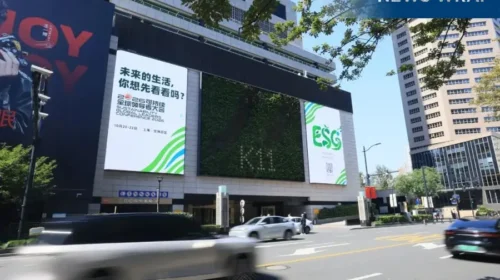
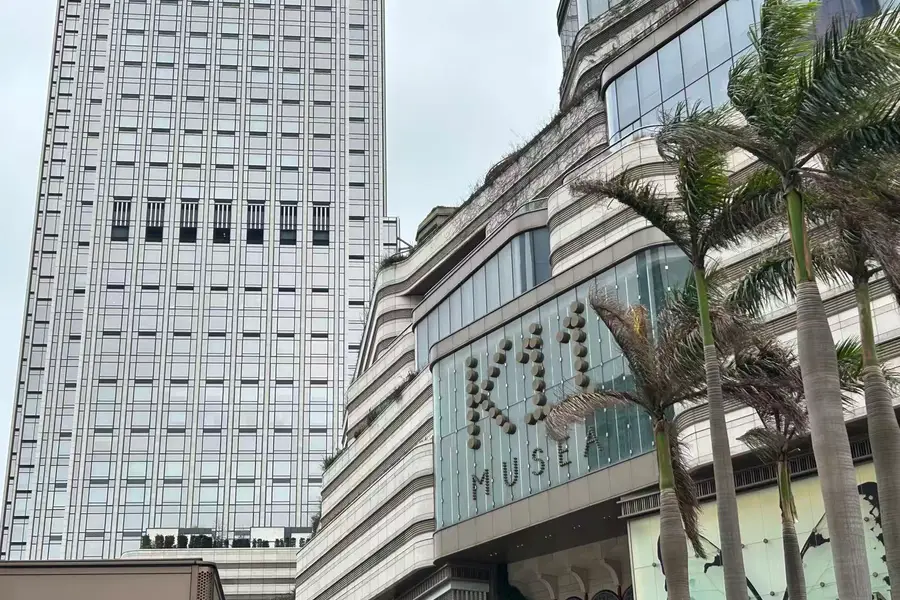
Now, more than three decades later, third-generation heir Adrian Cheng is providing a repeat trip down the road his father took. After taking the helm at New World, he aimed to surpass both his father and grandfather by aggressively expanding the empire. His efforts included heavy investment to build the K11 brand across Hong Kong and across the border in Mainland in China. That building spree is highly visible today in multiple shopping malls in both Hong Kong and on the Mainland, crowned by a massive HK$20 billion ($2.55 billion) bet on the 11 SKIES development at Hong Kong International Airport.
But then Adrian’s grandiose dreams began to follow in the footsteps of his father, as both the Hong Kong and Mainland property markets began to slump after 2020, dragging down New World’s property sales and shrinking the value of its assets. Making matters worse, two towers the company was building in 2021 in Hong Kong’s Tai Wai district failed to meet concrete strength standards, forcing a demolition and reconstruction that ultimately cost the company HK$1.5 billion.
Adding to the company’s woes, the U.S. Federal Reserve began hiking interest rates in 2022, compounding the burden on the already highly leveraged New World. Henry Cheng had no choice but to take back control from his son. Taking a page from his own father, the older and wiser Cheng immediately embarked on a deleveraging campaign to try to undo some of the damage done by his son.
REIT to the rescue
The most practical way to reduce debt is by selling off assets, which is what Henry Cheng has been doing. Last week, New World announced its latest move in that direction by unveiling a plan to spin off some of its assets as a commercial real estate investment trust (C-REIT), which would be listed across the border on the Shanghai Stock Exchange. The company said it has submitted its application to the China Securities Regulatory Commission (CSRC) and the Shanghai Stock Exchange, and received a notice of acceptance from the latter.
New World said it will hold 20% of the C-REIT and will receive net proceeds of 3.24 billion yuan ($483 million) from the spinoff. The C-REIT’s underlying assets consist mostly of New World’s K11 properties in Hong Kong and Shanghai, with a total floor area of 130,000 square meters. The REIT is also noteworthy as it would be the first from a Hong Kong property developer listed in Shanghai, which has become popular for new REIT offerings by domestic developers struggling under heavy debt loads.
That spinoff may be just the beginning of New World’s new cash-raising drive. The day after the announcement, rumors surfaced that the company was in talks with Singapore’s UOL Group to sell 50% of its Hyatt Regency hotel in Hong Kong’s busy Tsim Sha Tsui commercial district for HK$1.5 billion.
Debt reduction measures
Such asset sales conform with New World’s plan to reduce its debt using seven measures, which it rolled out last year. These include selling off projects under development, advancing asset disposal plans, unlocking opportunities presented by its land holdings, boosting returns on its investment properties, improving its returns on capital and operational spending, suspending dividend payouts and perpetual bond interest distributions, and better managing its treasury.
By the end of June last year, the company had secured HK$88.2 billion in financing agreements. Last November, it launched an offer for nearly HK$20 billion of its perpetual bonds and guaranteed notes, which succeeding in slashing its debt by HK$9.1 billion.
Extending debt repayment periods has also offered temporary relief, though the company’s debt burden remains quite high. Its net debt fell from HK$130.8 billion at the end of June 2023 to HK$120.1 billion by June last year, representing an improvement, albeit modest. But then the figure began to grow again, rising to HK$122.7 billion by the end of last year.
Now, the core strategy still appears to be selling off the family jewels to lower debt to more manageable levels. Whether these assets can be successfully unloaded for the values New World is seeking ultimately hinges on the fickle property markets in Hong Kong and across the border in Mainland China.
Hong Kong rebound
The Mainland property market remains largely in the doldrums, but Hong Kong has shown recent signs of improvement. The city’s residential price index compiled by its Rating and Valuation Department climbed from 287.2 in January 2025 to 321.5 this July, up 11.9% over that time.
A recovery for housing prices is crucial for New World. Most importantly, such a reversal would end its shrinking asset values, helping it avoid further asset impairment write-downs. Also important, such a reversal would create more activity from home buyers, many now sitting on the sidelines over concerns that values will keep falling.
On the commercial property front, an economic rebound in Hong Kong, paired with a recent jump in tourism from Mainland China, has brightened the city’s retail landscape and boosted occupancy rates in shopping malls. Aside from generating higher rental income for its shopping malls, the trend paves the way for New World to stop taking further asset impairment charges on its commercial property portfolio.
But none of that addresses New World’s exposure to a Mainland housing market that remains stubbornly anemic, despite a steady stream of government stabilization measures. Still, its destocking efforts on the Mainland are gradually bearing fruit, and a nascent recovery in domestic consumption is allowing the company to securitize its mall assets into C-REITs, allowing it to cash out like it’s doing now.
In summary, Hong Kong’s property market appears to be stabilizing, helping with New World’s agonizing task of selling off vital assets to pay down debt. That means the company is likely to weather this latest storm, though its status as one of Hong Kong’s leading developers may take longer to recover.
To subscribe to Bamboo Works weekly free newsletter, click here
Related Articles
RELATED ARTICLES
-
Developer lifeline: Seazen seeks financial relief through REIT spinoff
 1030.HK
 -
Struggling Shimao looks on as creditors move in on its trophy Hong Kong hotel
0813.HK
- Vipshop looks to outlets in bid to jumpstart growth
- ESWIN Computing powers up its RISC-V growth story for Hong Kong investors
- Its losses widening, Bitfire builds up its bets on the stablecoin race
- With looming debt pressures, Agile faces tough road to restructuring