Gogox dumps China dream that failed to deliver
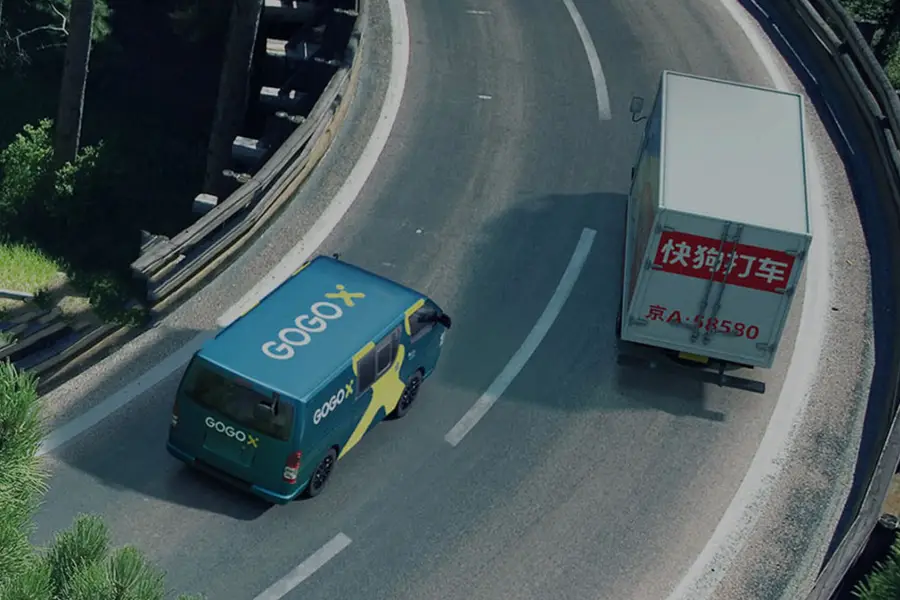
The Hong Kong-based delivery company is selling its Mainland Chinese business for a token 1 yuan, and is changing its name as it chases other global markets
Key Takeaways:
- Gogx announced it is selling its Mainland China business for a token 1 yuan, exiting a market that once turbocharged its stock
- The Hong Kong-based provider of delivery services will change its Chinese name from Kuaigou Dache to Gogox Keji to better unify its Chinese and English names
By Lau Chi Hang
Another day, another former highflyer that once harbored big hopes for the vast China market is now finding those dreams in tatters.
This time, the former dreamer is Gogox Holdings Ltd. (2246.HK), a Hong Kong mainstay that was once a rising star as it aimed to bring its local delivery services to the adjacent Mainland Chinese market. After listing in Hong Kong four years ago, its market cap briefly surged as high to HK$14 billion ($1.8 billion) on that China dream. But fast forward to the present, where that dream – and the company’s stock price – have both crashed, bringing down its market value to less than HK$100 million.
Now, the company has announced it will sell its China business for a song, handing it over to a local Hong Kong businessman for a token price of just 1 yuan, or about $0.15.
It’s not difficult to see why Gogox is taking the step. It has lost money in each of the four years since its listing, suffering a cumulative 2.67 billion yuan ($400 million) in losses over that time.
While the losses narrowed considerably in the last two years, it continued to bleed red ink in the first half of this year with a 70.86 million yuan loss. Equally discouraging, its revenue fell 10.9% during the latest six-month period to 293 million yuan. Its cash dropped by 47% year-over-year, leaving it with just 67.94 million yuan in its coffers. And its operating activities recorded a net cash outflow of 17.18 million yuan. The misery owed mostly to the company’s business in Mainland China, where the competition is fierce.
Subsidiary sale
Weighed down by that albatross, Gogox announced this month it was selling its Gogox PRC Group unit to Hong Kong businessman Ng Chi Fung for 1 yuan. According to the announcement, the unit has lost about 280 million yuan in the two and a half years between 2024 and June this year, including a 49 million yuan loss in the first half of 2026. Its net liabilities stood at approximately 2.48 million yuan at the middle of the year.
The company said that given changes in the market environment, it felt that Mainland China was no longer one of its core geographical regions. The disposal will enable it to streamline its structure, enhance long-term operational efficiency, and reallocate resources to areas that have better potential for future growth.
Along with the business changes, the company also proposed ditching its current Chinese name, Kuaigou Dache, in favor of a name closer to its English. Accordingly, it will use a hybrid of Gogox Keji, meaning Gogox Technology, as the Chinese name for its remaining Hong Kong and overseas operation, while its English name will remain unchanged.
These changes seem to return Gogox to square one, since the company initially set out from its base in Hong Kong. Before its inception, Lam Hoi Yuan, Tang Kuen Wai, Kwan Chun Man and a few others were running a lunchbox advertising business and frequently needed vans to make deliveries. They realized that communicating with drivers was very inconvenient, so they came up with the idea of using a mobile app to connect drivers with people who needed things delivered. They gradually realized that service held great promise, and founded their GoGoVAN ride-hailing platform in 2013.
Building a dragon
By chance, they set up their company just as China was also developing its own freight platforms as the local e-commerce industry began to boom. In 2017, Yao Jinbo, founder of 58 Daojia, orchestrated a major merger between GoGoVAN and his 58 Suyun subsidiary, with Yao Jinbo becoming the largest shareholder. With the China story providing some strong tailwind, GoGoVAN quickly became an investor darling, as its valuation surged past 10 billion yuan. It was still riding high when it went public with fanfare in Hong Kong under the Gogox name.
But Gogox quickly encountered a super formidable opponent: Lalamove, founded by another Hong Konger, Chow Shing-yuk. After several years of fierce fighting, Gogox found itself no match for its hometown rival. Making matters worse, other companies also piled into the market, with even traditional ride-hailing giant DiDi Global entering the battleground. The resulting price wars were ultimately too much for Gogox.
But after dumping its China hot potato, the company no longer has a big growth story to excite investors. While it says it will focus on developing the Hong Kong and overseas markets, the former is extremely small and already near saturation.
Overseas expansion easier said than done
As for expanding overseas, such a move is often easier said than done. Among other things, the company faces different regulations, market cultures, and different customer characteristics. And, of course, it will have to vie with established local competitors, who know the market far better and are hardly likely to roll out the welcome mat for a newcomer.
The company’s latest financial results show its revenue from Hong Kong and overseas markets totaled just 249 million yuan in the first half of this year, down 4.3% year-on-year. That doesn’t look particularly encouraging, as those two segments will become the company’s remaining business following its Mainland China sale.
What’s more, overseas expansion requires big spending. Gogox is quite limited in that regard, with less than 70 million yuan in cash available as of June this year. The company raised HK$550 million during its listing. But it announced in May this year that the remaining HK$107 million, initially intended for investments and overseas acquisitions, would be reallocated as general working capital instead. That seems somewhat contrary to the overseas development strategy stated in its announcements. Moreover, reallocating overseas development funds back to daily operations seems to indicate the company’s working capital is also quite tight.
Even if Gogox intends to raise new money to fund its global expansion plan, that won’t be easy. Its failed experiment in Mainland China has made investors wary. And the company’s small market capitalization greatly limits the size of the funds it can raise. Investors may also be skeptical since Gogox has yet to show it can be a strong overseas performer.
To subscribe to Bamboo Works free weekly newsletter, click here
Related Articles
RELATED ARTICLES
-
Creality’s 3D-printing dream faces first post-IPO test
 3388.HK
- CXMT IPO tests China’s state-driven chip dream
- SiliconFlow’s AI ‘token factory’ dream gets $300 million vote of confidence
- Why Hong Kong-listed companies are switching from IFRS to China accounting
- Tax crackdown erodes edge for Hong Kong insurers
- Declawed in China, UP Fintech faces challenges in global marketplace
-
Confined to Hong Kong, Lung Fung lacks tonic for growth-hungry investors
2290.HK