Confined to Hong Kong, Lung Fung lacks tonic for growth-hungry investors
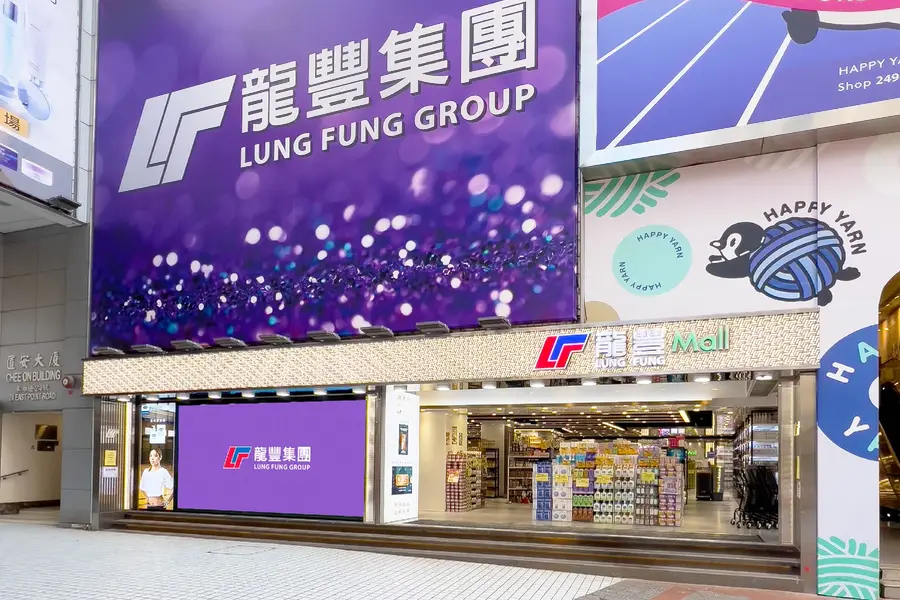
The city’s leading pharmacy chain reported record revenue and profits in its latest fiscal year, lifting its shares
Key Takeaways:
- Lung Fung reported its profit reached HK$269 million in its latest fiscal year through March, up nearly 60% from the previous year
- The Hong Kong pharmacy operator’s stock has lost more than 50% of its value just a month after its IPO
By Lau Chi Hang
Hong Kong’s IPO market continues to shine this year, with many newly listed stocks delighting investors with healthy gains on their first trading days. But that wealth-creating elixir has evaded Lung Fung Group Holdings Ltd. (2290.HK), one of Hong Kong’s top three pharmacy chains, which stumbled out of the gate a month ago by giving investors a haircut when its stock lost nearly half its value in its trading debut.
Despite that dismal performance, the company’s maiden post-IPO financial report, released last week, looked quite strong. Its revenue jumped 33.2% year-over-year to HK$3.28 billion ($420 million) in its fiscal year through March, while its annual profit soared by 57.9% to HK$269 million, as both figures set new records.
The company’s financial health also remained strong during the year. Its cash reserves reached HK$73.64 million, up 20% year-over-year, while its short-term bank borrowings fell by 17% to HK$543 million, with no long-term bank debt on its books. And while the company generated nearly HK$3.3 billion in revenue for the year, its receivables stood at just HK$31.6 million. Conversely, its payables rose by 19% year-over-year to HK$184 million. Those figures show Lung Fung is benefitting by quickly settling its sales, while obtaining longer payment terms from its suppliers.
From small pharmacy to listed company
Lung Fung started as a small neighborhood pharmacy when founder Tse Siu Hoi opened his first shop in 1992 in Sheung Shui, a remote area far from Hong Kong’s urban center. Tse never could have imagined back then that 34 years later, his company would emerge as the lone independent pharmacy operator to compete with Hong Kong’s two giants, Watsons and Mannings, which are both connected to big local corporations.
Much of the company’s success owes to a policy shift rolled out by China in 2003, making it much easier for Mainlanders to travel to Hong Kong individually, ending years of travel mostly confined to tour groups. That led to a flood of Mainland tourists visiting Hong Kong. Lung Fung was able to capitalize on that move since its location in Sheung Shui — once considered remote – suddenly became a hotbed of activity due to its proximity to the Mainland border.
Lung Fung’s business skyrocketed as Sheung Shui quickly became a prime destination for Mainlanders crossing the border to purchase daily necessities and medicines. The company expanded by opening new branches, boasting eight stores in the Sheung Shui area alone at its peak.
Basking in the new prosperity for his pharmacy business, Tse expanded by making moves into the real estate brokerage and restaurant businesses, leveraging his Lung Fung name with each. He also invested in residential properties, retail shops and industrial buildings, and even purchased an industrial building in 2011 with plans to convert it into a columbarium to house funerary urns.
Lung Fung also expanded beyond its Sheung Shui roots. As of June this year, its operated 31 stores throughout the city, with product categories including beauty, healthcare, and pharmaceuticals. Measured purely in terms of pharmaceutical retail, the company ranks first in Hong Kong with 5.2% of the market. Tse set his sights on the capital market as his business grew, ultimately landing on the Hong Kong Stock Exchange a month ago.
Even after a 30% rally for the stock after its stellar earnings report last week, the company still trades at an anemic trailing price-to-earnings (P/E) ratio of just 6 – quite low compared with the 14 for local health and beauty chain operator Sa Sa International (0178.HK).
Limited to Hong Kong
Given its strong financials and status as Hong Kong’s leading pharmacy chain, why has the company failed to win market favor? The key may lie in the limited size of its home market. According to Lung Fung’s prospectus, the total market for beauty, pharmaceutical, and healthcare products across all of Hong Kong in 2025 was HK$29.5 billion, highlighting limited prospects for growth.
Lung Fung’s 31 stores are already located throughout Hong Kong’s three major districts. And while there’s still room to open more, most areas are already heavily covered in the city’s relatively small geographical area. The company’s ability to grow its profits in its latest fiscal year owes largely to China’s further relaxation of travel restrictions to Hong Kong, which have continued to benefit Lung Fung. But with no new consumer stimulus policies in sight for now, additional catalysts to drive consumer foot traffic seem unlikely.
And even if the company keeps expanding, it still faces formidable competition from well-capitalized local rivals like Watsons and Mannings. While those two chains have lost some of their luster in recent years, both are backed by super-conglomerates CK Hutchison Holdings and Jardine Matheson Group, respectively. That strong support means Lung Fung can’t easily take market share from either of that pair.
No Mainland story
The reality is that solely relying on organic growth within Hong Kong makes achieving major breakthroughs difficult for companies like Lung Fung. Only by opening stores in the far larger Mainland market can such companies offer a growth narrative to get investors excited enough to award higher valuations. After all, investors are far more focused on the future, carefully scrutinizing a company’s growth prospects when picking stocks.
But telling a beautiful China growth story is easier said than done, and very few Hong Kong companies have been able to achieve such feats despite frequent efforts over the years. Even the locally dominant Watsons hit a wall in China, and was forced to close 279 Mainland stores last year in the face of declining revenue and profits. Sa Sa, a brand once familiar to Mainland consumers after its own expansion across the border, also suffered a crushing defeat that led it to completely withdraw from the market last year.
As a local pharmacy, Lung Fung has succeeded with its strategy centered on low prices and a wide variety of products. One way it maintains its low prices is by relying on “parallel imports” that carry lower prices than big brand products. But such a strategy might be difficult to replicate in Mainland China, which would take away that competitive advantage. But without a China growth story, no matter how difficult it might be to execute, Lung Fung simply lacks much attraction for Hong Kong investors.
To subscribe to Bamboo Works weekly free newsletter, click here
Related Articles

RELATED ARTICLES