Iluvatar earns paper profit, as its core GPU business stays stuck in the red
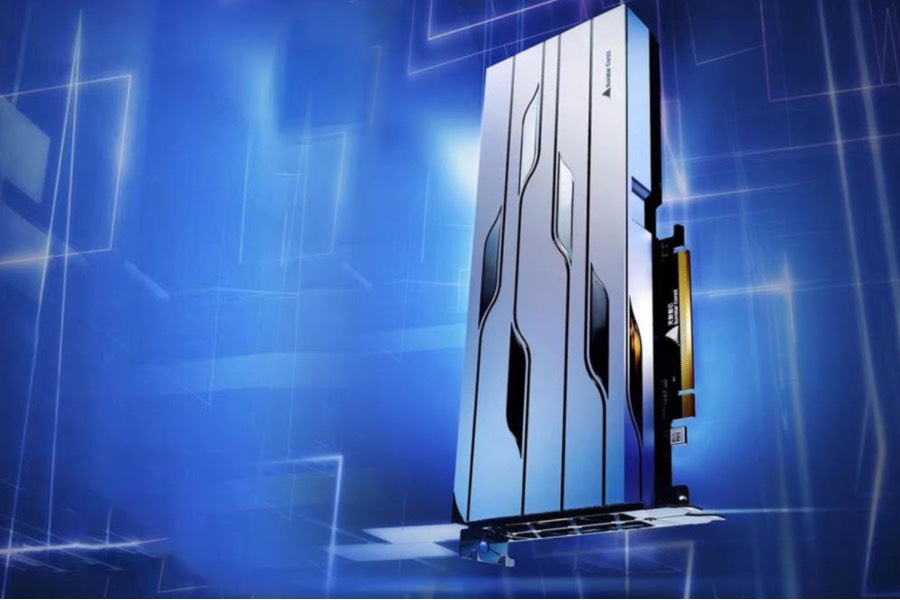
The company forecast a move to the black in the first half of the year, but investors are still waiting for its core inference GPU business to become profitable
Key Takeaways:
- Illuvatar expects to report a first-half profit of 60 million yuan to 140 million yuan, buoyed by more than 700 million yuan in paper fair value gains
- The GPU maker raised over HK$7 billion in a July share placement, with plans to use the funds to ramp up production
By Lee Shih Ta
If a chipmaker reports a half-year profit of 60 million yuan ($8.89 million) to 140 million yuan, but only because it logged 730 million yuan to 790 million yuan in investment gains, does it truly count as a breakthrough? A profit alert last week from Shanghai Iluvatar CoreX Semiconductor Co. Ltd. (9903.HK), a graphics processing unit (GPU) maker that debuted on the Hong Kong Stock Exchange early this year, raises exactly this question.
The company said it expects to swing to a profit of 60 million to 140 million yuan in the first half of this year, reversing a 609 million yuan loss a year earlier. But its board pointed out the breakthrough was due to 730 million yuan to 790 million yuan in fair value gains on financial assets stemming from shares it holds in a Shanghai-listed company. In other words, the swing to the black was just a paper profit.
While Iluvatar didn’t name the listed company, available information suggests it is SJ Semiconductor (688820.SH), a recently listed company that it invested in earlier this year. That means the pleasant swing to the black shows Illuvatar is a good investor, though it doesn’t really say much about its core GPU business.
Some simple math to exclude the fair value gains leaves the company with an estimated loss of 590 million yuan to 730 million yuan for the six-month period. That may not be the same as the adjusted net loss many companies provide, since Illuvatar’s final midyear report may still include other non-cash profit and loss items as well as accounting adjustments. Nevertheless, it at least demonstrates that the company’s core chip business is still far from being profitable.
That’s not to say the business isn’t growing rapidly. The company’s 2025 revenue nearly doubled, surging 91.6% year over year to 1.03 billion yuan, as its gross margin improved from 49.1% to 54%. Yet, it still recorded a net loss of 1 billion yuan for the year. Excluding share-based compensation and listing expenses, its adjusted net loss stood at 438 million yuan. Heavy R&D spending kept any future profits in the distance, reaching 974 million yuan for the year, equal to 94.2% of its annual revenue and roughly 175% of its gross profit. That shows that despite the rapid revenue growth, hefty R&D investment, an important factor for all tech companies, could continue to delay the company’s eventual move into the black.
In the first half of 2025, revenue from Illuvatar’s inference chip business spiked from 21.6 million yuan to 87 million yuan. But its gross margin dropped from 52.9% to 32%, which it blamed on intensifying market competition and price cuts on legacy products to clear inventory.
For all of 2025, revenue from its ZK series inference products reached 339 million yuan, more than tripling year-over-year, boosting its contribution from 18.6% to 32.8% of total revenue. Revenue from its general-purpose graphics processing units (GPGPU) totaled 923 million yuan, or nearly 90% of the total. The pressing question is no longer whether the company can sell its products, but rather when the rapid growth might translate into the economies of scale needed to operate profitably.
Some industry peers offer useful references. Cambricon’s (688256.SH) revenue skyrocketed 453.2% last year to 6.5 billion yuan, propelling it to a net profit of 2.06 billion yuan – its first annual profit since going public. During the same period, revenue for Moore Threads (688795.SH) and MetaX Integrated Circuits (688802.SH) grew by 243.4% and 121.3%, respectively, though that pair reported losses of 1.02 billion yuan and 781 million yuan.
China’s AI chip market has entered a new phase centered on “who can convert shipment volumes into profitability.” Compared to Cambricon, whose profitability was driven by its core business, Iluvatar’s recent paper profit doesn’t really count.
Another point worth noting is cash burn. Iluvatar logged a net operating cash outflow of 1.16 billion yuan in 2025, nearly double the level of 2024. Its year-end inventory also more than doubled from 343 million yuan to 710 million yuan, showing how scaling the business requires more working capital support.
New funding round
That ongoing need for cash means a massive financing round completed by Iluvatar in July warrants special attention. The company placed 14.86 million new shares at HK$476 each, raising net proceeds of approximately HK$7.03 billion ($896 million). About 60% of that, or roughly HK$4.22 billion, is earmarked for procuring critical materials and components and for enhancing its supply chain resilience.
The company said that increasing demand for AI training and inference clusters, coupled with a tight supply of certain components like memory, requires it to purchase materials in advance to build up its inventory buffers.
In a positive signal, Reuters, citing unnamed sources, reported in June that Illuvatar was in talks to sell chips to internet giant ByteDance. If such a deal materializes, Iluvatar could deliver 50,000 or more chips to ByteDance this year, mostly for use with its Doubao large model. The report also indicated that domestic GPU and AI chipmakers captured nearly 41% of China’s AI accelerator server market in 2025.
Those signals show Illuvatar’s inference GPU revenue continues to grow rapidly, as potential major internet clients emerge, giving investors the confidence to provide it with a fresh HK$7 billion cash infusion. A continuation of triple-digit growth could indeed take Illuvatar to the next level. Still, whether it can further convert its top-line growth into higher gross margins, improved operating cash flow, and ultimately profitability for its core business, will be the company’s critical next test.
Illuvatar has yet to disclose core operating metrics for the first half of this year, such as revenue, gross margin, R&D expenses, and operating cash flow, though it’s set to release its midyear report on Aug. 28. While the more than 700 million yuan in unrealized investment gains pushed the company into the black ahead of schedule, that feat is likely to be short-lived. For a GPU maker like Illuvatar, the ultimate question remains when it will truly turn a profit.
To subscribe to Bamboo Works weekly free newsletter, click here
Related Articles

RELATED ARTICLES
-
PPLabs eyes capital refresh as losses linger on heavy investments

- Where China’s AI models make their money
-
Digital China’s AI reboot gets stuck in its low-margin past
0861.HK
-
AsiaInfo calls on AI, space communications to revive its flagging business
1675.HK
-
PCI Technology stuck in low-margin ICT systems integration
600728.SHG
-
Huaqin stock rises in Hong Kong debut as AI data center business booms
3296.HK603296.SHG
-
BRIEF: NetEase profit inches up as gaming revenue stays strong
NTES.US