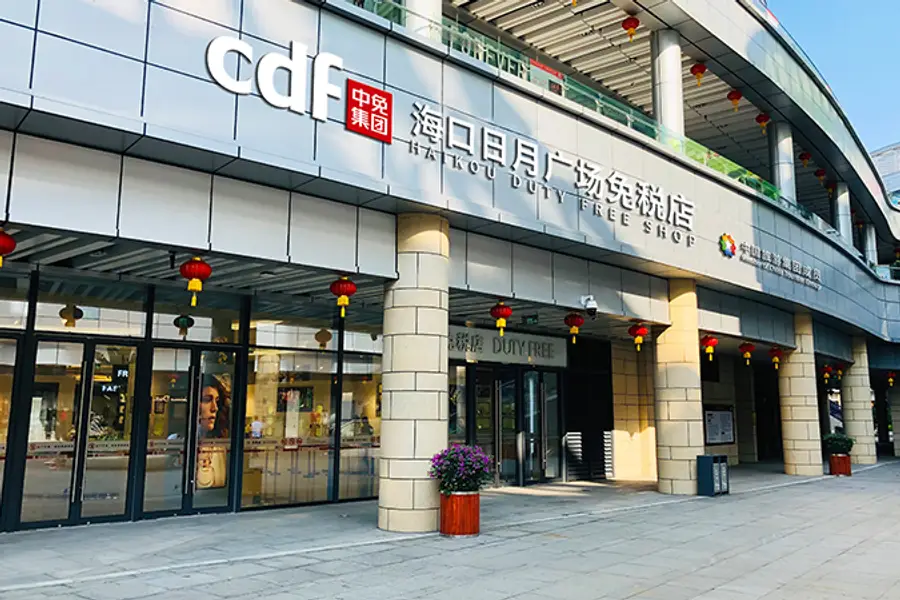
The duty-free group’s revenue sagged in the first three quarters, but its profit still rose on improved efficiencies
Key takeaways:
- CDF reported shrinking cash flows and mounting inventories this year, as cost-conscious Chinese shoppers turn away from luxury goods
- The duty-free shopping specialist is looking to cut costs, boost the share of its high-margin products and expand into overseas markets
By Cheng Shui Tong
The era of binge-buying Chinese big spenders looks to be over, with domestic duty-free retailers facing mounting operational pressure.
The trend isn’t good. Travel by Chinese residents has maintained steady growth in recent years, but per-capita spending per trip is slowing. Even worse for duty-free companies is the cooling appetite by Chinese shoppers for luxury goods.
Recent earnings from China Tourism Group Duty Free Corp. Ltd. (CDF) (1880.HK; 601888.SH) also reflect a worrying scenario of a higher bottom line profit, even as revenues sag. This suggests the company needs to pivot, prioritizing customer quality over sheer volume to shore up its gross profit margins.
CDF reported operating revenue of 11.17 billion yuan ($1.68 billion) in the third quarter, down 4.66% year-over-year. Meanwhile, its net profit surged 24.64% to 564 million yuan. In the first three quarters combined, operating revenue retreated 2.61%, while net profit jumped 20.25%. The top-line contraction accelerated in the third quarter, even as bottom-line growth also gained momentum.
Growing profits without top-line growth
With the trend of rising profits amid sliding revenue persisting this year, it appears unlikely that the retailer can rely on top-line growth to bolster earnings in the near term. Instead, it will have to lean on cost-cutting and fatter gross margins to sustain its profit growth.
A deep dive into the operating figures for the first three quarters shows CDF has maintained strict cost discipline. Total operating costs for the period stood at 34.09 billion yuan, down nearly 1 billion yuan, or roughly 2.76%, from a year earlier. This belt-tightening partially offset the blow from the revenue shortfall.
The company has also rolled out a slate of strategies to pump up its gross margins. First, it ramped up the sales mix of high-end cosmetics and boutique goods, while strategically shrinking or dropping certain low-margin, underperforming tax-paid retail channels.
Additionally, the duty-free giant fine-tuned its promotional management mechanisms by proactively reining in product discounts. Rather than relying heavily on markdowns to drive sales, it pivoted toward targeted loyalty programs to foster customer stickiness. This maneuver nudged its main business gross margin up by 1.3 percentage points year-over-year in the third quarter.
On another front, CDF is aggressively charting overseas expansion. Having finalized the acquisition of DFS’ Greater China retail business early this year, the company not only outright bought its rival’s core territory – consolidating its crown as a leader in the global duty-free sector – but also successfully brought luxury empire LVMH and the founding family of DFS on board as shareholders.
This strategic coup anchored its standing in the international market and fueled its ongoing overseas expansion, with international business surging 71% year-over-year in the first three quarters. Most recently, the company also unveiled the nation’s largest single-facility “Guochao,” or “Chinese chic,” duty-free zone at Shanghai’s Pudong International Airport, serving as a display window for domestic and international travelers at this global aviation hub.
Focusing on value and experience
In the past, Chinese tourist infatuation with global designer brands and their penchant for binge buying meant that CDF, with its near monopoly, just had to keep its doors open to reel in business.
But travel paradigms have shifted in recent years. Today’s tourists are increasingly shrewd and rational, driven by value and experiential offerings.
Consequently, the company’s Hainan operations are also pivoting toward an integrated development model fusing “cultural and sporting events, exhibitions and festivals, and duty-free shopping” to further broaden the domestic and international customer base for the duty-free market.
In the first nine months of this year, its share of Hainan’s offshore duty-free market climbed by more than 2 percentage points.
Investors should note, however, that the company’s financial health is showing signs of deterioration. Its net cash from operating activities plummeted 38.98% year-over-year to 2.07 billion yuan in the first three quarters.
Management attributed this primarily to shrinking revenues and higher procurement payouts. Specifically, cash received from the sale of goods and rendering of services dropped by roughly 640 million yuan, while cash paid to and on behalf of employees ticked up by roughly 351 million yuan, and other cash payments related to operating activities jumped by 1.32 billion yuan.
This dwindling cash flow left the company’s cash at roughly 22.5 billion yuan by the end of September, marking a 29.6% drop from the same period last year.
Another flashing warning sign is a sudden bloat in inventories, which surged 24.6% to 19.07 billion yuan by the end of September, up from 15.3 billion yuan at the end of last year. This signals that end-user demand is still lagging inventory turnover, raising the specter that the retailer may have to resort to aggressive discounting in the future to clear excess stock.
Share price plummets
CDF’s business peaked in 2021 when its net profit hit a high-water mark of 9.65 billion yuan. Its Shanghai-listed A-shares soared past 400 yuan, pushing its market capitalization to over 800 billion yuan. Riding the crest of this business boom, the company listed in Hong Kong in August 2022, with the stock ultimately peaking at over HK$200.
Since then, its financial performance has been on a rollercoaster ride. Its profit plunged nearly 50% in 2022, before rebounding in 2023, and then spiraling lower in the ensuing years. While the profit bleeding appears to have stopped this year, top-line revenues have continued to shrivel, trailing far behind the peak annual levels of over 60 billion yuan.
While the downtrend in revenues is tough to reverse, CDF’s recent efforts to boost gross margins have proven successful. Coupled with a stock price that has tumbled 80% from its peak, the brokerage industry remains cautiously optimistic about its future prospects. Sinolink Securities noted that the company’s third-quarter earnings were in line with its expectations, citing market share gains in Hainan and improving gross margins, and gave a “buy” rating to the company.
However, given the pressure from sales expenses, it noted that earnings forecasts for 2026 through 2028 need to be dialed back. Meantime, it said the company’s forecast 2027 price-to-earnings (P/E) ratio has dropped to 20 times, settling at a reasonable level.
To subscribe to Bamboo Works weekly free newsletter, click here
Related Articles

Haitian finds bitter taste in China’s restaurant slowdown
Hisense catches chill from cooling Chinese economy
RELATED ARTICLES
-
Hello Group courts big spenders abroad as Chinese daters economize
 MOMO.US
-
InnoLight shines on AI infrastructure spending binge
3308.HK300308.SHE
-
Nickel prices polish up its profits, but CNGR pivots towards phosphates
300919.SHE
- Gushengtang steps up TCM buying spree, doubling down in Beijing
-
Iluvatar earns paper profit, as its core GPU business stays stuck in the red
9903.HK
- Vatai delivers new e-commerce story with focus on cross-border trade
- China pivots to ‘hard tech’ and global branding: Frost & Sullivan Summit