Gogox’s 1-yuan Mainland exit, and Macao’s $2.5 billion gamble highlight the limits of capital

“They came to China with a knife, and it was a gunfight, and they just weren’t ready for that.” — on why Hong Kong delivery platform Gogox failed to gain traction in Mainland China’s cutthroat logistics market.

Key Takeaways:
- Gogox’s symbolic 1-yuan sale of its Mainland business shows that regional niche players can’t survive against China’s subsidy-fueled giants without massive scale
- Macao’s new $2.5 billion casino-backed diversification fund risks falling flat unless the city can turn day-tripping gamblers into longer-term visitors
By Adam Najberg and Doug Young
Ambition and capital rarely guarantee a second act in China when scale or vision is missing. Two case studies lie in Hong Kong logistics platform Gogox (2246.HK), which recently sold off its Mainland business for a symbolic 1 yuan (about 15 U.S. cents), and in nearby Macao, which just unveiled a $2.5 billion fund to finally wean itself off overreliance on gambling. Both cases offer a sobering reminder that chasing big market narratives takes far more than showing up with a checkbook.
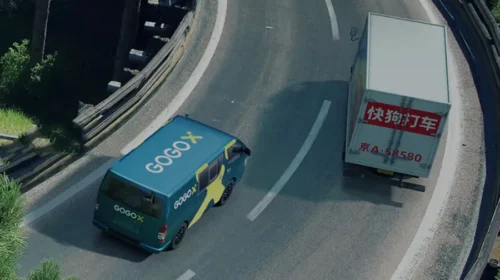
Gogox started out operating a ride-hailing and delivery platform in Hong Kong in 2013, before discovering it could pitch a much bigger story to investors by entering Mainland China a few years later. That narrative briefly propelled its valuation past $1 billion shortly after its 2022 Hong Kong IPO. Today, after conceding the Mainland market last month, its market value has plunged below $10 million.
Yet Gogox isn’t a broken business everywhere. It operates across six Asian markets and is posting year-on-year growth in five of them. In compact cities like Hong Kong and Singapore, or in markets like South Korea and India, there are clear opportunities for specialized players to handle local freight hauling or bring order to chaotic street logistics.
The trouble is that it’s nearly impossible — and prohibitively expensive — to survive as a niche player in Mainland China. Everything there operates on a massive scale where only the top one or two players truly control the market, while everyone else gets absorbed, subordinated, or priced out. Entrants face deeply integrated ecosystems like Alibaba (BABA.US; 9988.HK) and its Cainiao logistics arm, where unified e-invoicing and real-time truck tracking down to the neighborhood stop are standard. Worse, those giants rely heavily on subsidies and won’t hesitate to outspend smaller challengers to wipe them out.
It’s striking how often Hong Kong companies stumble on the Mainland despite cultural ties and geographic proximity, even as local rival Lalamove has gained real traction there and filed for a Hong Kong IPO. We think the difference comes down to understanding regional fragmentation and integration. Entering China really means entering sprawling, distinct markets like Guangzhou, Beijing, Tianjin, Shanghai, and Chongqing. Succeeding requires pulling independent four- or six-truck operators onto a unified tech platform while ensuring they can still earn a margin in a country where delivery players barely break even on volume.
For investors evaluating the next cross-border China pitch, headline order numbers and registered accounts aren’t enough. We believe they should scrutinize city cohort contribution margins, driver utilization, pickup times, and order density by market. Smart operators prove they can generate repeat customers whose lifetime value exceeds acquisition subsidies in three or four cities before trying to conquer 75. You eat the elephant one bite at a time.
Macao’s $2.5 billion roll of the dice
Across the Pearl River Delta, Macao is confronting its own structural reality with a new $2.5 billion state-led fund aimed at health, financial, and tech services. Major casino operators — including Sands China (1928.HK), MGM China (2282.HK), and Wynn Macau (1128.HK) — are collectively providing nearly half the capital, with professional investment managers set to oversee the deployment.
Why fix a model that still draws crowds? Both Macao and its U.S. counterpart Las Vegas welcomed roughly 40 million visitors in 2025, yet their underlying economics couldn’t be more different. Gaming taxes supply an extraordinary 83% of Macau’s government revenue. Before Beijing’s anti-corruption crackdown halted high-rolling “whale” junkets, Macao’s casinos pulled in four times the revenue of the Las Vegas Strip on similar visitor numbers. When Vegas suffered its own reckoning during the 2008–2009 financial crisis, it pivoted aggressively into conventions, live entertainment, and major professional sports franchises. Macao missed that wake-up call a decade ago, leaving us wondering whether this latest push is too little, too late.
This isn’t the city’s first attempt to branch out. Past talk of launching a local stock exchange went nowhere, and efforts to build up conventions and exhibitions have gained only modest traction. Throwing money at new industries doesn’t guarantee results — as Hong Kong learned with its underwhelming Cyberport tech initiative. Competing alongside regional heavyweights like Hong Kong, Shenzhen, and Guangzhou requires a real comparative advantage, not pie-in-the-sky dreams of becoming a med-tech or AI hub.
Right now, Macao’s visitor economy isn’t sticky: roughly 60% of its 40 million arrivals don’t even stay overnight. Yet the city is Asia’s oldest European outpost, boasting walkable historic sites, charming gentrified neighborhoods since the Portuguese handover in 1999, and standout Sino-Portuguese cuisine.
Rather than chasing distant tech ambitions, we think Macao should focus on excelling at tourism adjacent to its core strengths. Building two- to three-day itineraries around major weekend concerts, partnering with hotels, and steering Mainland travelers toward local neighborhood markets and cultural experiences would give visitors a reason to linger. Ultimately, Macao doesn’t just need a $2.5 billion fund to fit into the Greater Bay Area — it needs a leader with bold vision to carve out an identity of its own.
Edited by Brent Li
About China Inc
China Inc by Bamboo Works discusses the latest developments on Chinese companies listed in Hong Kong and the United States to drive informed decision-making for investors and others interested in this dynamic group of companies.
Subscribe to China Inc on your favorite app:


Related Articles

RELATED ARTICLES
-
Gogox dumps China dream that failed to deliver
 2246.HK
- Macao ‘guides’ gaming companies to pony up half of new $2.5 billion fund
- JD.com slows its bleeding, but investors want growth
- Is China’s express delivery price war over? The answer will lie in profits
- Gaw Capital builds new foundation on private real estate debt
- Annto drives out from Midea’s shadow with Hong Kong IPO
-
GDS commits up to 50 billion yuan to capture booming AI data center demand
GDS.US