TSMC supplier Konfoong seeks funds for push into chipmaking parts
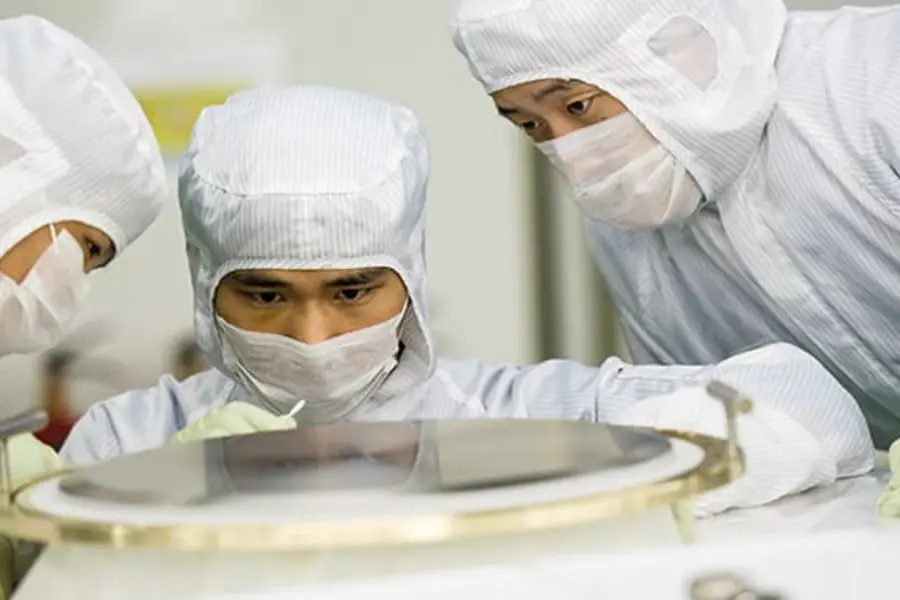
The maker of sputtering targets has filed for a Hong Kong IPO to help finance its move into the more crowded field of parts used in the chipmaking process
Key Takeaways:
- Konfoong, a supplier to leading global chipmaker TSMC, is seeking funds from a Hong Kong IPO to expand its materials and parts businesses
- Founder Yao Lijun is assembling a chain of businesses in the chipmaking process, from the purified metal used in sputtering targets to quartz parts for machinery
By Hu Minghe
In a showroom in the city of Yuyao in East China’s Zhejiang province, a pale-yellow metal ring marks the start more than two decades ago for a company now supplying some of the world’s leading chipmakers. In a Chinese media interview this month, that company’s founder and chief technology officer Yao Lijun held up what he described as its first sputtering target, a plate of material used to deposit thin films on chips.
Today, Yao’s company Konfoong Materials International Co. Ltd. (300666.SZ) is one of many low-key suppliers to chipmaking giant TSMC, and is seeking money for its next horizon in the complex chipmaking supply chain. The Shenzhen-listed company filed last week for a second listing in Hong Kong, laying out plans to expand production, develop new products and pursue acquisitions.
Yao spent two decades building Konfoong into one of the world’s biggest makers of sputtering targets, a business long dominated by Japanese and American companies. Now he wants to repeat that success by producing some of the parts used for chipmaking, where Konfoong faces a much wider field of competitors.
Winning a place in chip factories
The sputtering targets that are Konfoong’s main product are blocks or plates of material used to deposit extremely thin layers of metal on silicon wafers used to make chips. Inside a vacuum chamber, electrically charged particles knock atoms from its surface onto a silicon wafer. Those films become, among other things, the microscopic wiring connecting each chip’s transistors. Impurities can cause defects, making purity and consistency essential.
Sputtering targets wear away with use, creating repeat demand. But qualifying as a supplier to leading chipmakers generally takes two to three years, according to Konfoong’s filing. “World-class customers value your overall capabilities, not just any single product,” Yao said in the same interview this month.
Hailing from the Northern city of Harbin, known for its long, cold winters, Yao earned a doctorate at Hiroshima University in Japan and rose to head Honeywell Electronic Materials’ Japanese production base, then its China business. Selling Japan-made sputtering targets into China helped convince him to make them at home.
He founded Konfoong in 2005 with Japanese and Hong Kong backers. It shares its name with one of them, Konfoong Group, the Hong Kong owner of a tape-measure maker, which backed the startup and later sold its stake. Six Japanese experts joined the venture. Within a few years of its founding, Konfoong qualified to supply a Taiwan-based contract chipmaker and began batch deliveries.
The early days weren’t easy, especially after the 2008 global financial crisis suddenly made cash a scarce commodity. In a 2023 interview, Yao recalled turning to local business owners during the crisis to raise 2.6 million yuan ($380,000) just to cover wages, year-end bonuses and supplier bills. After getting through the new year, he said, the company had just 100,000 yuan left. It took eight years to turn a profit, he added.
Konfoong has come a long way since then. Its customers now include TSMC and UMC, another Taiwan chipmaking major, as well as China’s own SMIC and South Korea’s SK Hynix, according to a private placement document it filed in Shenzhen last December.
Konfoong now ranks second globally in ultra-high-purity metal sputtering targets, with about a tenth of the market by 2025 revenue, according to a third-party study it commissioned, cited in the listing document. Rivals include JX Advanced Metals (5016.T), Linde plc (LIN.US) and Solstice Advanced Materials (SOLS.US), which now owns the Honeywell business where Yao worked.
Konfoong is valued quite richly among that group with a price-to-earnings (P/E) ratio of 63, thanks to a big rally for Chinese chip stocks this year, even after its shares have lost half of their value from a peak in early July. By comparison, Solstice and Linde trade at multiples above 30, while JX Advanced Metals trades at just 14.
From metal to machines
Konfoong’s move into chipmaking parts began with requests from customers, Yao said in a 2024 interview. Those include showerheads that distribute gases inside manufacturing chambers, as well as precision heaters.
The potential market for those parts is much larger than the one Konfoong started in. China’s market for such parts was worth 74 billion yuan last year, and is expected to more than double by 2030, according to the listing document. By comparison, the global market for ultra-high-purity metal sputtering targets was worth about 28 billion yuan that year.
Konfoong’s semiconductor equipment parts sales rose 41% year-on-year to 645 million yuan in the first half of this year, accounting for nearly a quarter of its revenue during the period. It holds just 1.4% of China’s market for such parts, though it leads domestic showerhead makers, according to the listing document.
The company says the AI boom is spurring demand throughout the chip-making industry chain. Much of that is coming from China, though the company’s revenue from other markets is also growing. It recorded a gross margin of 11.9% in the first half of this year for the newer parts business, versus a higher 29.3% for the more mature sputtering targets business.
Building a chain
Yao is also building related businesses beyond Konfoong’s own factories. He separately controls TCPR Material International, which purifies the metals used in sputtering targets and was Konfoong’s largest supplier last year. It filed in June to list in Shanghai. Meanwhile, Konfoong’s acquisition this year of Beijing Kaide Quartz adds quartz parts used in semiconductor and solar-cell manufacturing to its product lineup.
With Kaide included in the company’s financial statements starting in July, Konfoong’s revenue rose 44% in the third quarter to 1.73 billion yuan from a year earlier, according to its quarterly report to the Shenzhen Stock Exchange. Its profit excluding one-off items also increased for the quarter.
Konfoong spent more on factories, equipment and other long-term assets in the first half of this year than its business generated in cash, so proceeds from the Hong Kong listing would help pay for more such investments. Analysts expect the growth to continue. Ten tracked by Chinese data provider Tonghuashun forecast on average that the company’s revenue will rise about 36% this year.
For now, sputtering targets still bring in most of Konfoong’s revenue. That original metal ring from more than two decades ago, now in the Yuyao showroom, was Konfoong’s key to entering the world’s leading chip factories. Now, Hong Kong investors are being asked to bet that its showerheads and heaters can follow, fueled by China’s rapid buildup of its chip sector.
To subscribe to Bamboo Works weekly free newsletter, click here
Related Articles

RELATED ARTICLES
-
ESWIN Computing powers up its RISC-V growth story for Hong Kong investors

- Unsated by Hong Kong listing, Knowledge Atlas seeks more funds in Shanghai
-
Lingyi pitched AI to Hong Kong. But the iPhone Duo may be powering its rebound
1688.HK002600.SHE
- PPLabs eyes capital refresh as losses linger on heavy investments
- New SORL’s IPO plows into winter for China auto stocks
-
Volume chipmaker ASR looks to climb up the value chain
688220.SHG
- China’s ‘Stroller King’ gets a push from its high-end Cybex brand