‘Cheap chic’ queen Judydoll joins parade of Chinese beauty brands going global
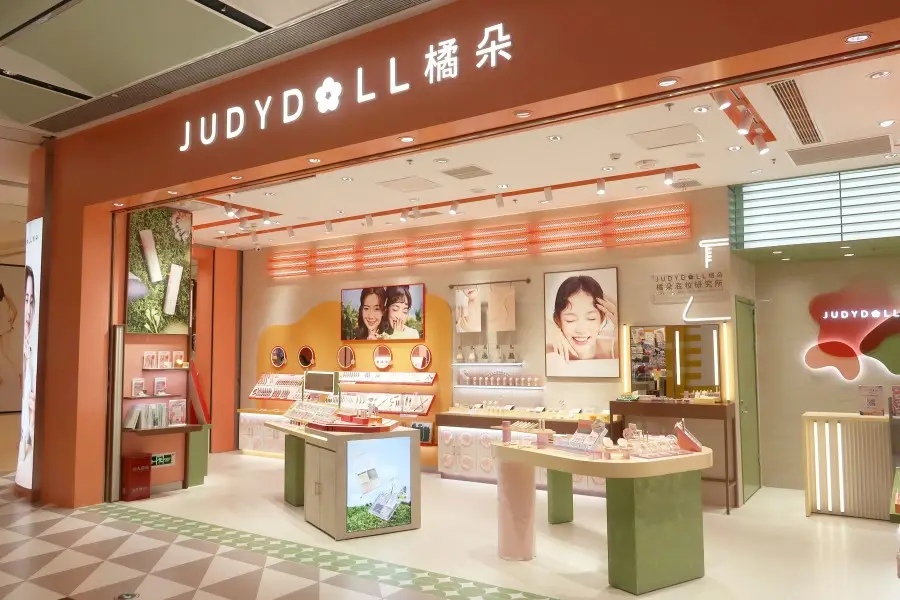
After launching its first overseas store in Singapore last year, the cosmetics company has entered Turkey through tie-ups with local retailer Gratis and e-commerce site Trendyol
Key Takeaways:
- Joy Group has entered Turkey, expanding a global footprint that gave the Judydoll cosmetics operator over 600 million yuan in overseas retail sales last year
- With 4.3 billion yuan in global retail sales last year, up 18% year-over-year, Joy Group has reportedly considered a Hong Kong listing in the past
By Edith Terry
There was a time not long ago when Chinese beauty brands, or “C-beauty,” were virtually unknown outside their home market. In China, the domestic industry mostly manufactured products for international names before gradually eclipsing them with their own brands in the early 2020s. Now, they’re taking their cosmetics show on the road. More than 50 brands operated internationally last year, exporting $7.82 billion worth of Chinese cosmetics, up 9.5% year-over-year.
During its second-quarter earnings call in August, Kecia Steelman, CEO of U.S. beauty retailing giant Ultra Beauty, even pointed out that C-Beauty is rapidly rising alongside more established Korean beauty products, or “K-Beauty.”
One company leading the new global C-Beauty charge is Shanghai Juyi Cosmetics Co. Ltd, also known as Joy Group. Its flagship Judydoll brand is a Gen Z favorite in China for its low prices and fun image. Together with its Joycee skincare brand, Judydoll has developed a fan base through e-commerce in Southeast Asia, and is just beginning to develop offline sales through retail partnerships and its own branded stores.
In its latest global step, the company last month announced its entry to the Turkish market, worth an estimated $7 billion to $8 billion and strategically positioned as a gateway to the 110-billion-euro ($123.5 billion) EU cosmetics and personal care products market. Joy Group is entering Turkey through partnerships with Gratis, the country’s largest beauty and personal care retail chain, and Trendyol, its leading e-commerce platform for fashion.
Gratis will provide dedicated branded display areas in 300 of its stores, as well as a presence through its Gratis Online shop. Trendyol, majority-owned by China’s Alibaba, is one of the largest online sellers not only in Turkey, but throughout the Middle East, North Africa and Central Europe.
Southeast Asia launch pad
Just after the Turkey announcement last month, Joy Group also opened its first Judydoll boutique in Malaysia, in Petaling Jaya near Kuala Lumpur. The company started its overseas expansion in 2020 through e-commerce, and currently has customers in over 50 countries, according to its LinkedIn page.
In addition to Judydoll, Joy Group owns four other brands: Joocyee, a makeup skincare brand hybrid; René Furterer and Biophyto-genesis, both skincare brands; and haircare brand Foltène.
The company only opened its first international Judydoll store in Singapore in October last year. It now has three stores there, and is also represented through 99 Watsons personal care stores in the market that carry its products. It launched its first offline Judydoll store in Hong Kong in June this year.
It has also been expanding through retail partnerships like the ones with Watsons and Gratis. It has similar tie-ups with Skin Cupid, a British chain, and last December began selling at ubiquitous FamilyMart convenience stores in Japan.
Founded in 2017, Joy Group recorded revenue of 1.8 billion yuan ($270 million) in 2022, when it began voluntarily disclosing figures. Its revenue had more than doubled to 4.3 billion yuan last year, up 22% from 2024. Its overseas retail sales were more than 600 million yuan last year – or more than 10% of its total sales.
Joy Group has also used acquisitions to fuel its growth, including its recent purchases of Biophyto-genesis, a Chinese dermatological and sensitive skincare brand, and Foltène, an Italian hair and scalp brand. But Judydoll has been the company’s workhorse, logging 18% growth last year to provide over 3 billion yuan in retail sales, nearly 60% of its total.
‘Cheap chic’
Judydoll’s strategy is to position its products as “cheap chic,” unlike most brands that typically seek a more upscale image. It uses heavy discounting on its Tmall store, where most of its products are priced between 30 yuan and 50 yuan, about the same as a cup of bubble tea or coffee. Targeting impulse buyers in the 14- to 29-year-old age bracket, the brand’s affordable approach led to explosive growth in the domestic market as well as Southeast Asia, where it partnered with Shopee, the region’s largest e-commerce platform.
Judydoll has also synced with Gen Z by joining TikTok in 2022, making it an early embracer of the popular video platform’s e-commerce services. By the time the brand opened its first overseas offline stores last year, it had already leveraged its e-commerce presence to develop products suited to local tastes and linked with local key influencers and key online customers.
Judydoll is one of a growing group of Chinese cosmetics companies that are going abroad, similar to the K-beauty wave that began around 2012. C-beauty brands are leveraging their experience, supply chains and domestic manufacturing scale to expand their reach.
In August, the Wall Street Journal reported that Proya Cosmetics (603605.SS), another major domestic brand, was also partnering with Ulta Beauty. Four months earlier, Proya also began selling branded products through the Guardian retail chain in Malaysia.
Privately held Florasis began a partnership with DFS, the retail arm of LVMH, in Paris as early as 2024, and opened its first overseas flagship store in Tokyo’s Ginza district in 2025. And Perfect Diary, owned by Yatsen (YSG.US), has moved abroad through e-commerce platforms like Shopee and its acquisition of European skincare brands Galénic and Eva Lom in the early 2020s.
China is the world’s fifth largest exporter of beauty products, which includes cosmetics, perfume, hair and skin cleansing products, with 8.13 trillion won ($6 billion) in overseas sales between January and July this year, up 24.3% year-on-year, according to the Korea International Trade Association. As an exporter, it is now ahead of Italy and Spain, rising by two places in the past year.
Surprisingly, C-beauty exports are making some of their biggest inroads in South Korea, the home of K-beauty. According to the Korea Customs Service, South Korea’s imports of Chinese cosmetics between January and September this year rose 26.6%, though the figure is still relatively modest at 154.1 billion won.
In the investment community, one of the biggest questions is whether Joy Group will seek an IPO, joining many of its rivals. Frequent equity changes in 2021, including the temporary departure of its founder, Zheng Ziyue, led to speculation about when and where it might make a potential listing. The company confirmed in 2022 that an eventual IPO was on its roadmap, noting its investors included giants like General Atlantic, Tencent and Shunwei Capital, owned by Xiaomi co-founder Lei Jun.
But the company said it was not ready to go public yet. Since then, it has begun voluntarily releasing basic financial data through annual press releases and social media posts, leading to renewed speculation of an eventual listing. Such a listing would probably come in Hong Kong, as China has prioritized listings from emerging industries like tech and AI on its domestic markets in Shanghai and Shenzhen lately.
To subscribe to Bamboo Works weekly free newsletter, click here
Related Articles

RELATED ARTICLES
-
YesAsia shines in intermediary role for Asian fashion and beauty brands going global
- Yatsen finds new beauty in AI, biotech and automated manufacturing
- Is Yatsen setting its sights on famous but struggling Erno Laszlo?
- The global leap: Chinese biopharma, athletic brands dip toes in global waters
- Beauty Farm first-half profit rises on Siyanli acquisition
- Global brands use overseas, emotional connections to navigate cutthroat China F&B market
- DPC Dash bakes up Domino’s pizza giant with Chinese characteristics