The Hong Kong-based beauty e-commerce site that began by serving the Chinese diaspora has become one of the world’s top online sellers of Korean cosmetics and fashion
Key Takeaways:
- YesAsia’s operating profit rose 56.3% in the third quarter on a 24.9% rise in orders, as its B2B wholesale business continues to gain traction
- The Hong Kong-based e-commerce company pivoted to Korean fashion and cosmetics in 2006, years before the competition
By Edith Terry
After China’s cosmetic brands first toppled international rivals in their 1.1 trillion yuan ($165 billion) domestic market in 2022, they began to look offshore, hoping to duplicate the global success of their Korean rivals, known as K-beauty.
The reason for their envy was obvious. K-beauty products currently command an estimated $129.2 billion in annual sales, or nearly one-third of the $355 billion global cosmetics market. One of the earliest sellers to recognize K-beauty’s global potential was the scrappy YesAsia Holdings Ltd (2209.HK), an e-commerce seller that has become one of the world’s top three online K-beauty retailers and wholesalers.
While relatively small, with a market value of about $150 million, YesAsia is serious about globalizing Asian beauty brands. Its success in that niche was on display in a business update from the company last week, showing its operating profit jumped 56.3% year-on-year to $10 million in the third quarter, with its total orders up 24.9% to $158 million. Its online B2C business rose 27.9% to $107.2 million, while its B2B wholesale business rose 19% to $50.3 million.
The limited third-quarter data continued the company’s strong performance in the first half of the year, when its revenue and profit rose by 23.2% and 30%, respectively, to $302 million and $18.2 million.
YesAsia has become one of the top three K-beauty distributors globally, trailing only StyleKorean, owned by Silicon2, and Hong Kong’s Stylevana.
The obvious risk for YesAsia and its K-beauty peers is what will happen to them when K-beauty falls out of fashion, which seems inevitable at some point. If the past is any guide, YesAsia will pivot again as it has done in the past – possibly to Chinese cosmetics, or C-beauty. It could also become an acquisition target for one of China’s homegrown cosmetics giants.
Homesick Asians in America
While YesAsia has found recent riches in K-beauty, the company’s original business was born out of homesickness. Two Hong Kong expatriates met in the San Francisco Bay Area and were frustrated by the absence of their favorite music from Asia. They saw an opportunity to cater to others like themselves by providing Asian entertainment products.
CEO Joshua Lau Kwok Chu graduated from Stanford University with a degree in economics in 1996 and went to work for investment banking giant Goldman Sachs. His wife, YesAsia Chairman Priscilla Chu Lai King, got her bachelor’s degree in computer applications, and an MBA from California State University.
In December 1997, the couple incorporated their first company, Asia CD, in California. They launched their first website soon afterwards and moved their growing operations back to Hong Kong in 1998, setting up shop in the city’s container port district of Kwai Chung.
Asia CD was a B2C site offering Chinese, Japanese, Taiwanese, Thai and South Korean music CDs and Blu-Ray, DVD and VCD movies. Asian expatriates in the U.S. were its first target market. It took on its current name, YesAsia, in 2000 and launched its YesStyle platform in 2006 and AsianBeauty Wholesale in 2017. YesStyle ventured into niche Korean and Asian fashion and cosmetics brands as a B2C e-commerce business. Asian Beauty Wholesale was a B2B business selling to mid-sized retail chains using both online and offline channels.
YesAsia’s English-language website remains a source for Asian music and entertainment, including related merchandise and games, while YesStyle features everything from skincare to press-on nails, fashionwear and bathroom accessories. The Korean products that are their mainstay all broadly track their rise with the first wave of K-pop mania that began in the 2000s and culminated with the global smash “Gangnam Style” by Korean artist Psy in 2012.
YesStyle became a go-to site for consumers in search of niche Korean brands that were not available through Amazon.com or major retailers. According to the company, it was the authorized distributor of over 475 K-beauty brands last year. Its wholesale business had distributor relationships with 56 retailers across 26 markets, including Burlington, Ulta, Target and Costco in North America, Primark and Superdrug in Europe and others in Latin America and the Middle East.
Hong Kong listing
Riding high on global appetite for Korean products, YesAsia’s made a Hong Kong IPO in July 2021, raising a modest HK$129.7 million ($16.5 million). Its B2C business took a big hit during the pandemic, and in 2022 the company began another pivot by building up its B2B wholesale business, with a particular focus on its logistics capacity.
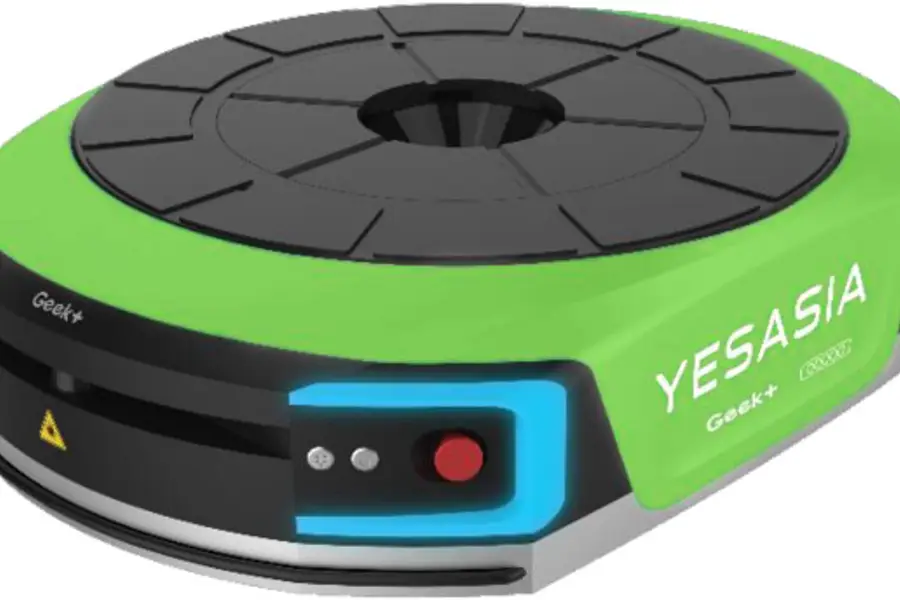
It developed a vertically integrated logistics network, partnering with CN Logistics, one of its investors. It also built a state-of-the-art autonomous mobile robotics (AMR) warehouse in Hong Kong, complementing its traditional warehouses in South Korea, the U.S., Germany and Britain.
Following that shift, the wholesale business has seen a 35% increase in its average order size, rising from $2,064.20 in 2024 to $2,786.60 in 2025. As that happened, the B2B business nearly doubled to $148.8 million last year, accounting for 29.7% of total revenue, up from 22.5% in 2024. The B2C business under YesStyle and YesAsia platforms also continues to grow, but has fallen to 69.7% of revenue last year from 77.4% in 2024.
Meantime, the company may ultimately find a welcome new audience of sellers if it decides to eventually embrace Chinese cosmetics brands seeking to go global, especially as their home market slows. China’s domestic market for cosmetics contracted by 6% year-over-year in September, according to the Jefferies China online beauty tracker.
While international brands like L’Oréal and Estée Lauder have suffered the most in China, domestic brands like Proya and Perfect Diary aren’t doing much better. That’s partly reflected in their share prices, with Proya down about 20% this year, and Perfect Diary owner Yatsen off by a steeper 40%.
Shares of YesAsia haven’t done much better, falling by 25.7% year to date, despite its international focus and strongly growing revenue. Its price-to-earnings (P/E) of just 5.8 is also well behind global e-commerce fashion peers like America’s Revolve (RVLV.US) at 22 and Germany’s Zalando (ZAL.DE) at a forward ratio of 13.
That probably at least partly reflects YesAsia’s smaller size and niche focus. But small as it may be, the company is also nimble. And its early recognition of the potential of Korean fashion and cosmetics reflects its market savviness, while its base in Hong Kong could position it well if and when a new wave of Chinese brands starts to look abroad.
To subscribe to Bamboo Works weekly free newsletter, click here
Related Articles

RELATED ARTICLES
-
Yatsen finds new beauty in AI, biotech and automated manufacturing
- Luxury e-commerce ‘gondolier’ BMax paddles towards Hong Kong IPO
- The global leap: Chinese biopharma, athletic brands dip toes in global waters
- Is Yatsen setting its sights on famous but struggling Erno Laszlo?
- TikTok, Southeast Asia boost prospects for Miduoduo IPO
- Beauty Farm first-half profit rises on Siyanli acquisition
- Global brands use overseas, emotional connections to navigate cutthroat China F&B market