Capchem cruises to Hong Kong IPO riding EV battery rebound
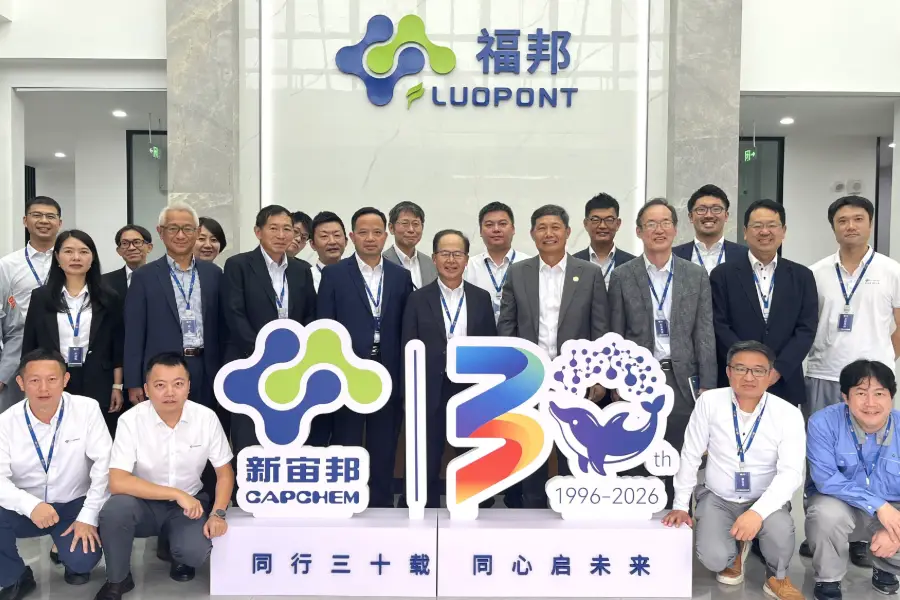
The supplier of battery chemicals won approval from China’s securities regulator to list in Hong Kong, just as the sector recovers from a brutal downtown
Key Takeaways:
- Capchem has been approved by the China Securities Regulatory Commission for a second listing in Hong Kong
- The move comes as the company’s fortunes drastically improve after a deep downturn for the battery materials industry
By Warren Yang
For a masterclass in how quickly a brutal downturn can morph into a celebratory champagne toast, look no further than Shenzhen Capchem Technology Co. Ltd. (300037.SZ).
Just a few months after submitting its IPO application to the Hong Kong Stock Exchange, the supplier of chemicals used in electric vehicle (EV) batteries cleared a major hurdle last Friday when the China Securities Regulatory Commission (CSRC) approved its listing plan, which will complement its existing listing in Shenzhen. If past cases are any guide, the company probably won’t waste much time dawdling. After getting the CSRC’s green light, companies typically sprint toward their public debuts within weeks.
The timing of Capchem’s Hong Kong IPO looks opportunistic. Over the past two years, the whole EV battery ecosystem in China weathered a bruising, margin-crushing downturn. Chemical producers in particular were gasping for air as prices for key battery materials plummeted amid overcapacity and softening short-term demand growth.
But looking at Capchem’s third-quarter results released in late October on the Shenzhen Stock Exchange, you would hardly guess the sector was in intensive care until just a year ago. The company’s revenue for the first three quarters of this year jumped 82% year-on-year to 12 billion yuan ($1.8 billion). Better yet, its net profit more than doubled to 1.5 billion yuan. The third quarter alone kept the pedal to the metal, with its revenue up more than 90% and net profit skyrocketing 111%.
Capchem and its peers are now reaping the rewards of an industry-wide rationalization. Battery makers and chemical suppliers alike have reined in unbridled capital spending, allowing supply and demand to creep back toward a healthier equilibrium. On the demand side, global EV adoption rates continue to climb, while energy storage systems (ESS) are rapidly becoming a second major customer group for lithium-ion batteries. As a result, sales volumes are growing while prices are rising, fattening margins across the board.
Product diversification has also provided Capchem with a profit buffer. Beyond battery chemicals for EVs and storage systems, Capchem maintains two other major business lines: organic fluorochemicals, which are used in AI data centers, pharmaceuticals, and clean energy; and electronic chemicals for semiconductors and capacitors.
This trifecta means that when one segment slumps, others can often pick up the slack. Also, higher margins for the fluorochemical and semiconductor businesses have helped Capchem maintain a gross profit margin in the mid-20% range – much higher than figures for many pure-play electrolyte makers. A case in point is battery materials maker Shida Shinghwa Advanced Material Group (603026.SH), whose latest gross margin stands at just 15.8%. Notably, Capchem saw its revenue and net profit grow last year while many of its rivals were still struggling to boost sales.
Favorable market shift
As Capchem prepares for a Hong Kong stock market debut, investors will find its recovery from a severe trough encouraging. But the big question for the company and its peers is whether the turnaround will hold up.
One thing is for sure: the good times the company enjoyed during the peak EV boom in 2021–2022 aren’t coming back. Instead, the market is maturing into a more disciplined, consolidated oligopoly where scale, supply-chain integration and technological superiority dictate the winners.
That shift plays right into Capchem’s wheelhouse. The company, which traces its roots back to 1996, has cemented its spot in the industry’s top tier through sheer global scale and sticky, direct relationships with major battery makers. Capchem generated the largest battery electrolyte revenue globally outside China from 2020 through 2025. It operates 13 production bases across China and Europe, with new plants being built in Malaysia, Poland, and Saudi Arabia to serve overseas automakers where they build cells, according to its prospectus.
Just as importantly, it has integrated production of its own key raw materials like solvents and proprietary additives into its operations, insulating its margins when commodity prices swing and helping it lock in massive, multi-year supply agreements with battery giants.
On the technology front, Capchem is also using its balance sheet to enhance its competitiveness while smaller rivals simply try to survive. Nearly a quarter of its workforce sits in R&D as the company seeks to move beyond standard liquid electrolytes into higher-margin formulations for fast-charging, high-voltage batteries, as well as next-generation sodium-ion and solid-state chemistries.
Combined with its parallel strengths in organic fluorochemicals and semiconductor chemicals, Capchem looks far less like a boom-and-bust commodity producer and much more like one of the durable winners built for the sector’s next phase.
Still, there are a few red flags. Capchem remains heavily reliant on a small circle of big battery makers, with its top five customers generating nearly 36% of its revenue in the first half of this year and a single buyer accounting for more than 15%.
At the same time, its aggressive overseas push into Poland, Malaysia, and Saudi Arabia leaves it exposed to shifting Western tariffs on Chinese EV supply chains and the usual headaches of cross-border factory construction. Added with the ever-present risk that another round of industry overcapacity could reignite a new price war, Capchem will need to prove its higher-margin fluorochemicals and overseas plants can truly help the company ride out the battery sector’s notorious boom-and-bust cycles.
Capchem’s Shenzhen-listed shares are down about 1.8% this year but still trade at a price-to-earnings (P/E) ratio exceeding 20, well above 16 for less-diversified Shida Shinghwa Advanced Material.
That valuation premium probably reflects Capchem’s strength as a specialty chemical maker that is less vulnerable to cyclical ups-and-downs in the EV battery market. When its shares land in Hong Kong, offshore investors looking for a cleaner, higher-margin play on the global energy transition will find plenty of reasons to toast its arrival.
To subscribe to Bamboo Works weekly free newsletter, click here
Related Articles
RELATED ARTICLES
-
Is Tinci Materials limping to a Hong Kong IPO?
 002709.SHE
-
Energized by strong profit growth, Zenergy Battery eyes Shenzhen IPO
3677.HK
-
GCL tries lithium battery materials in search of diversification
3800.HK
-
Nickel prices polish up its profits, but CNGR pivots towards phosphates
300919.SHE
-
Gon Tech taps high-grade industrial gases to accelerate growth
002768.SHE
-
Lingyi pitched AI to Hong Kong. But the iPhone Duo may be powering its rebound
1688.HK002600.SHE
- Kinwong runs hot on AI boom, cold on plunging margins