GCL tries lithium battery materials in search of diversification
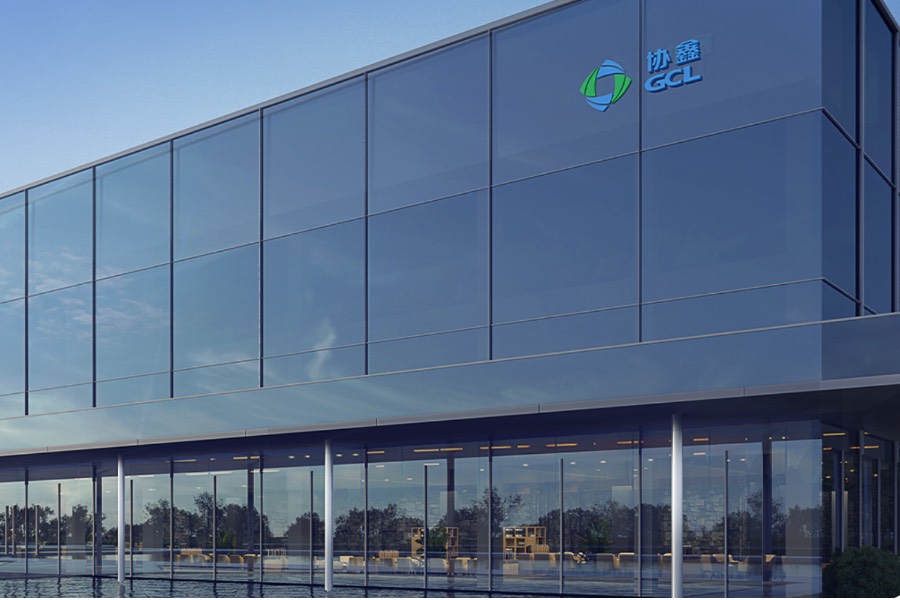
The solar materials maker plans to acquire 82% of sister company GCL Lithium Battery, paying with a combination of cash and shares
Key Takeaways:
- GCL will acquire a battery cathode materials business from a sister company for 2.5 billion yuan in cash and stock
- The solar materials maker’s first-half loss widened as it continues to suffer from a prolonged supply glut in the polysilicon industry
By Bai Xin Rui
The huge electricity demands of AI and resulting power shortages are no secret, and the pairing of photovoltaic systems with energy storage batteries has also become a major theme lately. GCL Technology Holdings Ltd. (3800.HK) is hoping to combine those themes by pairing its core business making polysilicon for solar cells with a new plan to enter lithium batteries used for energy storage.
Specifically, GCL announced last week it will acquire nearly 82% of Sichuan GCL Lithium Battery Technology Co. from an entity controlled by its chairman, in a deal valued at about 2.5 billion yuan ($374 million). The purchase gives GCL an entry into the lithium iron phosphate (LFP) materials business.
According to the announcement, GCL Technology will pay 650 million yuan in cash, with the rest of the purchase paid for with new shares. The seller is an associate of GCL Technology Chairman Zhu Gongshan, meaning the deal constitutes a connected transaction.
Reducing its silicon reliance
GCL Lithium Battery makes LFP cathode materials used in new energy batteries that power electric vehicles and energy storage facilities. The company’s first-phase production facility has a total gross floor area of about 156,000 square meters and annual production capacity of 120,000 tons of LFP. GCL Technology said the purchase will reduce its reliance on polysilicon and silicon wafers that are its two main products, whose prices have tumbled over the last two years after a huge industry buildup resulted in a major glut.
The lithium iron phosphate materials that GCL Technology is purchasing are mostly used in the cathodes of lithium-ion batteries. In terms of energy density, the material boasts exceptionally strong stability. It not only extends the battery’s service life during the charging and discharging cycle, but its safety performance also outshines similar products, making batteries significantly less prone to catching fire and exploding.
A report from the U.S. Department of Energy once pointed out that, based on a standard utilization rate of 80% of a battery’s capacity each time, the lifespan of LFP batteries can typically reach between 3,000 and 6,000 cycles. That’s three to eight times the lifetime for lead-acid batteries, which range from 500 to 1,500 cycles, showing how LFP batteries are significantly more durable during repeated charging and discharging.
LFP materials are also attractive because they don’t contain any heavy metals, making them more environmentally friendly. And the average price of LFP batteries is over 40% less than for ternary lithium batteries containing nickel, cobalt and manganese. For enterprises, that means LFP batteries can effectively reduce initial investment costs for projects requiring large-scale deployments. As a result, LFP batteries are typically used in applications such as renewable energy grid integration, solar energy storage, power grid frequency regulation and backup power supply scenarios.
Diversified product strategy
GCL Technology first hinted at the acquisition as early as mid-May, when it announced an overall strategic transformation plan. The company said it would shift from being a “single champion in granular silicon” and diversify to become a “globalized, multi-product new energy materials platform.” Thus, the new acquisition reflects the company’s move to create a product matrix centered on silicon, lithium, and carbon, further extending its business into cutting-edge new energy materials.
Here, we should point out that GCL Technology already possessed LFP operations before the acquisition. The company holds 30% of Leshan Xinneng New Materials, which has built an LFP facility with 200,000 tons of annual capacity and is now in its commissioning stage. Leshan Xinneng began shipping product in June, with a tax-inclusive average selling price of 60,320 yuan per ton, according to GCL Technology’s midyear financial report. It has achieved profitability since its commissioning, and is expected to be producing at full capacity by the end of October.
The combination of its profitable Leshan Xinneng business with the planned GCL Lithium Battery acquisition is expected to quickly give GCL Technology a strong foothold in the LFP materials space. Still, we should note that GCL Technology’s primary business remains in polysilicon. Weak polysilicon prices caused the company’s revenue to flatline in the first half of the year at 5.78 billion yuan, up by a marginal 0.7% from a year earlier. Within that figure, revenue from the photovoltaic material business accounted for the lion’s share of the total, at 5.73 billion yuan, up 1.2% year-on-year. But the company lost 2.08 billion yuan during the six-month period, 17.1% wider than a year earlier, reflecting the fact that most polysilicon producers are still selling their products at a loss.
Under a government-led initiative launched in August, multiple leading Chinese polysilicon makers advocated against the sale of products below cost, while simultaneously volunteering to cut outdated capacity. As it joined that initiative, GCL Technology’s selling price for polysilicon rebounded from 31,000 yuan per ton to between 40,000 and 43,000 yuan per ton, according to a Sept. 1 report from Bocom International. Still, it remains to be seen whether polysilicon prices can mount a further recovery to more sustainable levels. Any signs of a slowing rebound could cast a cloud over GCL Technology and its peers, boding poorly for their financial performance next year.
The bottom line is that GCL Technology’s proposed acquisition demonstrates its determination to transform from a traditional polysilicon maker into a better-rounded silicon, lithium and carbon new energy materials supplier. The new LFP acquisition will not only seek to find synergies with the company’s existing LFP joint venture, but will also reduce GCL’s heavy reliance on photovoltaics. Whether the new business can help return the company to profitability anytime soon remains an open question.
To subscribe to Bamboo Works free weekly newsletter, click here
Related Articles

RELATED ARTICLES
-
Ganfeng rediscovers profitability as volatile lithium prices test its mettle
 002460.SHE
-
Nickel prices polish up its profits, but CNGR pivots towards phosphates
300919.SHE
-
Is Tinci Materials limping to a Hong Kong IPO?
002709.SHE
- Rethinking bigger Is better: China’s long march toward higher-capacity energy storage cells
-
Energized by strong profit growth, Zenergy Battery eyes Shenzhen IPO
3677.HK
- Canadian Solar advances North American shift with new plant, new CEO
-
New energy faces reckoning as solar makers pivot to AI, Beijing halts battery storage construction
DQ.US