Junxin chases Hong Kong IPO, seeking funds to export its trash-to-cash story
The waste management specialist has received regulatory approval for its Hong Kong listing plan as it seeks growth outside its main market where it wields an effective monopoly
Key Takeaways:
- Junxin has received regulatory approval to list in Hong Kong, aiming to sell global investors on its trash-to-cash story
- The company is looking to export its business model beyond the Central Chinese city of Changsha, where it holds an effective monopoly in waste management
By Warren Yang
In the fast-moving world of Chinese corporates, waste management rarely commands the same glamour as high-flying technologies like AI, electric vehicles or semiconductors. Yet while many companies in those flashy sectors burn through cash, Hunan Junxin Environmental Protection Co. Ltd. (301109.SZ) is quietly doing just the opposite by converting heaps of refuse into cold, hard cash.
Now, the waste management specialist is looking to raise funds for overseas expansion from a Hong Kong IPO for its next growth phase. After securing approval from the China Securities Regulatory Commission (CSRC) for its offshore listing plan late last month, Junxin wasted no time in refiling its prospectus with the Hong Kong Stock Exchange last Thursday, after an earlier filing expired. Domestic heavyweights CICC and Citic Securities are acting as joint sponsors, indicating the listing could be relatively large, perhaps raising $100 million or more.
Overseas investors starved for profitable companies and generous cash dividends will welcome Junxin’s arrival in Hong Kong, which would complement its existing domestic listing across the border in Shenzhen. The company stably generates operational cash flow and pays out more than two-thirds of its net profit as dividends.
To understand the company’s investment thesis, one first needs to appreciate the massive structural shift in China’s environmental policy over the past decade. The era of dumping municipal garbage into unlined landfills or illicit discharge-and-forget waterways is long gone. Under Beijing’s aggressive “Zero-Waste City” initiative and strict environmental mandates, waste disposal has transformed from a low-tech sanitation service into a capital-intensive, high-tech utility business.
Junxin sits squarely at the center of this transformation. Founded in 2011 by entrepreneur Dai Daoguo, a former military student who later became interested in environmental protection in the construction industry, the company operates across the entire waste treatment value chain. Its core cash generator is municipal solid waste (MSW) clean incineration power generation, better known as waste-to-energy (WTE). In addition to burning trash to produce electricity for the national grid, Junxin processes sludge, leachate, kitchen waste and fly ash.
Junxin’s revenue comes mostly from sales to the state grid of electricity produced by burning waste and fees — paid per ton for the collecting, compressing and disposing of trash. Junxin further monetizes waste byproducts through resource recovery, extracting and refining food waste into industrial-grade mixed oil for commercial sale to biofuel markets.
Green energy sales account for more than half of the company’s total revenue. Junxin ranked first in average grid-connected electricity generated per ton of waste last year, according to third-party data in its prospectus.
All of this happens at the Changsha Environmental Park in Central China’s Hunan province, one of the largest integrated eco-industrial parks in China. By housing WTE plants, leachate treatment facilities and food waste processing units within a single site using an ecosystem of related technologies, Junxin extracts economies of scale that few competitors can match.
With this facility, Junxin effectively holds a local monopoly over MSW treatment in the urban core of Changsha, Hunan’s capital with a population of more than 10 million. Backed by multi-decade government contracts, the company handles all the city’s municipal waste, sewage sludge, leachate, and fly ash generated across Changsha’s six main districts.
It further solidified its dominance by acquiring Hunan Renhe Environment in late 2024. The deal allowed Junxin to expand beyond its flagship downstream incineration hub and integrate Renhe’s midstream urban logistics. It brought Changsha’s central municipal waste transfer and compression network, alongside a food waste treatment project, into Junxin’s ecosystem, uniting midstream waste collection with high-efficiency downstream power generation.
Superior margins
Because all urban waste in Changsha is directed to a single centralized hub owned and operated by Junxin, the company has an effective local monopoly that insulates it from the type of margin-eroding price wars and regional overcapacity that plague waste-to-energy operators in China’s coastal provinces. But it also limits growth opportunities, making Junxin look something like a traditional utility.
Thanks to the Renhe acquisition, Junxin’s revenue jumped about 31% to 2.41 billion yuan ($360 million) in 2024, and grew another 13% to 2.73 billion yuan last year. More importantly, the company’s closely integrated operations give it strong profitability. Jinxin turned a net profit of 716.6 million yuan last year, which translates into a net profit margin of 26%, an enviable figure for any company, let alone a utility operator.
But there’s only so much waste to process in Changsha, or in China for that matter. The country’s domestic waste-to-energy market has reached structural saturation, as rapid urban infrastructure expansion over the past decade has left coastal cities with excess incinerator capacity and intense price competition for trash. And because municipal waste management is locked under multi-decade agreements, it’s effectively impossible for Junxin to expand into other Chinese cities organically.
Facing a growth ceiling at home, the company is turning its sights overseas, looking to capitalize on China’s Belt and Road Initiative to export its high-margin business model to other developing markets. It’s eyeing the Central Asia nations of Kyrgyzstan and Kazakhstan, where underdeveloped waste processing systems and regional power shortages offer uncrowded markets and favorable long-term utility terms.
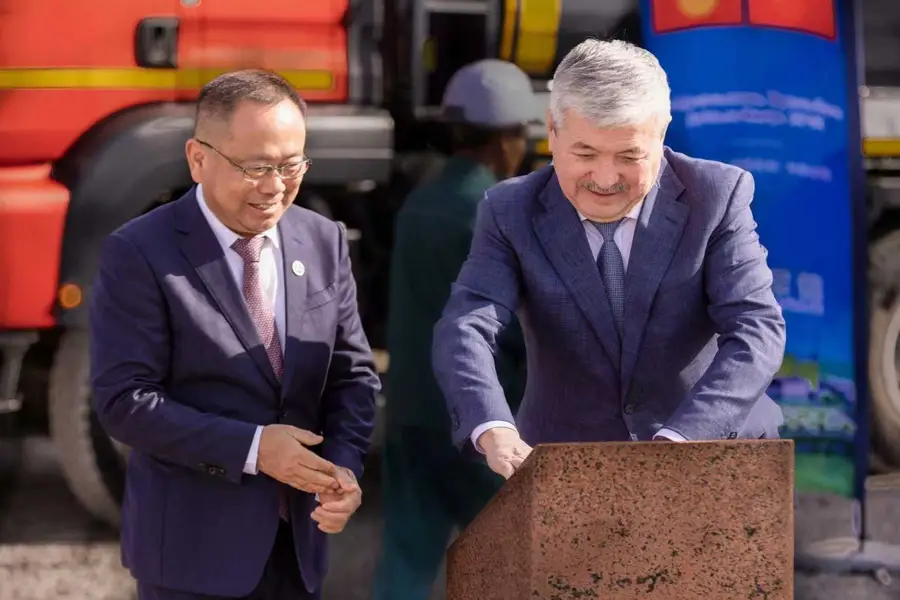
In Kyrgyzstan, the company invested $95 million to construct Central Asia’s first major waste-to-energy plant in the capital of Bishkek. Following this entry, Junxin expanded its regional footprint with additional project agreements in the Kyrgyzstan cities of Osh and Karakol, while signing a preliminary framework exploration agreement in Kazakhstan. International expansion is one of the reasons the company is seeking the Hong Kong IPO.
Of course, overseas expansion is a completely different ball game from the comfortable domestic monopoly the company currently enjoys, as it entails navigating different regulation environments and local politics. So, its future growth is hardly guaranteed.
But Junxin can still appeal to investors looking for a rare cash-generating company with good, stable margins and steady dividends. Trading at a trailing price-to-earnings (P/E) ratio of about 14 for its Shenzhen-listed stock, Junxin commands a premium over state-owned giants like China Everbright Environment Group (0257.HK), which probably reflects its superior net margins and localized monopoly.
Junxin’s business may not be sexy, but it sure is stable. And stability can be a valuable asset in this age of volatility.
To subscribe to Bamboo Works weekly free newsletter, click here
Related Articles
RELATED ARTICLES
-
Deye chases Hong Kong IPO in face of draining new energy valuations
 605117.SHG
 -
Citic Bank breezes into China’s insular tobacco sector with new investment
601998.SHG
- Unsated by Hong Kong listing, Knowledge Atlas seeks more funds in Shanghai
- PrimeGenX looks to a Hong Kong IPO as a cure for its cash woes
- Starved for better profits, Fubei chases IPO to fill its funding bowl
- Volant fuels up for Hong Kong IPO with $450 million in new funds