The humanoid robot maker’s stock jumped as much as 18% the day it unveiled a new line of companion models, only to give back all the gains the next trading day
Key Takeaways:
- Ubtech has unveiled a new line of companion robots aimed at the elderly and lonely, complementing its existing line of industrial-use humanoid models
- The company’s robot sales soared last year as its industrial-use robots went into mass production, but its models are generally more expensive than rival products
By Doug Young
It’s no secret that virtual companions have become all the rage lately, attracting people who like them for their empathy, positive comments, helpful suggestions and non-judgmental nature. But translating that to an emerging world of embodied robots has proven much more challenging, requiring far more complex physical reactions in the real world than simple words and images on a screen.
Despite that, Ubtech Robotics Corp. Ltd. (9880.HK) made a splash this week by saying it could overcome such issues with its series of UWorld U1 life-sized humanoid robots. The products immediately caught the attention of investors, who bid up Ubtech’s shares as much as 18% the day of the announcement, before the stock closed up 7.5%.
But talking up a product that will cost between 119,800 yuan and 990,000 yuan, or the equivalent of $16,500 to $146,000 is one thing. Delivering something people will pay that much for is another, especially if the products aren’t quite as lifelike and comforting as their virtual equivalents. That reality seemed to quickly sink in with investors, as Ubtech’s stock gave back all the gains and more the next day, closing down about 10%.
The stock has been on a roller coaster ride since Ubtech became Hong Kong’s first embodied robot maker to list in December 2023. It more than doubled initially, but has fallen since then as the company repeatedly raised more cash by selling additional stock. To date, it has done six post-IPO equity placements, raising HK$7.4 billion ($943 million) – more than seven times the HK$1 billion it raised in the original IPO.
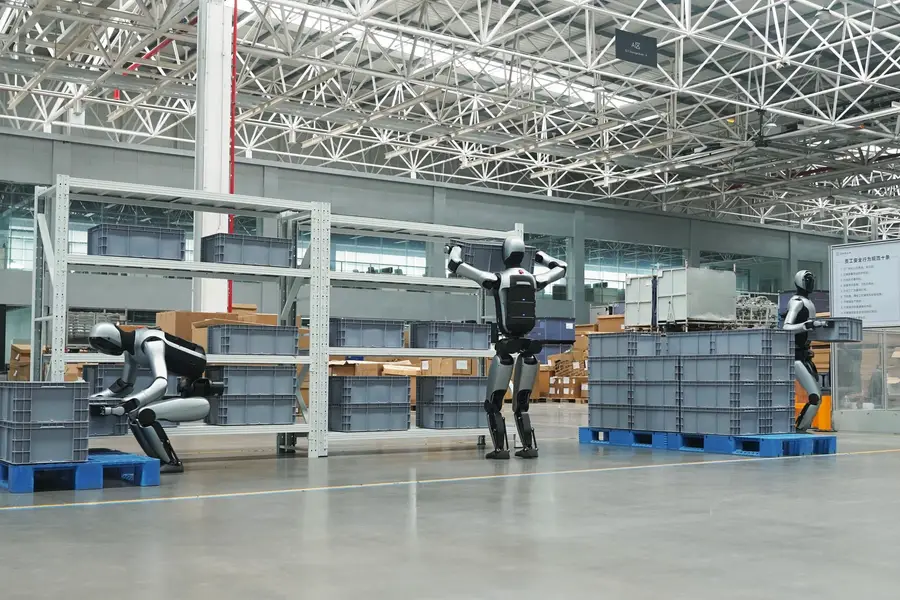
That underscores how expensive it is to design even simpler robots that perform highly repetitive tasks, like sorting products and conducting quality inspections in warehouses, that have been Ubtech’s main business until now. The move to companionship certainly captured investor imagination, though only briefly.
That said, the company did quite a nice job of showcasing these new robots and describing what they can theoretically do. The robots use 1:1 human modeling that tries to replicate actual humans as much as possible in appearance, down to replicating features like pores, veins and even fingerprints. The robots are powered by an emotional AI model, which allows them to recognize over 20 emotions with 90% accuracy. What’s more, people can even customize each robot’s personality, as well as its voice.
In terms of movement, each robot features 88 degrees of freedom, meaning there are 88 independent joints or other moveable parts, allowing for actions like hugging, hand-holding and nodding. Such functions are tailored for the robots’ primary audience, namely, the elderly and lonely individuals. Only adults are allowed to buy the robots, leading some to speculate the company may also be eying the sexual companion market. Then again, there probably aren’t too many kids out there with the kinds of money needed to buy one of these models.
Ubtech said it logged pre-orders for 13,361 units by the June 30 launch day, though that figure is almost certainly a combination of exaggeration and curious people placing orders they have no intention of completing. Mass deliveries are set to begin in September.
Rising sales
The move to companionship robots comes as a slight surprise, since business for Ubtech’s current series of industrial-use robots finally seemed to be gaining some major traction last year. The company’s revenue rose by 53% last year to 2 billion yuan ($294 million) from 1.31 billion yuan in 2024. And all of those gains came from a huge jump in sales of full-sized embodied robots and related services, which rose to 821 million yuan from just 35.6 million yuan the previous year.
The company sold 1,079 embodied robots last year, up exponentially from three the previous year. But some simple math shows the average price per robot last year would have been about 760,000 yuan, or just over $100,000, which looks quite expensive. By comparison, robots from Geekplus (2590.HK), which aren’t humanoid but are also used in warehouses for tasks like sorting and picking products, typically cost half that amount or less.
Ubtech pointed out it ended 2025 with the capacity to build 6,000 full-sized humanoid robots a year, so it’s certainly capable of continuing to crank out both industrial use robots at last year’s rate, as well as these newer companion models. But by sticking to humanoid robots, the company is definitely emerging as a maker of pricier products compared to rivals focused on more practical robot forms.
In fact, Ubtech may also be looking to diversify beyond humanoid robots as well. Late last year, the company announced plans to acquire up to 43% of Zhejiang Fenglong Electric Co. Ltd. (002931.SZ) in a two-part deal for as much as 1.67 billion yuan. Fenglong makes auto parts and garden machinery, which could hint that Ubtech wants to get into more practical use robots for things like gardening.
The company is still losing money, including a 790 million yuan loss last year, narrowing from a 1.16 billion loss in 2024. But it had plenty of cash at the end of last year, 4.9 billion yuan to be exact, after its series of new share sales during the year.
This week’s rise and fall for Ubtech’s shares left the stock trading at HK$92.60 at Thursday’s close, quite close to the company’s HK$90 IPO price. Even at that level, the stock still trades at a fairly high price-to-sales (P/S) ratio of 20, roughly the same as robotic arm maker Dobot (2432.HK), and double the 10 for OneRobotics (6600.HK), a provider of home embodied robotic systems, and a lowly 4.3 for Geekplus.
You have to give the company credit for trying to keep investors engaged with forays like this latest move to companionship robots and its potential move into gardening with the Fenglong investment. But the clock is now ticking on the companionship robot campaign, and disappointing reviews or sales for these new models could easily pressure the company’s stock over the rest of this year.
To subscribe to Bamboo Works weekly free newsletter, click here
Related Articles
RELATED ARTICLES
-
The new smart home: Where robots handle chores and provide companionship

- Dobot taps Shenzhen market to fund its bet on humanoid robots
- The embodied intelligence puzzle: A deep dive into China’s humanoid robot industry
- PsiBot’s $280 million fundraising bets on the brains behind embodied AI
- INTERVIEW: Cainiao rolls out ZeeBot in latest step toward ‘Dark Warehouses’