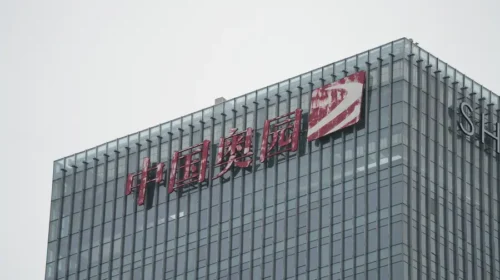
A tale of two markets: DSC’s disastrous Nasdaq debut, and Nike’s distribution dilemma
“It’s the kind of market that has always promised better tomorrows but has never been able to deliver.” – on China’s used-car market

Key Takeaways:
- DSC’s disastrous Nasdaq debut highlights the structural and economic challenges facing Chinese used-car platforms
- Rumors of Nike cutting online distributor ties in China reflect broader struggles by Western brands to adapt to shifting local consumer preferences
By Doug Young & Rene Vanguestaine
We’re currently witnessing a fascinating, albeit painful, recalibration of how companies navigate the Chinese consumer market. Wall Street recently hosted its first major Chinese IPO in over a year — a used-car platform whose disastrous debut underscores the deep vulnerabilities in China’s automotive sector. Meanwhile, rumors are swirling that global sportswear giant Nike (NKE.US) might be radically restructuring its online distribution networks in China. Both developments point to a shared reality: operating in the world’s second-largest economy has become remarkably unforgiving amid weak consumer confidence, brutal price wars and shifting local tastes.
Consider the landscape on Wall Street. Until recently, the U.S. market had gone for more than a year without a major new Chinese listing. That drought ended when a used-car trader called DSC (DCS.US) made its Nasdaq debut last week, raising a relatively large $50 million. We haven’t seen anything that large since robotaxi operators WeRide (WRD.US) and Pony AI (PONY.US) made much bigger listings worth hundreds of millions of dollars in late 2024.
DSC’s listing had quite a few big names attached, chiefly backing from Alibaba’s Ant Group financial affiliate, which indicated it would buy more than half of the IPO shares. The company also secured a decent group of underwriters — including Deutsche Bank, CICC, and ICBC — which, while perhaps not tier-one, are still respectable. Yet, in a somewhat ominous sign, the stock cratered. The shares lost nearly half their value on their first trading day, fell another 20% the next day, and by day three were down 65%. Even after this massive sell-off, the stock still trades at a relatively high price-to-sales (P/S) ratio compared to its Chinese peer Auto Home (ATHM.US), which is older and actually profitable.
We believe DSC simply got caught in a perfect storm. Their basic pitch is an AI story — applying artificial intelligence to a fragmented, inefficient market to simplify time-consuming and expensive tasks. Unfortunately, they came to market just as an AI backlash has been growing in the U.S. for several weeks. Furthermore, investors remain highly sensitive to traditional issues affecting Chinese U.S. listings, chiefly the variable interest entity (VIE) structure that most companies use.
More fundamentally, the Chinese car market is in the midst of a ferocious price war. Manufacturers like BYD (1211.HK; 002594.SZ) are selling their cheapest models for the equivalent of less than $10,000. This has brought the cost of new cars down to levels many people can afford, shrinking the once-sizable price differential between new and used cars. Combined with slashed government EV subsidies and consumers worrying about their jobs and the healthcare system, it’s a very tough story to sell.
This used-car market has always promised better tomorrows but has never delivered. It’s highly fragmented, filled with mom-and-pop shops, and plagued by a lack of trust. There are some cases like Uxin (UXIN.US), which made its U.S. IPO eight years ago. While they made progress in standardizing inspections and recertifications, we don’t think they’ve ever had a sustainably profitable year. They’ve been kept on life support by local governments and backers like Nio Capital. Another player, Cango (CANG.US), left the market completely. Even after 14 years in business, DSC is also still losing money. Building the necessary infrastructure — super reconditioning centers and upfront inventory — is an incredibly expensive proposition.
Still, there’s a silver lining for future listings. DSC noted in its prospectus that it applied for and passed Beijing’s required data security review for companies with over 1 million customers. This signals that China is still allowing non-controversial companies — particularly those that don’t hold strategic national importance — to list abroad. Moving forward, we might see more listings from consumer-focused companies or those not aligned with national priorities like green energy and chips.
Nike’s potential pivot highlights retail woes
Moving from cars to consumer closets, another prominent brand is struggling to find its footing. Last week, Topsports (6110.HK) — one of Nike’s oldest and largest distributors in Mainland China — cited media reports in a stock market filing noting the U.S. sportswear giant may stop selling its products through online distributors in China starting next year. Topsports clarified that Nike hasn’t officially informed them of such a move. But investors still dumped the stock, which tanked 15% before a trading halt. The company noted that online Nike sales account for about 22% of its revenue.
While this remains a rumor, it aligns with Nike’s global and local rough patches. The company changed its CEO about a year and a half ago in late 2024. Under the previous leadership, Nike over-focused on direct-to-consumer sales, lifestyle products, and digital channels, ultimately weakening its relationships with the traditional big box retailers that historically pushed its products.
In China, the dynamic is even more complex. For a long time, Western goods from Nike and Adidas (ADS.DE) were considered premium, must-have brands. But Chinese consumers have realized that domestic brands are getting better. Competitors like Li Ning (2331.HK), 361 Degrees (1361.HK), Anta (2020.HK) and Xtep (1368.HK) have invested heavily in technology and styling, signing top athletes to boost their image. The landscape has shifted so much that Puma is in the process of being acquired by a Chinese brand.
Furthermore, fashion trends have drastically changed. Growing categories now include trail running, hiking, outdoor activities and tennis — none of which have traditionally been a strong suit for Nike. Newer entrants like On Holdings (ONON.US), Hoka, and Lululemon (LULU.US) have swooped in to steal market share.
If Nike is indeed overhauling its partnerships, it isn’t alone. We’re seeing a growing number of Western brands changing their China management or relying more on domestic partners who possess a much better understanding of today’s market. Starbucks and other brands in the food sector have been struggling along those same lines. Ultimately, both DSC’s Wall Street woes and Nike’s retail recalibration prove that succeeding in China today requires adapting swiftly to a profoundly changed consumer.
About China Inc
China Inc by Bamboo Works discusses the latest developments on Chinese companies listed in Hong Kong and the United States to drive informed decision-making for investors and others interested in this dynamic group of companies.
Subscribe to China Inc on your favorite app:


Related Articles

RELATED ARTICLES