PCB leader Dynamic Electronics holds the line on prices – to its detriment
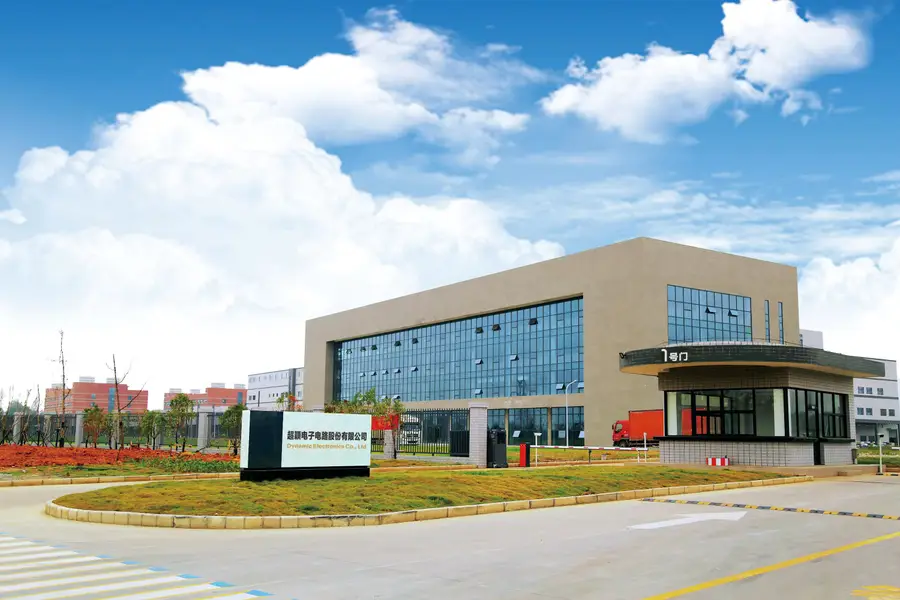
The Shanghai-listed company has filed for a Hong Kong IPO, reporting it swung to a loss this year as it failed to fully pass on rising material costs to its customers
Key Takeaways:
- Dynamic Electronics has filed to list in Hong Kong, reporting it fell into the red in the first half of this year, even as its revenue jumped by 33%
- The PCB maker is getting pressured by steadily rising material costs, especially for copper, which caused its gross margin to plunge this year
By Bai Xin Rui
Within the hardware realm, printed circuit board (PCB) makers and their suppliers have been major beneficiaries of the AI boom, despite their traditional positioning as an anonymous but important player in the computing space. While many such hardware stocks viewed as AI beneficiaries pulled back sharply in July, overall sentiment toward the group remains relatively strong.
Seizing on that momentum, Dynamic Electronics Co. Ltd. (603175.SH), which is already listed in Shanghai, filed for a second listing in Hong Kong last week, even as rising material costs fueled by the AI explosion pushed it into the red this year.
Founded in 2015, Dynamic Electronics focuses on PCBs, which have wide applications across sectors including automotive electronics, data storage, consumer electronics and communications. The company’s emphasis is on automotive electronic PCBs, which accounted for 51.4% of its revenue in the first half of 2026.
Star-studded clientele
Dynamic Electronics currently ranks sixth globally in automotive PCBs and has captured the global top spot in automotive high-density interconnect (HDI) boards. Its clients include such marquee names as EV pioneer Tesla, auto parts giant Bosch, storage device maker Western Digital, and memory chip giant SK Hynix.
A PCB is a functional board constructed with predefined circuit patterns on a copper-clad laminate or insulating substrate. It is designed to connect electronic components and facilitate their signal transmissions. Serving as the fundamental interconnection for many electronic devices, a PCB’s performance typically hinges on its layer count, circuit density, material properties, reliability and end-use applications.
The global PCB industry remains highly fragmented, with the top 10 manufacturers accounting for just 37.7% of the market last year. Competition has moved beyond a simple capacity arms race to a more comprehensive battle over technological thresholds, yield management, client certification and global supply chain capabilities.
According to third-party market data in Dynamic Electronics’ listing document, the global PCB market is expected to grow about 9.1% annually from 2026 to 2030, fueled by steady advances in technology and an explosion in downstream demand.
The PCB product spectrum encompasses HDI boards, multilayer boards, single- and double-sided boards, flexible printed circuits (FPCs) and packaging substrates. HDI boards use microvia, blind and buried vias and sequential build-up structures to achieve denser interconnection within constrained spaces. They are mostly used in compact designs and for high-speed signal transmission, as well as in high-end applications such as domain controllers for autonomous driving and smart cockpits, memory modules, GPU accelerator carrier boards, and AI computing boards.
Meanwhile, multilayer boards feature multiple conductive layers separated by insulating materials and compressed into a single circuit board. Such architecture provides extra wiring space, supporting more complex circuit layouts, power distribution, and signal transmission. Current product tiers include 4- to 6-layer, 8- to 14-layer, and 16-layer and higher PCBs, which are used in vehicle control systems, storage modules, communication equipment and AI computing boards.
The average selling price of multilayer boards is lower than that of HDI boards. According to Dynamic Electronics’ listing application, the average price for one of its multilayer boards stood at 1,351 yuan in the first half of 2026, up 19.6% year-over-year. HDI boards fetched an average of 2,833 yuan, up 14.8% annually. Together, multilayer and HDI boards accounted for 45.4% and 43.8% of the company’s revenue, respectively, accounting for nearly 90% of the total in the first half of 2026.
Driven by strong demand from a wide range of applications across automotive electronics, data storage, communications and AI servers, Dynamic Electronics’ overall average selling price rose by 27% to 1,684 yuan in the first half of 2026. This helped to lift its revenue by 33.3% to 2.91 billion yuan (326 million) during the six-month period.
But the company began to bleed red ink this year, swinging to a net loss of 191 million yuan in the first half from a profit a year earlier. It attributed the reversal to a net foreign exchange loss of 171 million yuan in the half-year period.
Rising copper prices
While foreign exchange losses played a part in the swing to the red, Dynamic Electronics also suffered a steep profitability squeeze as its gross margin plummeted 6.8 percentage points in the first half to 15.2% from 22% a year earlier. That drastic slide was primarily the result of surging raw material prices alongside rising freight, labor, and other production-related costs.
Raw materials are the biggest item in Dynamic Electronics’ cost of sales, representing between 55% and 57% of the total in the last year and a half. Key materials include copper-clad laminates, prepregs, copper foils and copper balls or powder. The company indicated that its inability to promptly pass on these raw material price hikes to customers was the key factor pressuring its gross margin this year.
What’s more, the trend of spiking copper prices looks unlikely to ease anytime soon. London copper futures have touched multiple record highs this year alone, briefly nearing $15,000 per ton — up over 18% year-on-year. With global copper mining capacity on a broader downtrend and aging European and U.S. power grids driving demand for copper wire, demand for the metal is expected to keep growing. That means continued inability to promptly pass on those price hikes to its clients could continue to weigh on Dynamic Electronics’ profitability.
In a sign of shifting sentiment towards these companies, shares of Kinwong Electronic (3228.HK; 603228.SH), which specializes in automotive PCBs, initially fell in their Hong Kong trading debut on Tuesday, before recovering to trade up by more than 10% in the afternoon.
On the whole, Dynamic Electronics looks well-positioned to reap dividends on booming business from the AI and smart vehicle industries, giving it a solid growth narrative. Still, its massive margin compression and resulting near-term losses should serve as a cautionary signal for investors looking for the latest hot AI stocks. Instead, buyers might be well advised to wait for signs of a gross margin recovery, and not focus solely on the company’s strong top-line growth.
To subscribe to Bamboo Works weekly free newsletter, click here
Related Articles

RELATED ARTICLES
-
Kinwong runs hot on AI boom, cold on plunging margins
-
Andre Juice’s PCB gambit: A sweet pivot or a sour distraction?
2218.HK605198.SHG
-
Dtech’s soaring profit on AI demand fails to tool up Hong Kong investors
1377.HK301377.SHE
-
Han’s CNC etches out triple-digit growth on AI infrastructure boom
3200.HK301200.SHE
-
BRIEF: PCB leader Victory Giant launches $2.2 billion Hong Kong IPO
300476.SHE
-
NEWS WRAP: Victory Giant posts strong quarterly growth on AI boom
2476.HK300476.SHE
- PCB maker Kinwong Electronic’s Hong Kong IPO approved by CSRC