Dtech’s soaring profit on AI demand fails to tool up Hong Kong investors
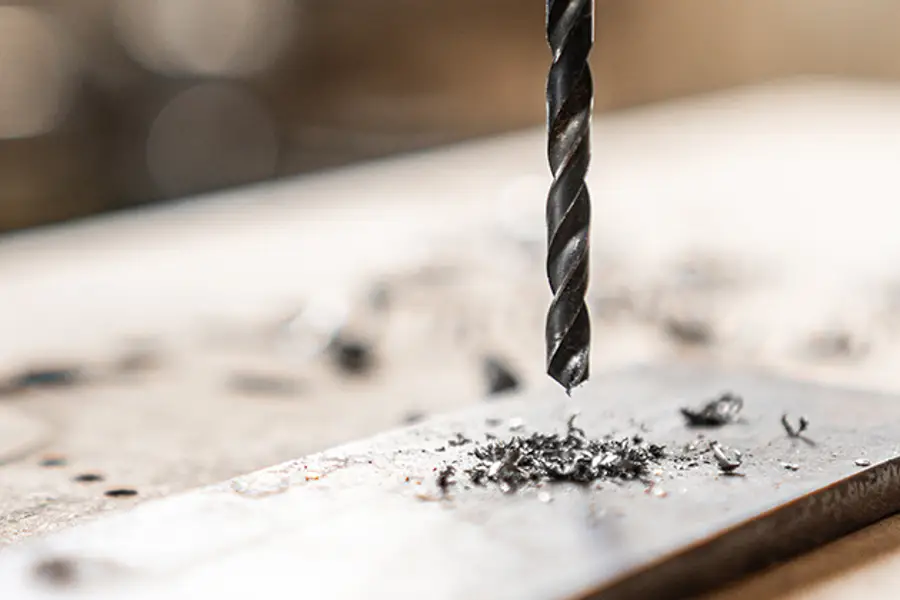
The precision-tool maker founded by a former toy factory worker is planning another factory, even as its Hong Kong shares trade well below their July IPO price
Key Takeaways:
- Dtech is planning to build a 700 million yuan materials factory, while net cash outflow and growing competition test the durability of its growth
- The company’s revenue more than doubled in the first half of 2026 as increasingly complex circuit boards needed for AI lifted demand for its precision tools
By Hu Minghe
Wang Xin entered China’s sprawling manufacturing sector as a worker on a toy factory assembly line back in the late 1980s. Fast forward nearly four decades, when her career trajectory has taken her up the value chain to producing the tiny drills used to make printed circuit boards (PCBs). Her somewhat anonymous product is enjoying a renaissance these days, thanks to demand from the AI boom. But Hong Kong investors barely seem to notice.
The drills made by her company, Guangdong Dtech Technology Co. Ltd. (1377.HK; 301377.SZ), create the tiny holes for electrical connections between the layers of circuit boards, which link components inside devices such as servers. AI servers require complex boards made with harder-to-machine materials, putting greater demands on the tools used to make them.
Based on the city of Dongguan, Dtech listed in Hong Kong in July this year, complementing its domestic listing in Shenzhen in 2022. Now, it’s taking a slight step back to the past with new plans for a 700 million yuan ($105 million) factory to expand its smaller businesses in industrial brushes, films and glass coatings, according to an announcement last week, adding the project is still awaiting investment and land agreements.
The businesses Dtech plans to expand have had mixed fortunes. Sales of brushes and other materials used mainly to clean and smooth PCBs rose about 50% in the first half of 2026 from a year earlier. But sales of films for displays and cars, including layers that make screens harder to read by anyone from the side, fell about 25%.
The company’s main growth driver remains its core cutting-tool business, which makes drills, cutters for trimming boards and tools for cutting other parts. That business accounted for most of the company’s revenue growth in the first half of the year, when the overall figure more than doubled to 1.83 billion yuan from 894 million yuan a year earlier, according to its midyear results published last month.
Early arrival to Dongguan
Wang’s history in Dongguan dates back to 1989, when she moved to the city, then an emerging manufacturing hub near Hong Kong, from Central China’s Henan province. She worked at several toy factories, rising from assembly-line worker to supervisor before moving into PCB sales. In 1997, she used 20,000 yuan to 30,000 yuan of savings to start her own business, buying used drills from large factories, repairing them and reselling them to smaller ones, according to Xinhua.
She then assembled a team to develop machines for making drills, initially taking no salary alongside several fellow shareholders. Workers were paid first, and the remaining money went back into improving the equipment and production methods.
The AI connection grew through the company’s existing customer base. Dtech says it has supplied a Chinese customer now making PCBs for AI servers since 2016, working together to develop tools to help manufacture more complex boards, according to the prospectus for its Hong Kong listing. The company ranked first worldwide by PCB drills sold in 2025, with 29.2% of the market, according to the prospectus.
Small tools, bigger returns
Drills wear out, so PCB manufacturers need new ones as old drills get retired, and also for capacity expansion. That double-pronged demand lifted Dtech’s tool revenue by 114.5% to 1.6 billion yuan in the first half of 2026, accounting for nearly 90% of total revenue.
Coated drills increased from 36.2% of drills sold in the first half of 2025 to 49.5% in the same period of 2026. Coated products carry higher price tags for Dtech, lowering customers costs per hole by making drills last longer. But longer life means fewer replacements, which ultimately translates to less sales for Dtech.
As its revenue more than doubled in the first half, the company’s profit more than quadrupled to 679 million yuan, thanks to a sharply improving gross margin that rose from 38% to 53.1%. Management attributed the big improvement to more sales of higher-value products and improving efficiency with economies of scale.
The latest results also include the German tool business Dtech bought from MPK Kemmer, which was insolvent at the time of the purchase in August 2025. Its latest first-half results do not separately identify that business’s contribution to growth in the first half of this year. But the modest purchase price of about 3 million euros ($3.4 million) suggests Dtech bought the company more for its intellectual property and German presence than its actual sales.
Dtech isn’t the only company getting a lift from AI demand. Japanese drill maker Union Tool (6278.T) reported 48.3% year-on-year revenue growth in the first half of 2026, while Taiwan’s Topoint (8021.TW) grew 66.6%. As demand remains strong, Topoint plans to double its April 2026 monthly capacity to 70 million drills by the end of 2027. Dtech is already well above that, with monthly capacity of more than 160 million drills in August.
Lukewarm shareholder reception
Despite its rapid growth, Dtech’s first-half operations again used more cash than they brought in. Its net cash outflow rose to 45.5 million yuan in 2026, against 29.4 million yuan in the same period of 2025, though much of that rise was due to a big jump in income tax.
The company’s Hong Kong IPO in July raised HK$4.67 billion ($595 million), providing money to expand. Despite its strong growth, however, Dtech’s Hong Kong shares have gotten a lukewarm investor reception in the more than two months since their debut. The stock climbed to an intraday high of HK$455.60 a week after its trading debut, up 20% from its IPO price of HK$380. But the shares have fallen since then and at their Monday close of HK$287 were 24.5% below their IPO price.
UBS attributed the retreat to waning investor enthusiasm and delays in the expected rollout of PCBs for Nvidia’s future Kyber AI computing design, according to a report this month in Zhitong. The report said UBS rates Dtech a “buy,” with a HK$439 price target, and forecasts its net profit will grow about 78% annually between 2026 and 2028.
The average forecast of five analysts tracked by Yahoo Finance puts Dtech’s revenue at 9.13 billion yuan in 2027, nearly double their estimate for this year. Those forecasts show that expectations for the company are high. Wang built her business by repairing used drills. Investors now need to see whether Dtech can keep its current more cutting-edge tools business profitable and growing in the face of stiff competition, as it also adds to its spending with the new materials factory expansion.
To subscribe to Bamboo Works weekly free newsletter, click here
Related Articles

RELATED ARTICLES
-
Dtech profit rises fourfold in first half of 2026
 1377.HK301377.SHE
 - Tianli turnaround fails to sway education-averse investors
-
Longsys rides soaring memory wave to Hong Kong IPO
301308.SHE
-
Techtronic tools up 18-year streak of gross margin gains
0669.HK
- Meitu thrives on exploding demand for paid AI content creation
-
NEWS WRAP: UISEE makes Hong Kong debut, powered by autonomous driving demand
1511.HK
- Fairland IPO fails to impress with dive into the red, sinking margins