The automotive cockpit maker has agreed to buy a controlling stake in Guangzhou Seagull to expand into China’s fast-growing smart home market
Key Takeaways:
- Pateo Connect will buy 20% of Guangzhou Seagull for 800 million yuan in a deal that will give it control over the manufacturer of smart home hardware
- The company is looking to leverage its core automative cockpit software to add smart home-based hardware to its portfolio
By Warren Yang
Observers might call it a major shifting of gears.That’s a key takeaway on the latest move by Pateo Connect Technology (Shanghai) Corp. (2889.HK), which last week announced it’s broadening beyond its core focus on high-tech car cockpits with a foray into kitchen sinks and bathroom plumbing. The shift looks like some slightly head-spinning corporate road rage until you peek under the dashboard.
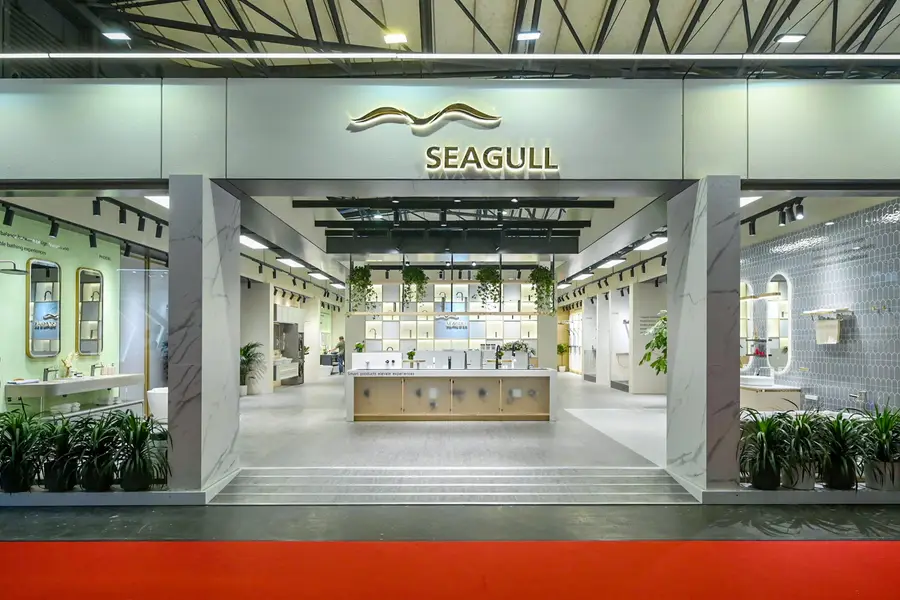
According to its announcement last Friday, the automotive smart cockpit maker has signed a deal to buy 20% of Guangzhou Seagull Residential Industry Co. (002084.SZ) from its controlling shareholder for 800 million yuan ($119 million). Although Pateo is acquiring a minority stake, the transaction will hand it control over the sanitary ware manufacturer, giving it the right to nominate seven out of Seagull’s nine board members. Pateo is paying 2.6 times Seagull’s book value, which includes a premium for the operational control.
At first glance, the move looks like a distraction from Pateo’s main business. The company is a maker of smart cockpits for cars. Guangzhou Seagull, on the other hand, manufactures plumbing fixtures and prefabricated bathroom modules.
The apparent disconnect between the two business lines makes this deal unusual. Pateo seems to be betting that at the end of the day, some of the same technologies that power vehicle digitalization can also drive home automation. Essentially, it hopes to leverage its technological capabilities for automotive environments to better digitalize home equipment. For example, Pateo in theory can inject its key products like AI voice assistants and ambient interaction systems into Guangzhou Seagull’s kitchen and toilet hardware.
“The transaction will further extend the group’s capabilities in intelligent vehicles to smart home and other related terminal scenarios, establishing a strategic layout of ‘vehicle-home integration’ and promoting the long-term development of the group,” Pateo said in its filing.
China’s smart home sector is set for fast growth, driven by rapid deployment of 5G telecommunications networks, government initiatives and unified ecosystem integration by giants like Huawei, Xiaomi and Haier. The domestic market is expected to grow at a compound annual rate of about 24% from 2026 to 2033 to $117 billion in annual sales by the end of that period, according to Grand View Research. That’s significantly faster than Global Market Insights’ projection of about 9% annual growth for the global market over the nine years through 2035, positioning China as the central engine behind the rise of the AI of things (AIoT).
By comparison, China’s smart automotive cockpit market, valued at roughly $12 billion to $15 billion, is strictly bound by limited vehicle production capacity and severely pinched by an ongoing electric vehicle (EV) price war that is forcing part suppliers like Pateo to absorb relentless margin-eroding price cuts for its products.
Crucially, smart home hardware makers have a broad range of potential customers, from property developers to home improvement chains and individual consumers. By comparison, the customer base is far more limited for auto suppliers like Pateo, leaving them at the mercy of a handful of carmakers. So for Pateo, bridging into home automation is not just a high-concept move into homes from its vehicle base, but also an attempt to jump from a brutal, margin-challenged auto supply chain into a higher-margin, more promising domestic market that is already much larger in terms of sales potential.
Smart toilets
Guangzhou Seagull makes a range of high-tech plumbing devices like smart toilets and bidets, infrared-activated motion-sensor faucets for kitchens and bathrooms and modular prefabricated bath units integrated with lighting, ventilation, and water-control sensors.
But the company lacks in-house software development capabilities, and that’s where it could leverage the new relationship with Pateo. Guangzhou Seagull makes physical equipment, relying on third parties for the software that makes them “smart.” Now, it can turn to Pateo for the necessary software to perform that function.
In addition, Pateo can throw AI chips into the mix. Early this month, the company struck another deal to purchase 70% of Chengdu Mingyi Electronics Technology for up to 1.4 billion yuan, a transaction that the company says completes a “software, hardware and cloud” integration model.
Chengdu Mingyi is a fabless chipmaker specializing in high-performance analog, radio-frequency and high-speed optoelectronic communication chips. While those chips were designed for use in AI data centers and high-speed in-vehicle networks, they are transferable for a wide range of home applications, including voice recognition for toilets and heating, ventilation, and air conditioning systems.
All that said, Pateo is heading into a market directly tied to a Chinese property sector that is grappling with a prolonged slump – which shows up in Guangzhou Seagull’s sputtering business. Guangzhou Seagull’s annual revenue shrank 8% to 2.62 billion yuan last year, marking its second consecutive annual decline, as its business bore the brunt of declining home sales in China.
Guangzhou Seagull still generates positive operational cash flow, but accounting factors like depreciation costs and impairment charges for unsold inventory are keeping it in the red. Last year, it lost 118.1 million yuan, which means it won’t provide any immediate boost to Pateo’s bottom line.
Pateo isn’t profitable either because of heavy R&D spending and pricing pressure across the EV supply chain in China. Its net loss more than doubled to about 1 billion yuan last year, even though its revenue jumped 37% to 3.5 billion yuan.
Pateo’s stock barely moved on Monday, the first trading day following the announcement of the Guangzhou Seagull deal. Things were better for Guangzhou Seagull’s shares, which jumped by their 10% daily limit in Shenzhen. Such a reaction to an acquisition plan isn’t so surprising, especially if the buyer should issue new shares to fund the deal like Pateo may do.
The 800 million yuan price tag for the Guangzhou Seagull acquisition amounts to more than half of the 1.4 billion yuan in cash and cash equivalents that Pateo held at the end of last year. So Pateo should resort to other resources to pay for the deal, saying it plans to use “self-raised funds” to cover part of the cost.
It could issue new shares, taking advantage of its relatively high price-to-sales (P/S) ratio of 5.9, which is far higher than the 1.8 for Huizhou Desay SV Automotive (002920.SZ) and 0.4 for Ecarx (ECX).
Pateo’s diversion to the smart home sector is strategically reasonable and could lift its valuation further still. But any investors hoping for quick results may be in for disappointment, especially as things stand in China’s anemic property market.
To subscribe to Bamboo Works weekly free newsletter, click here
Related Articles

RELATED ARTICLES
-
BRIEF: Pateo Connect’s first-quarter revenue doubles on high-end strategy
- Pateo Connect raises $49 million in new share sale at 17.6% discount
-
Yonyou IPO tests whether AI will rewrite the software business
600588.SHG
- From 4G boxes to SOS for motorists: Yodosmart finds second growth curve
- Fairland’s ‘smart pools’ swim closer to IPO with CSRC application
- Ingdan bets on ‘token factory’ in its latest attempt to harness AI