Is Shenzhen Pagoda still a top banana in China’s massive fruit market?
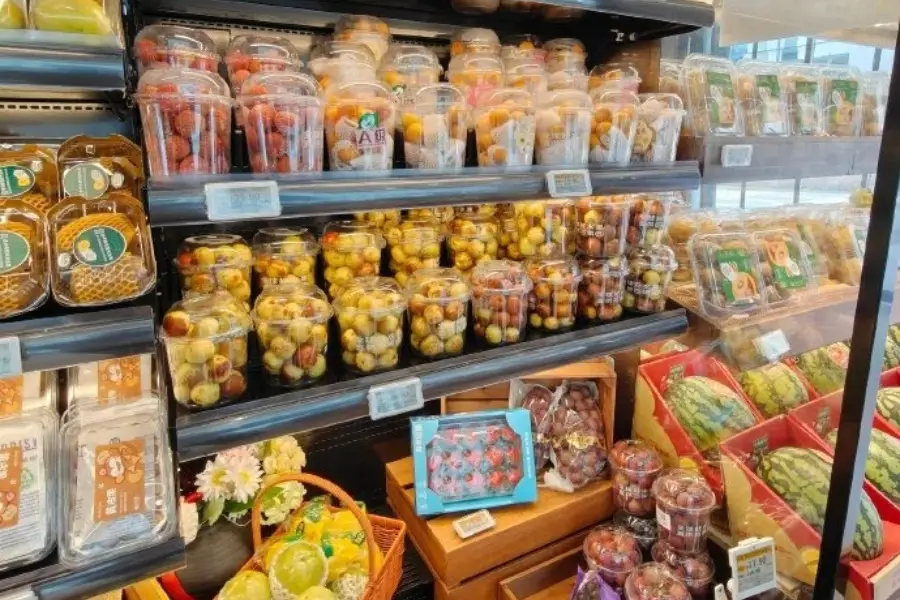
The leading fruit seller returned to profitability and revenue growth in the first half of this year, as its chairman declared 2026 a ’year of rebirth’
Key Takeaways:
- Shenzhen Pagoda earned a profit of 20 million yuan or more in the first half of 2026, reversing a loss a year earlier, as its revenue grew 7%
- The return to profits and revenue growth comes after the leading fruit seller posted a 20% revenue decline last year and closed 1,625 stores between 2023 and 2025
By Edith Terry
China’s largest fresh fruit retailer, Shenzhen Pagoda Industrial (Group) Corp. (2411.HK), has offered up an attractive financial fruit basket for investors, with budding signs of a comeback after two years of declining revenues and steep losses. It presented that picture in a positive profit alert last week, showing it returned to profitability and revenue growth in the first half of 2026, reversing its recent string of bad years.
The report offers some of the first hard evidence of a turnaround since Chairman Yu Huiyong told 700 suppliers at a meeting in April that his company’s restructuring was a success and officially designated 2026 as a “year of rebirth.”
According to the latest announcement, Pagoda expects to report 7% revenue growth and a profit of 20 million yuan ($2.9 million) or more in the first half of 2026, reversing a 342 million yuan loss a year earlier.
Pagoda said it added a net 292 new stores to its network during the period. It also credited the turnaround to other adjustments, including its use of fruit industry-specific large language models, an AI-driven order system and the addition of snacks in some of its traditional fruit stores. It said it has also started offering supply chain services to third parties.
The numbers were impressive less because they represented strong growth or profitability, and more because they reversed the string of revenue contraction and losses, as well as a record-low gross margin of 7.3% last year. Now, the big question is whether those trends can be sustained.
Signs of rebound
The nascent recovery is finding some believers in the analyst community. Citic Securities, which recently upgraded Pagoda to a “buy” rating, said the company is poised to return to a growth trajectory. In a research report in April, it noted the company began expanding its store count in the second half of 2025 with the addition of 82 new stores. It added Pagoda’s order volume and gross profit both grew by mid-single digits during that time, as its gross profit margin recovered to 10%.
Cost cutting has been an important part of Pagoda’s turnaround. The company shaved more than 20% off its expenses last year, including cuts in its selling, administrative and R&D expenses of 11.6%, 38.3% and 22.9%, respectively.
A big part of the savings came from the contraction of Pagoda’s core network of fruit stores. That network grew from 4,307 to 6,093 stores between 2019 and 2023, with 80% of those run by franchisees. But the company has been rapidly paring that network over the last two years to weed out underperformers, mostly franchised outlets, leaving it with 4,468 stores at the end of 2025.
Pagoda says the loss of franchisees was intentional, part of a restructuring where stores in expensive locations or with weak sales were encouraged to drop out. Pagoda’s premium price strategy also ran head-on into a slowdown in consumer spending that has persisted since a brief post-Covid rebound.
Pagoda isn’t the only one suffering in China’s large but also challenging market for fresh fruit. Three giants dominated that market just a few years ago when the economy was still on relatively solid footing. Pagoda, alongside Hongjiu Fruit and Xianfeng Fruit, collectively feasted on a market that grew by 25% from 1.2 trillion yuan in 2021 to 1.5 trillion yuan in 2025, according to the Qianzhan Industry Research Group.
But the boom was followed by bust, as Hongjiu buckled under excessive debt and Pagoda struggled with the high costs of supplying its ever-expanding store network with both standard and exotic fruits at premium prices. At one point, Pagoda boasted it would make annual revenue of 100 billion yuan from a network of 30,000 stores in 10 years – something that now looks impossible given its revenue of just 10.3 billion yuan last year.
Business diversification
After Hongjiu Fruit was delisted from the Hong Kong Stock Exchange in December 2025, Pagoda appeared in danger of heading in a similar direction, burdened with weak sales, competition from online and community vendors, and a premium approach to fruit merchandising that drove away customers and franchisees as Chinese consumers became more frugal.
As recently as August 2025, Chairman Yu, who started his company in 2001 with just 400 yuan in his pocket, insisted Pagoda’s role was to educate consumers, not to pander to them.
Like Hongjiu before it, Pagoda has been scrambling to rescue its business partly through diversification. In addition to its franchised and self-operated stores, it has developed more online collaborations with other platforms and a B2B unit that sells to supermarkets and wholesalers. It also operates a software as a service (SaaS) platform, Shenzhen Banguo, for independent mom-and-pop fruit stores.
According to Citic Securities, the company has developed a “dual-engine” model of “customer traffic” products, including free items, together with its higher-margin businesses to restore profits. Its AI system now covers 3,000 stores for intelligent ordering and diagnostics, driving last year’s labor and management cost reductions.
Early this year, the company also spun off a new unit as a joint venture with two of its shareholders to develop a snack and fruit franchise business, with a loan of 180 million yuan and 960 million yuan in cash from Pagoda co-founder and deputy chairman Tian Xiqiu and finance director Lai Hin Yeung. Citic Securities thinks the new business may have started contributing significantly to Pagoda’s growth as early as this year’s second quarter.
Meanwhile, the company has tried to boost its stock price through multiple share repurchases, most recently by Chairman Yu last December. But it has also been raising money through follow-on private placements to improve its finances.
Last September, Pagoda’s shares briefly shot up after it announced a private placement of HK$325 million ($41.4 million), nearly equal to the sum it raised from its IPO, even though it sold the shares for 19.3% less than the stock’s closing price the day before the announcement. Perhaps investors were encouraged that the funds would be used to help the company meet its debt repayment schedules and cover operating costs.
The stock ultimately gave back most of the gains, though its latest close of HK$1.44 is still well above the placement price of HK$1.17. Pagoda has had to swallow some bitter fruit over these last few years. But at least it’s still alive, and perhaps also on the cusp of a new, more fruitful chapter with the return to profitability and revenue growth.
To subscribe to Bamboo Works weekly free newsletter, click here
Related Articles

Can Longcheer buy its way to the top of the AI rack?
Two auto giants hitch wagons to combat harsh industry winter
RELATED ARTICLES
-
Dobot taps Shenzhen market to fund its bet on humanoid robots

-
Restructuring hits Want Want’s bottom line, as top line ekes out growth
0151.HK
- RedNote separates its China business, while Texas Chicken plots a massive China entry
- OneRobotics powers ahead on top line, but falls just short of profits
-
Plummeting cash flow and a stake-trimming top shareholder: What’s up at Zhejiang Shibao?
1057.HK002703.SHE
- ‘Plum king’ sweetens fourth IPO bid with new products, price cuts
- China’s shrinking ‘Chicken King’ scurries towards Hong Kong IPO