Joinn’s ‘jumping’ monkey market hides core weakness
Despite announcing a sharp profit surge, the lab animal provider’s stock ticked up by just a muted 3% over the next three trading days
Key Takeaways:
- Joinn Laboratories has built up a reserve of around 25,000 laboratory monkeys using a counter-cyclical strategy, creating a significant resource-based moat for its business
- While laboratory monkeys are unlikely to be fully replaced in drug safety testing over the short term, the trend toward technological substitution is irreversible
By Molly Wen
Rapid advances in cutting-edge innovative drugs, particularly the expansion of large-molecule therapeutics, is casting a spotlight on the importance on key upstream experimental resources for such product development.
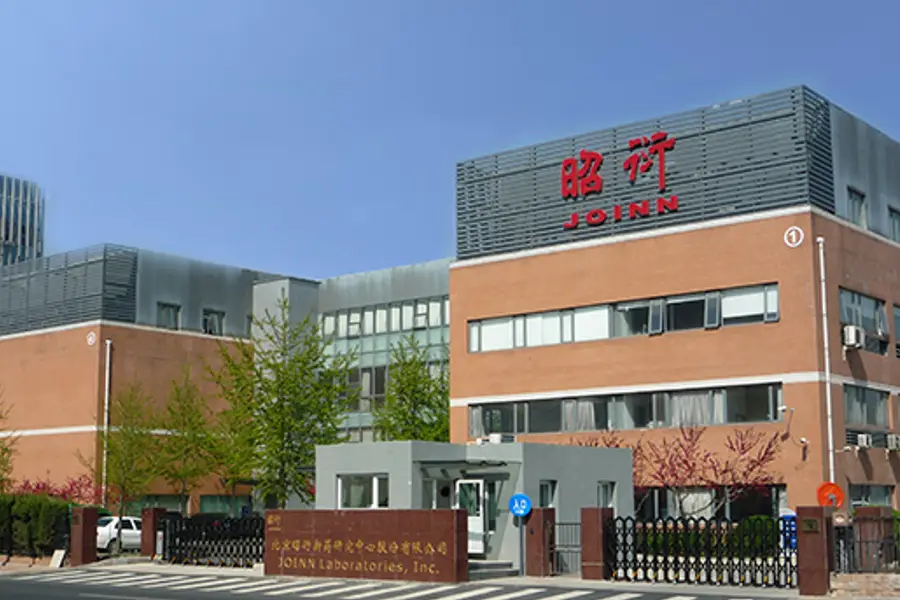
Their indispensable role as “living reagents” for preclinical safety evaluations caused laboratory monkey prices to spike sharply in 2025, with the cost of a single animal jumping from around 80,000 yuan ($11,500) at the beginning of the year to more than 130,000 yuan by year-end. That surge filtered directly to the bottom line last year for Joinn Laboratories (China) Co. Ltd. (603127.SH; 6127.HK), a leading money provider among China’s contract research organizations (CROs) for preclinical testing.
The bounty was front and center last week when Joinn announced it expected to report a profit of between 233 million yuan and 349 million yuan for 2025, representing a year-on-year increase of 214% to as much as 371%. Excluding non-recurring items, the company’s profit is expected to total between 220 million yuan and 350 million yuan, up by an even bigger 945% to as much as 1,467% year-on-year.
But the huge leap failed to impress investors, with the company’s shares gaining only about 3% combined over the three trading days after the announcement. Such a muted response reflects investor concern that behind the headline growth lies continued weakness in the company’s core business, as lab animals slowly get replaced by other testing methods.
In its forecast, Joinn attributed the strong profit growth mainly to changes in the fair value of its biological assets, namely, its laboratory monkeys. Its laboratory services and other businesses fared far worse, expected to report an estimated net loss between 1.3 billion yuan and 2.1 billion yuan last year. At the same time, Joinn forecast that weakness in its pharmaceutical R&D outsourcing services caused its overall revenue to fall between 13.9% and 22.1% last year to between 1.57 billion yuan and 1.74 billion yuan.
Innovative drug development moved ahead at a healthy pace in 2025. But the strongest momentum in frontier areas such as antibody-drug conjugates (ADCs) and cell and gene therapies provided little direct boost to Joinn’s preclinical safety evaluation business. At the same time, significant capacity expansion by CROs during the pandemic has triggered intense price competition as companies fight for contracts.
Joinn acknowledged in its latest announcement that “the company’s laboratory continued to maintain a good and stable operating state.” But it added that the lag effect of intense industry competition in the previous period resulted in “year-on-year decreases in revenue and gross profit margin of the contract performance during this reporting period and a corresponding decrease in the profit contribution of the laboratory service business.”
The prominent place of laboratory monkeys in Joinn’s earnings is no coincidence. Lab monkeys are a critical link in the preclinical drug evaluation process, with more than 70% of large-molecule drugs and 20% to 30% of small-molecule chemical drugs requiring their use during those stages.
As monkey prices peaked in 2022, Joinn spent about 1.8 billion yuan to acquire two laboratory monkey companies and built its own breeding base in the city of Wuzhou in Southwest China’s Guangxi region. The move intensified financial pressure on Joinn at the time, particularly during an industry downturn in 2023 and 2024, when monkey prices at one point fell below the 100,000-yuan-per-animal mark, forcing the company to recognize large fair value losses.
But its “counter-cyclical” strategy is now paying off, leaving Joinn with a reserve of roughly 25,000 laboratory monkeys that gives it an edge over its rivals with far smaller reserves. As innovative drug development rebounded last year, demand for laboratory monkeys tightened again and prices surged back to between 100,000 yuan and 150,000 yuan, driving the sharp rebound in Joinn’s profits.
Can the windfall be sustained?
Joinn’s ability to keep profiting from rising lab monkey prices remains to be seen. In the short term, at least, tight supply is expected to persist into the start of the New Year. Emerging technologies, including large-molecule drugs like multi-specific antibodies and ADCs, small nucleic acids, peptides, and cell and gene therapies, all require cynomolgus monkeys to simulate human physiology in preclinical safety testing, Sealand Securities wrote in a December research note, adding that the supply of such monkeys was already insufficient in 2025.
Joinn had outstanding orders worth 2.3 billion yuan and newly signed contracts totaling about 1.02 billion yuan at the middle of last year, according to the company’s midyear report released last August. Among those, the number of antibody-related contracts rose 20% year on year, while contracts for small nucleic acids and ADC projects increased by more than 50%.
Over the longer term, however, Joinn will face challenges from some important policy changes. In 2025, the U.S. Food and Drug Administration (FDA) introduced a series of initiatives aimed at gradually replacing animal testing with new technologies such as AI-based modeling and organoids. Last November, the world’s first drug developed entirely using in vitro organoid data passed its FDA investigational new drug (IND) application review, signaling that alternative technologies are rapidly moving toward practical adoption. While lab monkeys are unlikely to be fully replaced for drug safety evaluation anytime soon, the broader change in testing trends is irreversible.
On the financial front, a recent large sale of the company’s shares by controlling shareholder Zhou Zhiwen also raised some eyebrows in the investor community. Following last week’s profit alert, Zhou sold just over 10 million of his Shanghai-listed Joinn shares between Jan. 22 and Jan. 23, pocketing about 410 million yuan.
A 2025 net profit of 233 million yuan, representing the bottom of its forecast range, gives Joinn a current price-to-earnings (P/E) ratio of up to 75 times, though the figure could be lower if the profit is in the middle of the forecast range. By comparison, Pharmaron (3759.HK; 300759.SZ), another company focused on preclinical research, trades at a far lower P/E ratio of just 24 times, highlighting Joinn’s substantial valuation premium. Maintaining such a strong valuation could hinge on whether the company can strike a balance between seizing on the booming “monkey market,” while preparing for a future when those monkeys could well be replaced by AI and other technologies.
To subscribe to Bamboo Works weekly free newsletter, click here
Related Articles