Empty towers and full plates: China’s office glut and its dumpling king
“You’re going to need a spark. And you’re going to need one company to get into serious trouble and then everybody’s going to start paying attention, including the government.”

Key Takeaways:
- China’s office sector is facing extreme oversupply and rising vacancy rates, yet government support for developers is staving off major bankruptcies
- Fast-growing dumpling chain Yuen Kee offers a promising value play for investors despite potential challenges in exporting its model
By Doug Young & Rene Vanguestaine
China’s economy currently presents a stark dichotomy between its infrastructure ambitions and the daily realities of its consumers. On one side, we see an ailing property market with a massive glut of office space. On the other, we see the resilience of the low-cost dining sector, exemplified by a dumpling chain hoping to become the fast-food answer to the hamburger. One grappling with past overbuilding while consumers hunt for value.
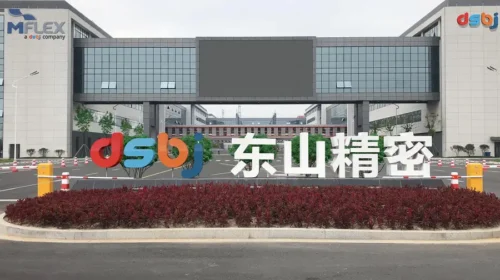
We start with the commercial property sector, which is often overlooked due to its smaller size compared to the massive residential market. Like its residential counterpart, the office market has been massively overbuilt over the last two decades. This is most evident in the southern boomtown of Shenzhen, where the supply-to-demand ratio soared to 2.7 to 1 last year.
The slowing economy is certainly partly to blame. The net absorption rate — a measure of the net change in occupied office space — has dropped from a peak of 3.34 million square meters in 2021 to just 1.1 million to 1.2 million square meters in each of the last three years. Despite these growing vacancies, new glass towers continue to rise.
In a Western market, such a situation would typically lead to a halt in new building lasting years, or even a decade. Market discipline would force developers to stop. However, in China, many office developers are owned or supported by central, provincial, or municipal governments. These entities often feel they have the “wind in their sails” to build continuously to support economic growth.
Consequently, we haven’t seen any high-profile bankruptcies in this sector yet. We believe there is a mechanism at play here that doesn’t exist in freer markets like Europe or the U.S. Governments can support these developers by forcing their other state-owned companies to abandon older buildings and move into newer ones. While this artificial support helps, the dreaded rise of AI and its potential to reduce workforces looms as a future cloud over office demand. Eventually, just as with the residential sector, we suspect a “spark” could cause a crisis, forcing the government to step in and freeze development activity.
The ‘McDonald’s of dumplings’
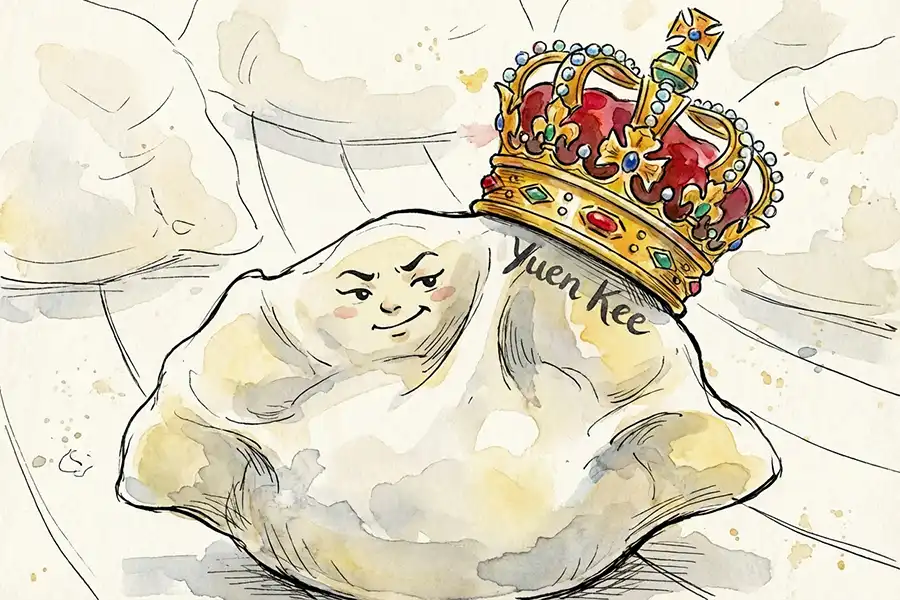
While office towers sit empty, the business of feeding China’s 1.4 billion people remains robust, specifically at the value end of the spectrum. This brings us to Yuen Kee, a dumpling chain that filed this month to list in Hong Kong. Founded in 2017, the company has quickly become China’s dumpling king with 4,266 stores as of last September.
We view Yuen Kee as a potential winner in the current climate. As consumer sentiment remains weak, diners are constantly looking for value. Yuen Kee operates with a level of scalability and efficiency comparable to McDonald’s (MCD.US), offering a popular basic food in a clean environment.
The chain is also looking abroad, having opened its first store outside China in Singapore in 2024, growing to 10 stores there. However, we believe global expansion poses a challenge. We have seen this with hotpot chain Haidilao (6862.HK) when they expanded to the U.S.
At first, there was a lot of excitement. Now the excitement is still around — but they don’t have the buzz that they used to.
While dumplings are a hit within ethnic Chinese communities globally, getting non-Asians to move past initial curiosity is a different issue. We believe Yuen Kee would be smart to focus on Southeast Asian markets like Indonesia and Malaysia, where there are big ethnic Chinese communities and standards of living align with their pricing model.
Ultimately, whether it’s filling empty offices or selling dumplings, the key lies in discipline. For the property sector, it requires a halt to the “build and they will come” mentality. For Yuen Kee, it means growing measurably without destroying its reputation for quality.
About China Inc
China Inc by Bamboo Works discusses the latest developments on Chinese companies listed in Hong Kong and the United States to drive informed decision-making for investors and others interested in this dynamic group of companies.
Subscribe to China Inc on your favorite app:


Related Articles