Daqo goes ‘back to the future’ with AI power equipment gamble
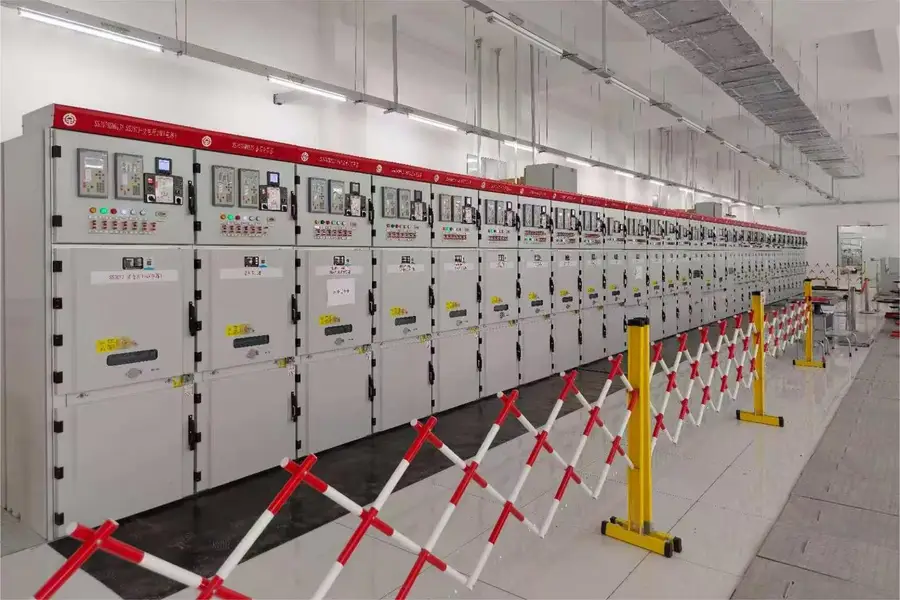
The polysilicon maker will partner with the Kunshan government to build a 6 billion yuan base producing electrical equipment to power AI data centers
Key Takeaways:
- Daqo and the Kunshan Economic and Technological Development Zone will build a 6 billion yuan base to make AI data center electrical equipment
- The move comes just three years after Xu Xiang took over at the helm of the company from his father, and draws on Daqo’s origins as an electric power equipment maker
By Doug Young
Chinese history is filled with succession stories of sons trying to outdo their fathers in running successful family businesses, often with mixed results. One of the latest such stories is shaping up at Daqo New Energy Corp. (DQ.US; 688303.SH), a leading maker of polysilicon that’s the main ingredient used to make the solar panels that are quickly becoming a top source of clean electricity.
That’s our assessment after the company on Thursday announced a major – and somewhat unusual – strategic shift into producing the electrical infrastructure that will power the AI data centers of the future. Such data centers have suddenly become a hot ticket for both developers and investors, who are betting demand will soar with the popularization of AI applications that require huge computing power and equally huge amounts of electricity.
Daqo’s big shift is the brainchild of Xu Xiang, who is in his mid-50s and took over as the company’s chairman and CEO in August 2023. He took the chairman’s position from founder Xu Guangfu, now in his 80s, who is also his father. The CEO’s position had been held by an outsider, Zhang Longgen, for the previous five years.
Xu Xiang was joined by his sister, Xu Xiaoyu, who came in as Daqo’s head of investor relations in May 2023. Not surprisingly, Xu Xiaoyu has risen quickly in the company, named as a director just a half year after joining, and becoming deputy CEO in October 2024.
This brother-sister combination at the top of Daqo looks relatively complementary. Xu Xiang appears to be a product of the Chinese education system, and has been at Daqo since at least 2000, meaning he was probably being groomed to take over the leadership. By comparison, Xu Xiaoyu is a much more recent arrival and has a far more international education, including an MBA in finance from the Wharton School at the University of Pennsylvania and bachelor’s degree from the University of California, Berkeley.
With all that family background in mind, we’ll turn to the strategic shift under this brother-sister team, which will see Daqo establish a manufacturing base in the Kunshan Economic and Technological Development Zone. From a geographic standpoint, the choice of Kunshan is quite different from Daqo’s traditional polysilicon manufacturing base in the relatively remote and less developed Xinjiang and Inner Mongolia regions in interior China. By comparison, Kunshan is adjacent to Shanghai, China’s financial capital and one of its wealthiest cities.
The partnership will focus on next-generation energy solutions and related equipment for AI data centers, including energy storage systems, solid-state transformers, solid-state circuit breakers and solid-state batteries, according to the announcement. It will be built in two phases for about 6 billion yuan ($886 million), starting with a first phase costing 2.1 billion yuan.
“By leveraging our deep expertise and proven technical capabilities of our affiliates, specifically in transformer and circuit breaker technologies, we are well positioned to address this tremendous growth opportunity,” said Xu Xiang. “This investment agreement represents a cornerstone of our broader strategy to diversify our product portfolio … and capitalize on the massive market opportunities presented by the global energy transition.”
Dead cat bounce?
At first blush, investor reaction to what looks like a fairly big announcement seems quite positive, with Daqo’s stock rising 5.1% on Thursday after the news. But the jump also looks a bit like a classic “dead cat bounce,” as the shares are still down 43% this year. The company has been dogged over the last two to three years by a massive global oversupply of polysilicon, following the rapid addition of new capacity by Daqo and its peers.
Daqo is typical of the group, spending a massive 17.7 billion yuan over the last three years on a new complex in Inner Mongolia that boosted its annual capacity fourfold from 75,000 MT to the current 300,000 MT. As overall industry capacity exploded, polysilicon prices cratered, sending Daqo and most of its peers into the red, including an $88.4 million loss for Daqo in this year’s first quarter.
Many were hoping for an industry rebound to take hold last year as Beijing encouraged producers to scrap their older, less efficient capacity and consolidate some of the smaller players into a new company set up by the big ones. But progress has been slower than expected, and most companies are still producing polysilicon for more than they can sell it for.
That brings us back to Daqo’s latest move, which may leave some people scratching their heads, especially if they are only familiar with the company’s polysilicon business that is the New York-listed company’s main asset. In fact, Daqo’s earlier history lies in the electric equipment business, and the company’s unlisted parent, Daqo Group, states its businesses include medium- and low-voltage electrical equipment, transformers and switchgear. Much of that is done at its subsidiaries like Nanjing Daqo Transformer Co. and Zhenjiang Daqo Power Transformer Co., which are not part of the New York-listed Daqo New Energy.
That shows that Daqo indeed has the expertise needed to create the kind of power equipment it plans to make at this new venture. What’s more, the price tag, while relatively high at 6 billion yuan, is far less than the 17.7 billion yuan for the big polysilicon expansion.
Daqo also has plenty of resources to undertake such an initiative, with $2 billion in assets that “can easily be turned to cash,” at the end of March, according to its latest quarterly report. And Daqo wouldn’t have to pay for all of the investment either, as the city of Kunshan, which is quite wealthy, is almost certain to foot a big part of the bill.
At the end of the day, this move by Xu Xiang, probably with input from his father and sister, looks like a relatively prudent diversification step for Daqo New Energy to lessen its reliance on the polysilicon industry, which is highly cyclical even in the best of times. But many others are also eyeing these new business opportunities, especially in energy storage, meaning Daqo could ultimately find itself diversifying from one oversupplied sector into another.
To subscribe to Bamboo Works free weekly newsletter, click here
Related Articles
RELATED ARTICLES
-
Can crypto power supplier Boco plug into the AI boom?
- Booming electricity demand feeds KeLiang’s niche in power grid simulation
-
BRIEF: Daqo’s revenue plunges, loss widens in first quarter
DQ.US688303.SHG
- After years on the sidelines, VNET seizes on China’s AI moment with new CATL tie-up
- CFMEE’s first-half profit nearly doubles on surging PCB equipment sales
-
Xinyi Energy’s profit dives as China suffers from ‘solar hangover’
3868.HK