KE Holdings defies property slump by cleaning up its own house
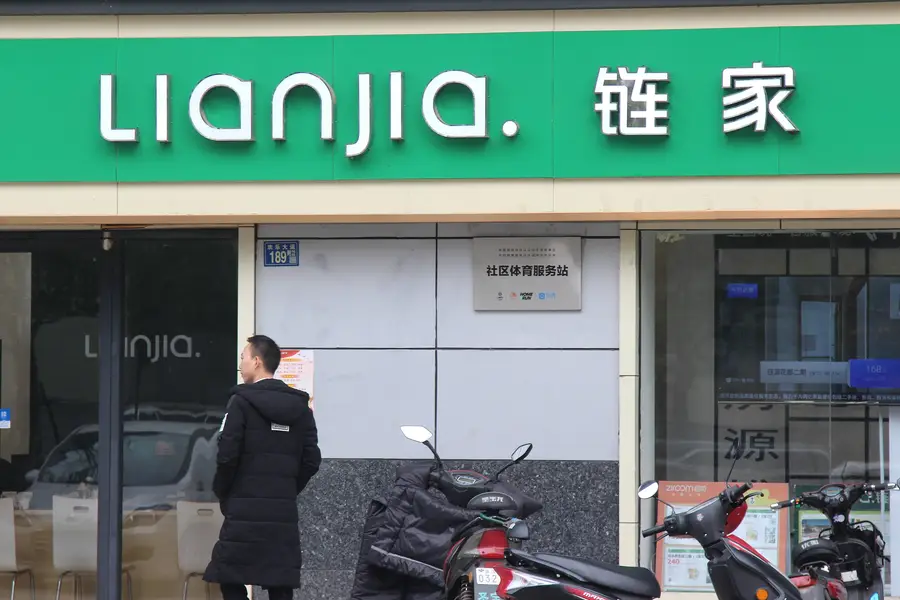
The leading real estate brokerage delivered a huge profit increase in the third quarter despite a prolonged downturn that has undermined most of its peers
Key Takeaways:
- KE Holdings reported its third-quarter revenue fell 8.9% year-on-year, as its active store count dropped 2.5% to 57,545
- The real estate broker’s quarterly profit nearly tripled during the quarter on strict cost controls
By Lau Chi Hang
Delivering strong results is easy when market conditions are favorable.
During a downturn, however, merely holding your ground is a challenge. A company that manages to thrive even as its broader industry languishes looks like a compelling long-term investment value. KE Holdings Inc. (2423.HK; BEKE.US), also known as Beike, is a prime example.
Following Beijing’s roll out of a “three red lines” policy in 2021 aimed at reining in property developers’ debt-fueled building spree, China’s housing market rapidly fell from boom to bust. The traditional growth model – reliant on high leverage for aggressive land acquisition and construction – unraveled. Home prices began to fall and sales plunged due to huge oversupply. At the same time, developers saw their funding dry up, leaving them mired in severe debt that most couldn’t repay.
Though not a developer, KE operates a real-estate brokerage business closely tied to the fortunes of the property sector. Feeling the chill, the company saw its profit decline over the past three years.
Even as that happened, KE still managed to generate more than 2 billion yuan ($300 million) in annual profit each year, underscoring its resilience in the face of market headwinds. But that pressure seemed to ease significantly in its recently released quarterly results for the third quarter, which saw its net profit nearly triple.
KE’s revenue fell 8.9% year-on-year during the quarter to 21 billion yuan, even as its net profit surged 194% to 2.19 billion yuan. Its active store network stood at 57,545 at the end of September, down 2.5% from a year earlier, while active agents declined 4.4% year-on-year to 450,724.
Net revenue from existing home transaction services edged up 1.8% year-on-year to 6.1 billion yuan, while new home transaction services grew 2.9% to 6.8 billion yuan. Net revenue from home renovation and furnishing fell 22.9% to 3.3 billion yuan, and home rental services dropped 25.4% to 4.3 billion yuan. Net revenue from emerging and other services rose 19.8% to 474 million yuan.
Saving its way to profit
With its core brokerage revenue posting only low-single-digit growth, frugality drove the dramatic profit surge.
KE boosted its bottom line by reining in costs and improving efficiency. For internal commissions and compensation, it trimmed fixed salaries for its agents, reducing related expenses by 4.6% to 4 billion yuan. Refined operations in its new home segment helped optimize its cost structure, nudging external commissions down by 0.8%.
KE also streamlined its trademark network of dark green Lianjia stores, cutting store costs by 24% to 504 million yuan. In its home renovation and furnishing segment, enhanced supply chain capabilities lowered material expenses, driving its cost of revenue down 32.2% to 2 billion yuan. Similarly, improved operational efficiency in home rental services slashed costs for the period by 31.9% year-on-year to 3.6 billion yuan.
At the company level, KE also slashed its operating expenses by 22.4% to 3.4 billion yuan, with general and administrative, sales and marketing, and R&D expenses falling 14.2%, 27.5%, and 22%, respectively.
Thanks to all those efforts, KE’s operating profit for the third quarter reached 2.46 billion yuan, a fourfold surge from 608 million yuan a year earlier.
Market praise
Encouraged by the upbeat results, investors gave KE a strong vote of confidence. The day after the earnings release, its Hong Kong-listed shares jumped as much as 10% to breach the HK$50 mark, before paring the gains slightly to close up 8% at HK$49.32.
Investment banks were equally bullish. Jefferies noted that the company beat market expectations by improving profit margins through strict cost controls, efficiency gains, and structural optimization, maintaining a “buy” rating while raising its U.S. stock target price by 4% to $25. Morgan Stanley also maintained an “overweight” rating and lifted its target price from $22 to $23.
CLSA went a step further, naming KE its top sector pick, raising its Hong Kong stock target price from HK$62 to HK$67, and reiterating an “outperform” rating.
Still, it’s worth noting that cost-cutting and efficiency gains have their limits. A company can’t simply rely on belt-tightening indefinitely to drive earnings growth. If China’s housing slump drags on, KE will struggle to sustain its momentum. Ultimately, its trajectory is tied to the broader property market outlook, just like everyone else.
Another two years?
So, how much longer will the wait be? After more than five years of correction and a steady series of government stimulus measures, the decline in home prices has moderated. Once excess inventory is absorbed, the housing market stands a chance of stabilizing.
According to data from the National Bureau of Statistics, unsold residential floor space began to recede in the first nine months of this year, offering a glimmer of hope for the market.
The investment banks broadly expect it will take another 26 to 27 months to digest the current inventory of completed and under-construction homes with pre-sale permits. If those projections hold true, the property market still faces a two-year wait.
Regardless, KE’s ability to remain profitable – and even grow its earnings – amid a deeply depressed property market where industry players are reeling is no small feat. Even if it achieved that mostly through cost reductions and efficiency gains, it proves that management can find ways to bolster the bottom line in a tough environment.
If KE can deliver solid results in a downturn, its performance is bound to shine when the housing market eventually stabilizes and recovers.
To subscribe to Bamboo Works free weekly newsletter, click here
Related Articles
RELATED ARTICLES
-
Evergrande property management arm gets new life as strongman takes charge
 6666.HK
- Property slump takes further toll on building materials supplier
- Cango cleans up its house. Now comes the hard part
-
Tongcheng’s rosy report fails to discuss the worrisome elephant in its house
0780.HK
-
New World looks to REIT in bid to rescue its shaky foundation
0017.HK
-
Struggling Shimao looks on as creditors move in on its trophy Hong Kong hotel
0813.HK
- Linklogis swings back to the black amid pivot away from property